
When selecting a ceramic sealing alloy manufacturer, enterprises face critical decisions that impact product quality, production efficiency, and long-term costs. This comprehensive guide analyzes key factors for evaluating suppliers, introduces Qingchuan New Materials (Zhengzhou) Co., Ltd.’s technical capabilities, and provides practical selection criteria for industries including aerospace, medical devices, and semiconductor manufacturing.
Understanding Ceramic Sealing Alloys
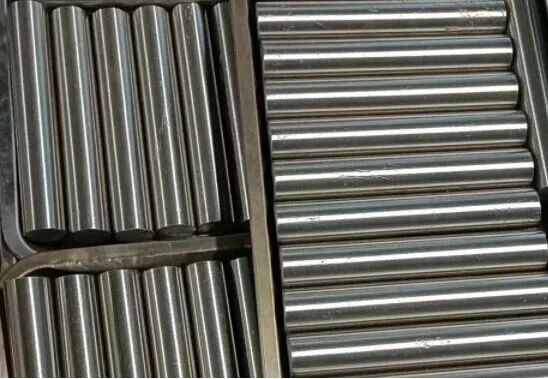
Ceramic sealing alloys represent specialized materials engineered for hermetic sealing applications under extreme conditions. These alloys typically combine high-temperature resistance with excellent corrosion protection, making them indispensable in aerospace, nuclear power, and medical implant manufacturing. The core composition usually includes nickel-based, cobalt-based, or iron-based alloys with precise elemental control to achieve specific thermal expansion coefficients matching ceramic components.
The manufacturing process demands exceptional purity levels – often exceeding 99.95% for critical applications. Qingchuan New Materials achieves this through advanced vacuum induction melting (VIM) and electroslag remelting (ESR) technologies, ensuring homogeneous microstructures free from impurities that could compromise sealing performance. Our degassed chromium flakes and high-purity nickel evaporation materials specifically address the stringent requirements of vacuum coating processes used in ceramic sealing applications.
Key Selection Criteria for Manufacturers
Evaluating ceramic sealing alloy suppliers requires examining five critical dimensions:
1. Technical Certification System
Reliable manufacturers should maintain comprehensive certification portfolios including ISO 9001:2015 quality management, AS9100D aerospace standards, and Nadcap special process accreditation. Qingchuan New Materials’ Zhengzhou facility operates under dual aerospace and medical device quality systems, with batch-specific material certificates traceable to raw material melting.
2. Production Capability Matrix
The production capability should cover the complete value chain from alloy design to finished component machining. Our facility houses:
- Three 500kg VIM furnaces with argon atmosphere control
- Two ESR remelting stations for directional solidification
- CNC precision machining center with 5-axis capability
- Class 10000 cleanroom for powder metallurgy processing
This vertical integration enables us to control critical parameters like grain size distribution (ASTM E112) and oxygen content (≤15ppm) throughout production.
3. Analytical Testing Capabilities
Advanced testing protocols differentiate professional manufacturers from commodity suppliers. Our quality control system includes:
| Test Method | Detection Limit | Applicable Standard |
|---|---|---|
| GD-MS (Glow Discharge Mass Spectrometry) | 0.1ppm | ASTM E1070 |
| ICP-OES (Inductively Coupled Plasma Optical Emission Spectrometry) | 0.01ppm | ISO 11885 |
| LECO Combustion Analysis | 1ppm | ASTM E1019 |
4. Application-Specific Expertise
Different industries impose unique requirements on ceramic sealing alloys. For example:
- Aerospace applications demand materials with controlled thermal expansion coefficients (CTE) matching alumina ceramics (6.5-7.5×10⁻⁶/°C)
- Medical implants require biocompatible alloys meeting ASTM F136 standards for titanium-6aluminum-4vanadium
- Semiconductor equipment needs ultra-low outgassing materials with total mass loss (TML) <1% per ASTM E595
Qingchuan’s R&D team works closely with customers to develop customized alloy compositions through Computational Materials Engineering (CME) simulations before physical production.
Cost Optimization Strategies
While price remains an important consideration, professional buyers should evaluate total cost of ownership (TCO) rather than unit price alone. Three cost drivers require special attention:
1. Material Utilization Efficiency
Advanced casting technologies like investment casting with ceramic shells can achieve 92-95% material utilization rates, compared to 70-75% for traditional sand casting. Our precision casting capabilities for aviation components have helped customers reduce material costs by up to 28% in high-value nickel-based superalloy applications.
2. Process Consistency
Stable production processes minimize scrap rates and rework costs. Our statistical process control (SPC) system monitors 23 key parameters in real-time, maintaining process capability index (Cpk) values >1.33 for critical dimensions. This consistency enables customers to streamline their incoming inspection procedures, reducing quality control costs by 15-20%.
3. Supply Chain Resilience
Geopolitical factors increasingly impact specialty alloy availability. Qingchuan’s strategic location in Zhengzhou High-Tech Zone provides stable access to rare metal resources from Henan Province’s mining cluster. Our 3,000-ton raw material warehouse ensures 6-month production continuity even during supply chain disruptions.
FAQ
What makes ceramic sealing alloys different from standard alloys?
Ceramic sealing alloys require precise control over thermal expansion coefficients to match ceramic components, typically achieving CTE values between 6-8×10⁻⁶/°C. They also need exceptional chemical purity (often >99.95%) to prevent interfacial reactions that could compromise hermetic seals under high-temperature operation.
How to verify a manufacturer’s quality system?
Request copies of their quality manual and recent audit reports from certification bodies like TÜV SÜD or SGS. For medical applications, verify FDA Device Master File (MAF) registration numbers. Professional manufacturers will readily provide batch-specific material certificates including spectrographic analysis reports.
What is the typical lead time for custom alloy development?
Development cycles vary based on complexity. For modifying existing alloys, lead times range from 4-8 weeks including lab-scale trials and pilot production. Developing entirely new compositions may require 12-18 months for comprehensive property testing and application validation.
How does powder metallurgy benefit ceramic sealing applications?
Powder metallurgy enables near-net-shape manufacturing with minimal machining, reducing material waste by 30-50% compared to traditional casting. Our gas-atomized powders with D50 of 20-45μm achieve >99.5% theoretical density after hot isostatic pressing (HIP), meeting the stringent porosity requirements (<0.05%) for vacuum applications.
Summary
Selecting the optimal ceramic sealing alloy manufacturer requires balanced evaluation of technical capabilities, cost structures, and application expertise. Qingchuan New Materials combines advanced production facilities with rigorous quality control systems to deliver materials meeting the most demanding specifications across aerospace, medical, and industrial sectors. Our vertically integrated operations in Zhengzhou ensure stable supply while maintaining competitive pricing through material utilization optimization and process efficiency improvements.