
Qingchuan New Materials (Zhengzhou) Co., Ltd. stands as a premier manufacturer of specialty alloys and high-purity materials, with particular expertise in Inconel713C alloy production. Located in Zhengzhou High-Tech Industrial Development Zone, our state-of-the-art facility combines advanced production lines with precision machining capabilities to deliver superior quality materials for demanding applications across multiple industries.
Understanding Inconel713C Alloy Composition and Properties
Inconel713C belongs to the nickel-based superalloy family, specifically designed for high-temperature applications requiring exceptional strength and corrosion resistance. The alloy’s composition typically includes nickel as the base element (approximately 70-75%), with significant additions of chromium (18-22%), cobalt (8-10%), and smaller amounts of aluminum, titanium, and molybdenum. This precise chemical balance creates a material that maintains its mechanical properties at temperatures exceeding 1000°C (1832°F).
The microstructure of Inconel713C features a gamma matrix reinforced with gamma prime (Ni3(Al,Ti)) precipitates, which provide the alloy’s remarkable strength at elevated temperatures. Additionally, the chromium content ensures excellent oxidation resistance, while cobalt enhances thermal fatigue resistance – crucial for components subjected to cyclic heating and cooling.
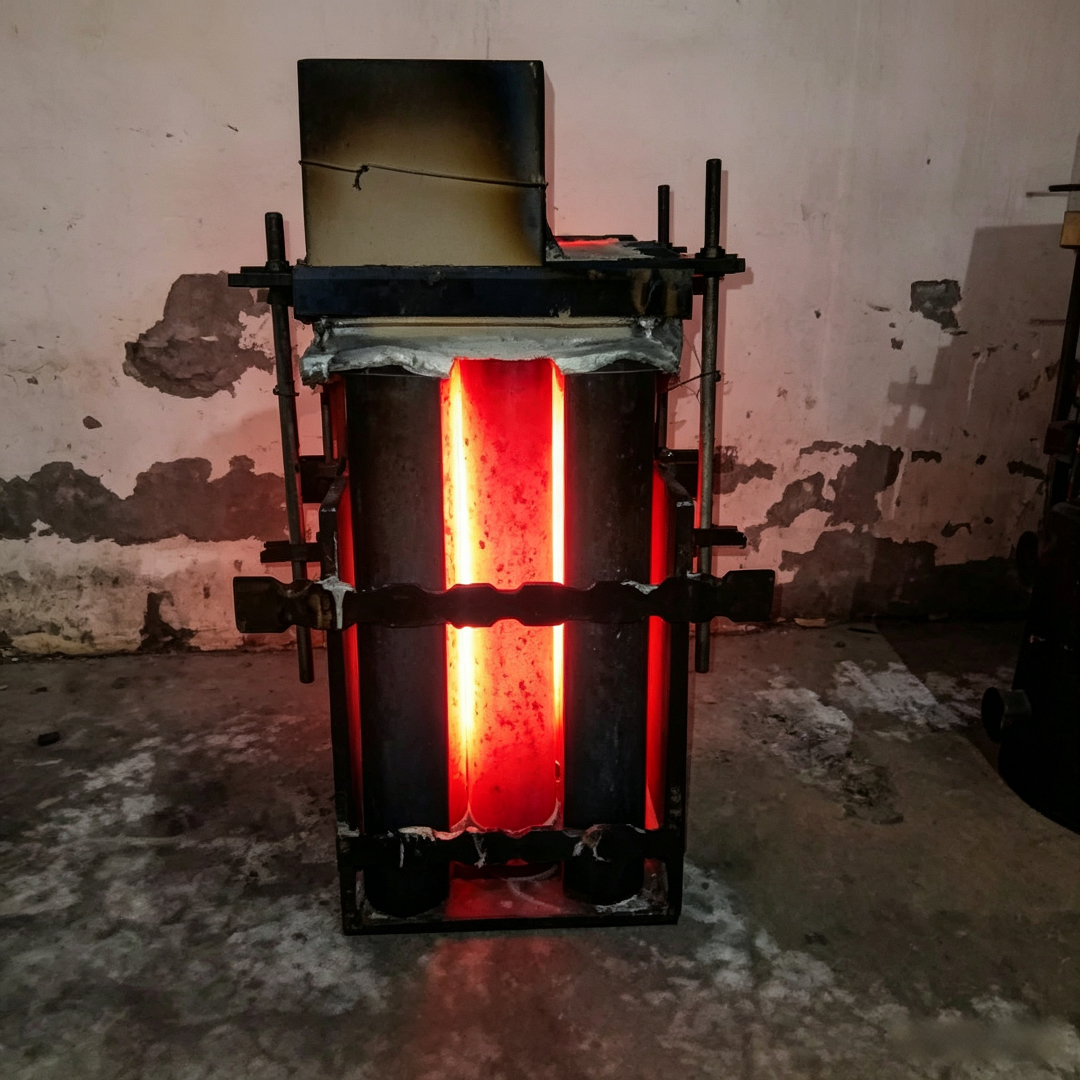
Our manufacturing process for Inconel713C begins with vacuum induction melting (VIM) to ensure precise control over chemical composition and minimal impurities. This is followed by vacuum arc remelting (VAR) for further purification and homogenization of the ingot structure. The resulting material exhibits superior cleanliness and consistency compared to conventionally melted alloys.
Inconel713C Product Forms and Manufacturing Capabilities
As a comprehensive alloy solutions provider, Qingchuan New Materials offers Inconel713C in multiple product forms to meet diverse application requirements:
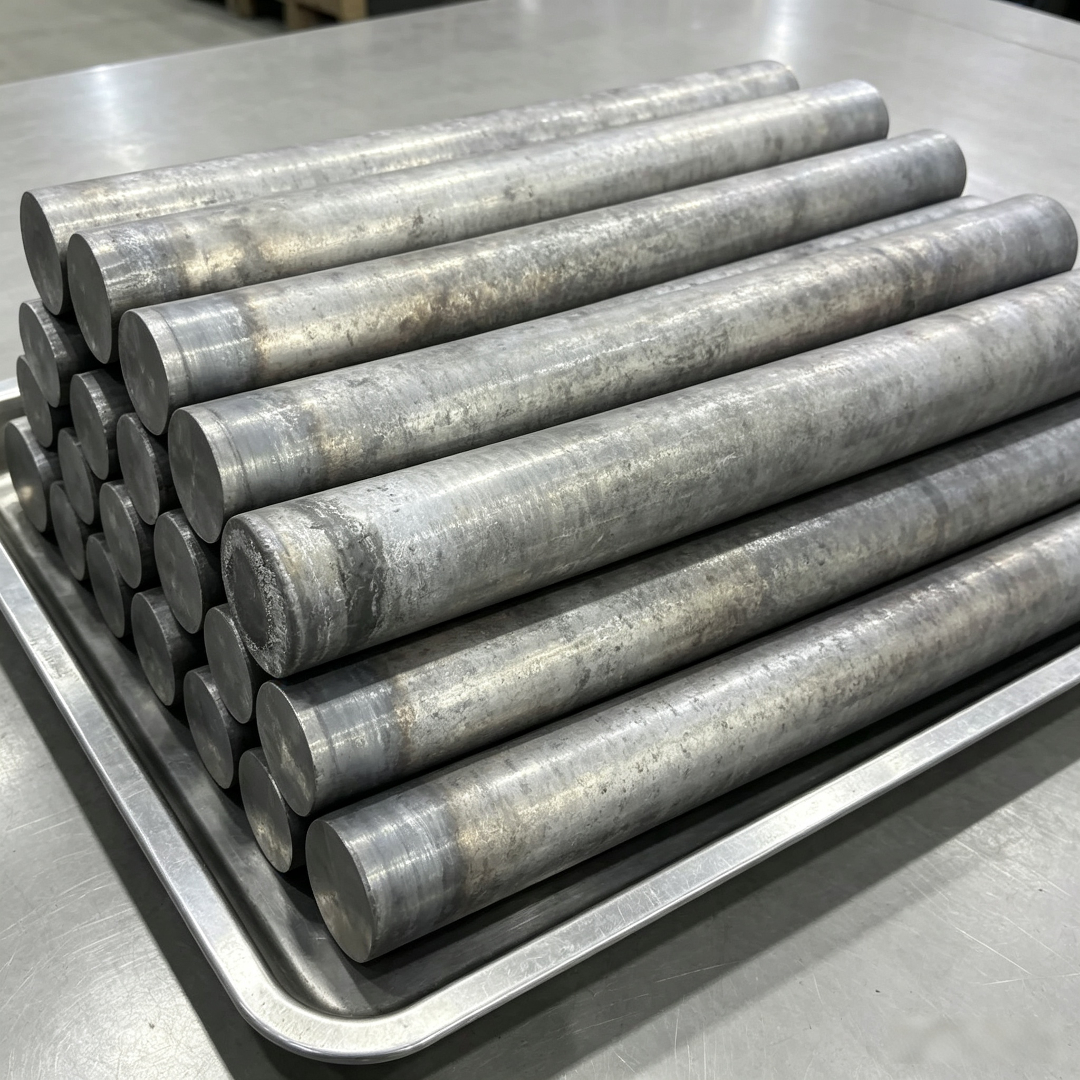
- Round Bars: Produced through hot rolling and precision grinding, our Inconel713C round bars range from 10mm to 300mm in diameter with tight dimensional tolerances. These bars serve as raw material for machining components such as turbine blades, valve stems, and fasteners.
- Cast Ingots: Our vacuum casting process produces high-integrity ingots weighing up to 500kg, suitable for subsequent forging or direct investment casting. The controlled solidification parameters ensure optimal microstructure for demanding applications.
- Forgings: Using advanced isothermal forging techniques, we transform ingots into near-net-shape components with superior mechanical properties. Forged Inconel713C parts exhibit improved fatigue resistance and reduced susceptibility to defects compared to cast alternatives.
- Master Alloy: Our precision-blended master alloys enable customers to create custom Inconel713C compositions or adjust existing formulations. Available in various forms including powder, wire, and chunk, these master alloys facilitate consistent alloy production.
Production Process Specifications
Our manufacturing process for Inconel713C follows strict quality control protocols at each stage:
| Process Stage | Key Parameters | Quality Control |
|---|---|---|
| Raw Material Inspection | Chemical composition verification, purity level assessment | Spectral analysis, ICP-MS testing |
| Vacuum Melting | Temperature: 1600-1650°C, Vacuum: <10^-3 mbar | Temperature monitoring, vacuum level verification |
| Hot Working | Temperature: 1150-1200°C, Reduction ratio: >3:1 | Dimensional measurement, surface inspection |
| Heat Treatment | Solution annealing: 1120°C/2h, Aging: 845°C/24h | Hardness testing, microstructure examination |
| Final Inspection | Chemical analysis, mechanical testing, NDT | Certificate of Conformance issuance |
Key Applications of Inconel713C Alloy
The exceptional properties of Inconel713C make it indispensable in several high-performance applications:
Aerospace Components
In the aerospace industry, Inconel713C serves as the material of choice for hot-section components in gas turbine engines. Typical applications include turbine blades, vanes, and combustor cans that must withstand extreme temperatures (up to 1100°C) and corrosive environments. The alloy’s combination of high-temperature strength and oxidation resistance ensures reliable performance throughout the engine’s service life.
Our manufacturing capabilities support both new engine development and component replacement programs. We work closely with aerospace OEMs to develop customized solutions that meet specific design requirements while optimizing material usage and reducing production costs.
Medical Implants
The biocompatibility and corrosion resistance of Inconel713C make it suitable for certain medical implant applications, particularly where high strength is required at body temperature. While cobalt-chromium alloys dominate the orthopedic implant market, Inconel713C finds niche applications in specialized devices where its unique properties offer advantages.
Our medical-grade production facilities comply with stringent regulatory requirements, including ISO 13485 certification and ASTM F138 standards. We implement additional cleaning and passivation processes to ensure the highest levels of material purity and biocompatibility for medical applications.
Industrial Gas Turbines
Power generation gas turbines operate under conditions similar to aerospace engines but often at higher power outputs and longer continuous operation times. Inconel713C’s resistance to thermal fatigue and oxidation makes it ideal for first-stage turbine blades and nozzles in these demanding applications.
We supply both original equipment manufacturers and aftermarket service providers with Inconel713C components that match or exceed OEM specifications. Our advanced forging capabilities enable the production of large, complex blade geometries with optimal grain flow for maximum fatigue resistance.
Automotive Applications
While less common than in aerospace, Inconel713C finds specialized applications in high-performance automotive engines and exhaust systems. Turbocharger components, particularly turbine wheels and housings, benefit from the alloy’s ability to withstand exhaust gas temperatures exceeding 1000°C while maintaining dimensional stability.
Our precision casting capabilities support the production of thin-walled turbocharger components with complex geometries. By optimizing the casting process parameters, we achieve fine grain structures that enhance both mechanical properties and machinability.
Material Selection Guide for Inconel713C
Choosing the right form of Inconel713C for your application requires consideration of several factors:
Component Design Requirements
Analyze your component’s stress profile, operating temperature range, and environmental exposure. For components with complex geometries or internal cooling passages, investment casting using Inconel713C ingots may be the most cost-effective solution. For simpler shapes requiring maximum strength, forged Inconel713C offers superior properties.
Manufacturing Process Considerations
Evaluate your production capabilities and tooling requirements. Machining Inconel713C round bars requires specialized tooling and cutting parameters due to the alloy’s work-hardening tendency. For high-volume production, near-net-shape forging or casting can significantly reduce material waste and machining time.
Cost Optimization Strategies
Balance material cost with performance requirements. While Inconel713C offers superior properties compared to lower-grade alloys, it comes at a premium price. In some applications, you may achieve acceptable performance using a modified alloy composition or by applying protective coatings to less expensive base materials.
Supplier Capability Assessment
Choose a supplier with proven expertise in Inconel713C production. Look for facilities with vacuum melting capabilities, advanced forging equipment, and comprehensive quality control systems. Request material certification and traceability documentation to ensure compliance with industry standards.
FAQ
What are the primary differences between Inconel713C round bar and forging?
Inconel713C round bars are produced through hot rolling and grinding processes, resulting in uniform cross-sections suitable for machining. Forgings, on the other hand, are shaped through compressive forces, creating near-net-shape components with optimized grain flow for maximum strength. Forged Inconel713C typically exhibits superior fatigue resistance and mechanical properties compared to machined bar stock.
How does Inconel713C compare to other nickel-based superalloys for aerospace applications?
Inconel713C offers an excellent balance of high-temperature strength, oxidation resistance, and thermal fatigue resistance at a relatively lower cost compared to some premium alloys. While it may not match the extreme temperature capabilities of alloys like Inconel 718 or Rene N5, it provides sufficient performance for many first-stage turbine components while offering better machinability and cost-effectiveness.
What quality control measures are implemented during Inconel713C production?
Our production process incorporates multiple quality control checkpoints, including raw material inspection, chemical composition verification during melting, dimensional checks during hot working, and comprehensive final inspection. We perform mechanical testing (tensile, impact, hardness), non-destructive testing (UT, PT), and microstructure examination to ensure all material properties meet specifications.
Can Inconel713C be used for medical implant applications?
While Inconel713C possesses good biocompatibility and corrosion resistance, its use in medical implants is limited compared to specialized cobalt-chromium alloys. We can produce medical-grade Inconel713C components that comply with relevant standards, but each application requires careful evaluation of material properties against specific clinical requirements.
What is the typical lead time for Inconel713C product orders?
Lead times vary depending on product form and order quantity. Standard round bar sizes may be available from stock with 2-4 week delivery. Custom sizes, forgings, and castings typically require 8-12 weeks for production, including melting, hot working, heat treatment, and final inspection processes. We work with customers to optimize production schedules and minimize lead times.
Summary
Inconel713C alloy represents a versatile solution for high-temperature applications across aerospace, energy, automotive, and specialized industrial sectors. Qingchuan New Materials’ comprehensive manufacturing capabilities enable us to produce this advanced material in multiple forms – from round bars and ingots to precision forgings – each tailored to specific application requirements.
Our commitment to quality extends beyond material production to include application engineering support, helping customers select the optimal product form and processing parameters for their specific needs. With state-of-the-art facilities in Zhengzhou and a team of experienced metallurgists and engineers, we stand ready to support your most demanding Inconel713C alloy requirements.