
When it comes to high-performance materials for demanding industrial applications, Inconel792 alloy stands out as a premier choice among engineers and manufacturers worldwide. This nickel-based superalloy, also known as Alloy792 or GH792 in certain markets, combines exceptional high-temperature strength with excellent corrosion resistance, making it indispensable in critical components across aviation, aerospace, and energy sectors. Qingchuan New Materials (Zhengzhou) Co., Ltd., a professional enterprise specializing in high-purity metals and specialty alloys, has established itself as a trusted manufacturer of Inconel792 alloy with state-of-the-art production facilities and rigorous quality control processes.
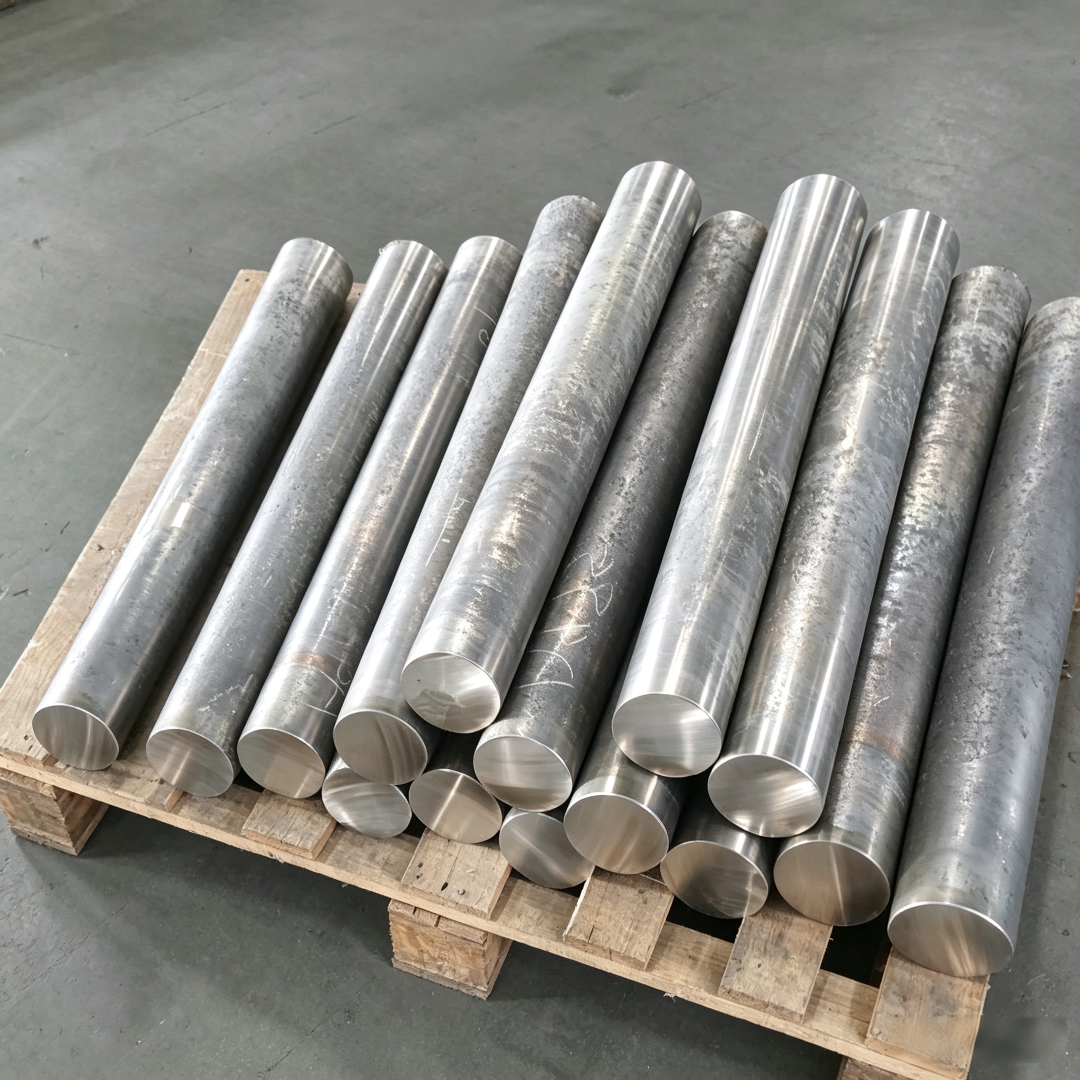
Understanding Inconel792 Alloy Composition and Properties
Inconel792 belongs to the family of nickel-chromium-based superalloys specifically designed for extreme environments. Its chemical composition typically includes nickel (Ni) as the base element, with significant additions of chromium (Cr), cobalt (Co), molybdenum (Mo), aluminum (Al), and titanium (Ti). This precise combination of elements gives Inconel792 its remarkable properties:
- High-temperature strength: Maintains mechanical properties at temperatures exceeding 1000°C (1832°F)
- Oxidation resistance: Forms a stable, protective oxide layer that prevents further corrosion at high temperatures
- Hot corrosion resistance: Withstands degradation in sulfur-containing environments common in combustion applications
- Thermal fatigue resistance: Excellent performance under cyclic heating and cooling conditions
- Fabricability: Can be processed through conventional manufacturing methods including casting, forging, and machining
The microstructure of Inconel792 features a gamma matrix (γ) reinforced with gamma prime (γ’) precipitates and carbides. The γ’ phase provides the primary strengthening mechanism through precipitation hardening, while the carbides contribute to grain boundary strengthening and creep resistance. This multi-phase structure enables Inconel792 to maintain its strength and dimensional stability even after prolonged exposure to high temperatures.
Key Applications of Inconel792 in Critical Industries
The exceptional properties of Inconel792 make it indispensable in several high-stakes applications where performance and reliability cannot be compromised:
Aviation and Aerospace Components
In the aviation industry, Inconel792 is widely used for manufacturing turbine blades, turbine disks, and combustion chamber components in both commercial and military aircraft engines. Its ability to withstand the extreme temperatures and stresses encountered in jet engines makes it an ideal material for these critical parts. The alloy’s resistance to oxidation and hot corrosion ensures long service life even in the harsh operating conditions of aero engines.
For aerospace applications, Inconel792 finds use in rocket engine components, re-entry vehicle heat shields, and structural elements that must maintain integrity during extreme thermal cycling. The space industry’s stringent requirements for material performance make Inconel792 a preferred choice for many space-bound applications.
Gas Turbine Manufacturing
The energy sector relies heavily on Inconel792 for gas turbine components in power generation plants. Turbine blades, nozzles, and transition pieces made from this alloy can operate continuously at temperatures exceeding 1000°C, significantly improving the efficiency and power output of gas turbines. The alloy’s resistance to oxidation and hot corrosion in the presence of combustion byproducts extends component life and reduces maintenance requirements.
In industrial gas turbines used for mechanical drive applications, Inconel792 components ensure reliable operation in demanding environments such as offshore platforms, chemical processing plants, and pipeline compression stations. The alloy’s ability to maintain mechanical properties under fluctuating loads and temperatures makes it ideal for these variable operating conditions.
Automotive and Marine Applications
While less common than in aerospace or energy applications, Inconel792 also finds niche uses in the automotive and marine industries. High-performance racing engines may incorporate Inconel792 valves or exhaust components to withstand extreme exhaust gas temperatures. In marine applications, the alloy’s resistance to seawater corrosion makes it suitable for certain critical components in ship propulsion systems.
Manufacturing Process of Inconel792 Alloy
Producing high-quality Inconel792 alloy requires precise control throughout the manufacturing process, from raw material selection to final inspection. Qingchuan New Materials employs advanced production techniques and rigorous quality management systems to ensure its Inconel792 products meet the highest industry standards.
The production process typically begins with the selection of high-purity raw materials to minimize impurities that could affect the alloy’s performance. These materials are then melted in a vacuum induction furnace or electroslag remelting furnace to achieve a homogeneous composition and reduce segregation. The molten alloy is cast into ingots or other intermediate forms suitable for further processing.
For wrought applications, the ingots undergo hot working processes such as forging or rolling to produce bars, plates, or sheets with the desired dimensions and mechanical properties. Heat treatment steps including solution annealing and aging are carefully controlled to optimize the microstructure for specific applications. Precision machining operations then shape the alloy into final components with the required tolerances and surface finishes.
Cast components are produced through investment casting or directional solidification techniques, depending on the complexity and performance requirements of the part. These processes allow for the production of near-net-shape components with minimal post-processing, reducing material waste and manufacturing costs.
| Production Stage | Key Process Parameters | Quality Control Measures |
|---|---|---|
| Raw Material Selection | High-purity nickel, chromium, cobalt, etc. | Chemical analysis certification |
| Melting Process | Vacuum induction melting at 1500-1600°C | Spectrographic analysis, gas content testing |
| Hot Working | Forging at 1100-1200°C, rolling at 1000-1100°C | Dimensional inspection, ultrasonic testing |
| Heat Treatment | Solution annealing at 1080-1120°C, aging at 750-800°C | Hardness testing, microstructure examination |
| Final Inspection | Chemical composition, mechanical properties, NDT | Material traceability, certification |
Quality Assurance and Certification for Inconel792 Products
Qingchuan New Materials implements a comprehensive quality management system that covers every aspect of Inconel792 production, from raw material procurement to final product delivery. The company’s modern analytical and testing facilities enable thorough characterization of materials at each stage of manufacturing.
Key quality control measures include:
- Chemical analysis: Using advanced techniques such as inductively coupled plasma mass spectrometry (ICP-MS) to verify alloy composition meets specifications
- Mechanical testing: Conducting tensile, impact, and fatigue tests to ensure materials meet required strength and ductility properties
- Non-destructive testing (NDT): Employing ultrasonic testing, radiographic inspection, and liquid penetrant testing to detect internal or surface defects
- Metallographic examination: Using optical and electron microscopy to analyze grain structure, phase distribution, and precipitation characteristics
- Corrosion testing: Performing accelerated corrosion tests to evaluate resistance to oxidation, hot corrosion, and stress corrosion cracking
Qingchuan’s Inconel792 products comply with international standards such as AMS 5666, AMS 5832, and ASTM B637, ensuring compatibility with global supply chains and customer requirements. The company can also provide custom specifications to meet specific application needs.
FAQ
What is the maximum service temperature for Inconel792 alloy?
Inconel792 maintains excellent mechanical properties at temperatures up to approximately 1050°C (1922°F). However, its optimal operating range depends on the specific application and required service life. For continuous operation, engineers typically design components for temperatures below 1000°C to ensure long-term reliability.
How does Inconel792 compare to Inconel 718 in terms of high-temperature performance?
While both are nickel-based superalloys, Inconel792 offers superior high-temperature strength compared to Inconel 718, especially above 700°C. Inconel 718 has better room-temperature ductility and is easier to fabricate, making it more suitable for applications below 650°C. Inconel792’s enhanced performance at elevated temperatures makes it preferred for turbine blades and other components operating in the highest temperature regimes.
Can Inconel792 be welded for repair or fabrication purposes?
Yes, Inconel792 can be welded using appropriate techniques such as gas tungsten arc welding (GTAW) or electron beam welding. However, welding requires careful control of parameters to prevent hot cracking and maintain corrosion resistance in the heat-affected zone. Post-weld heat treatment may be necessary to restore mechanical properties. For critical applications, welding consumables specifically designed for Inconel792 should be used.
What are the main challenges in machining Inconel792 alloy?
Machining Inconel792 presents challenges due to its high strength at elevated temperatures and tendency to work harden. Effective machining requires: 1) Using carbide or ceramic cutting tools with proper geometry; 2) Maintaining low cutting speeds and high feed rates; 3) Employing adequate coolant to control temperature; 4) Using rigid machine setups to minimize vibration. Qingchuan provides machining guidelines to help customers achieve optimal results when processing Inconel792 components.
How does Qingchuan ensure the consistency of Inconel792 alloy quality across different production batches?
Qingchuan implements several measures to ensure batch-to-batch consistency: 1) Strict raw material control with certified suppliers; 2) Precise process parameter control during melting, hot working, and heat treatment; 3) Comprehensive testing at each production stage; 4) Statistical process control (SPC) methods to monitor key parameters; 5) Detailed production records for full traceability. This systematic approach guarantees that every batch of Inconel792 meets the same high-quality standards.
Summary
Inconel792 alloy represents a pinnacle of materials engineering, combining exceptional high-temperature strength with excellent corrosion resistance to meet the most demanding requirements of modern industry. From aviation turbine blades to gas turbine components, this versatile superalloy enables the development of more efficient, reliable, and durable systems across multiple sectors. Qingchuan New Materials (Zhengzhou) Co., Ltd. stands as a premier manufacturer of Inconel792 alloy, leveraging advanced production technology and rigorous quality control to deliver materials that consistently exceed customer expectations. With its strategic location in Zhengzhou High-Tech Industrial Development Zone and commitment to innovation, Qingchuan continues to push the boundaries of what’s possible with specialty alloys, supporting the advancement of critical technologies worldwide.