
In the realm of advanced materials engineering, the demand for high-performance specialty alloys continues to grow across industries ranging from aerospace to medical devices. Qingchuan New Materials (Zhengzhou) Co., Ltd. stands at the forefront of this technological evolution, specializing in the research, development, and manufacturing of premium alloy materials including the renowned Inconel713C series. This comprehensive guide explores our capabilities in producing Inconel713C round bars, ingots, forgings, and master alloys, while highlighting their critical applications and the technological advantages that set our products apart in the global market.
Understanding Inconel713C Alloy Composition and Properties
Inconel713C belongs to the nickel-based superalloy family, specifically designed for high-temperature applications where exceptional strength and corrosion resistance are required. The alloy’s composition typically includes nickel as the base element (approximately 70-75%), with significant additions of chromium (18-21%), aluminum (2.5-3.5%), titanium (1.5-2.5%), and smaller amounts of carbon, manganese, silicon, and boron. This precise formulation creates a material that maintains its mechanical properties at temperatures exceeding 1000°C (1832°F), making it ideal for demanding environments.
The material’s exceptional properties stem from its gamma prime (γ’) phase precipitation strengthening mechanism. During heat treatment, fine γ’ particles form within the nickel matrix, creating a dispersion-strengthened structure that resists deformation under high stress and temperature conditions. This characteristic makes Inconel713C particularly valuable for components operating in gas turbine engines, where materials must withstand both extreme heat and centrifugal forces.
Our Inconel713C Product Range and Manufacturing Capabilities
At Qingchuan New Materials, we maintain a comprehensive production system capable of delivering Inconel713C in multiple forms to meet diverse industrial requirements:
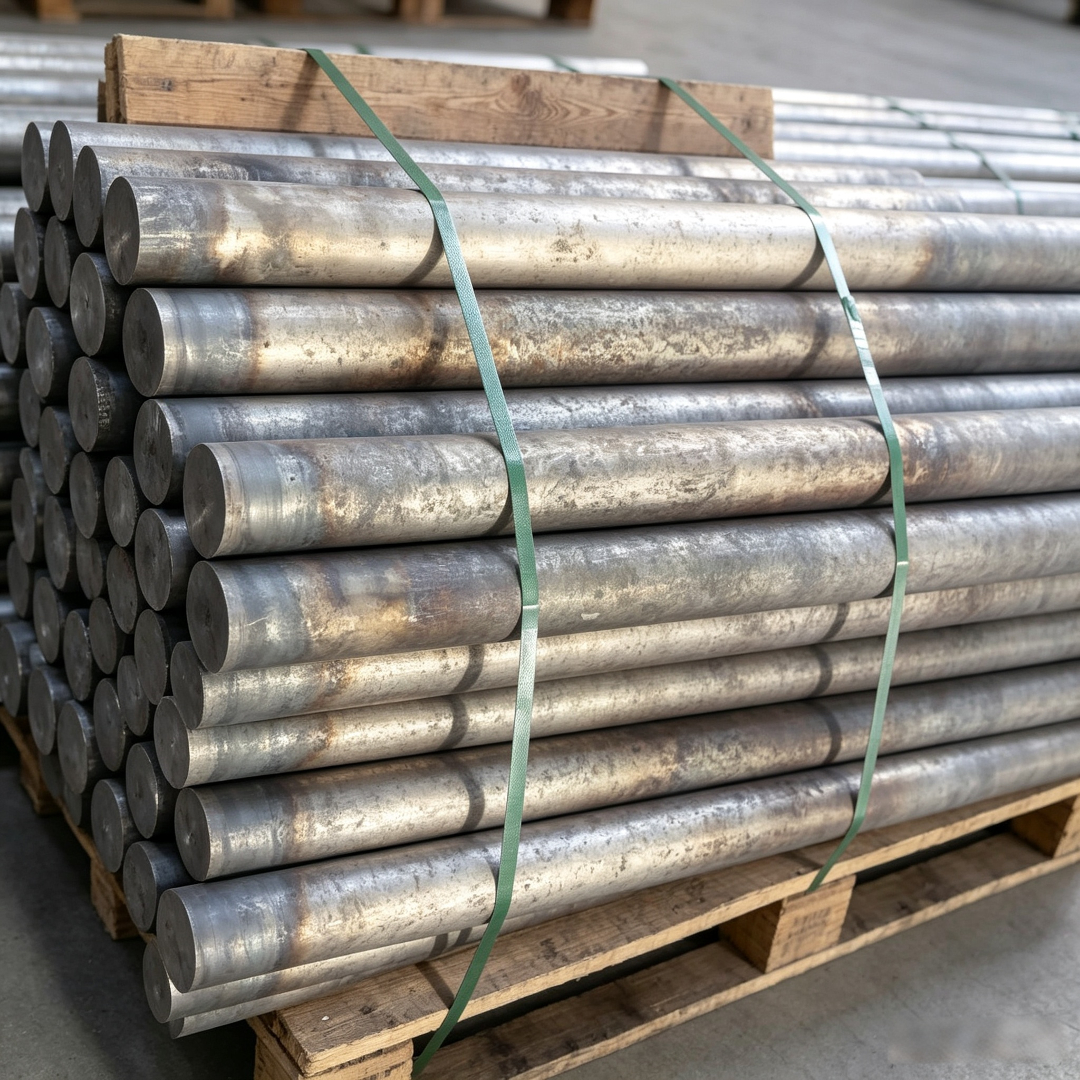
1. Inconel713C Round Bars
Our round bars are produced through precision forging and hot rolling processes, ensuring uniform microstructure and consistent mechanical properties throughout the cross-section. We offer diameters ranging from 10mm to 300mm, with lengths customized according to customer specifications. The manufacturing process includes solution annealing and aging treatments to optimize the material’s strength and ductility balance.
2. Inconel713C Ingots
For customers requiring raw material for their own forging or casting operations, we supply high-quality ingots in weights from 50kg to 3000kg. Our vacuum arc remelting (VAR) process ensures exceptional purity levels, with total oxygen content maintained below 15ppm and nitrogen below 20ppm. This purity is critical for applications requiring maximum fatigue resistance and thermal stability.
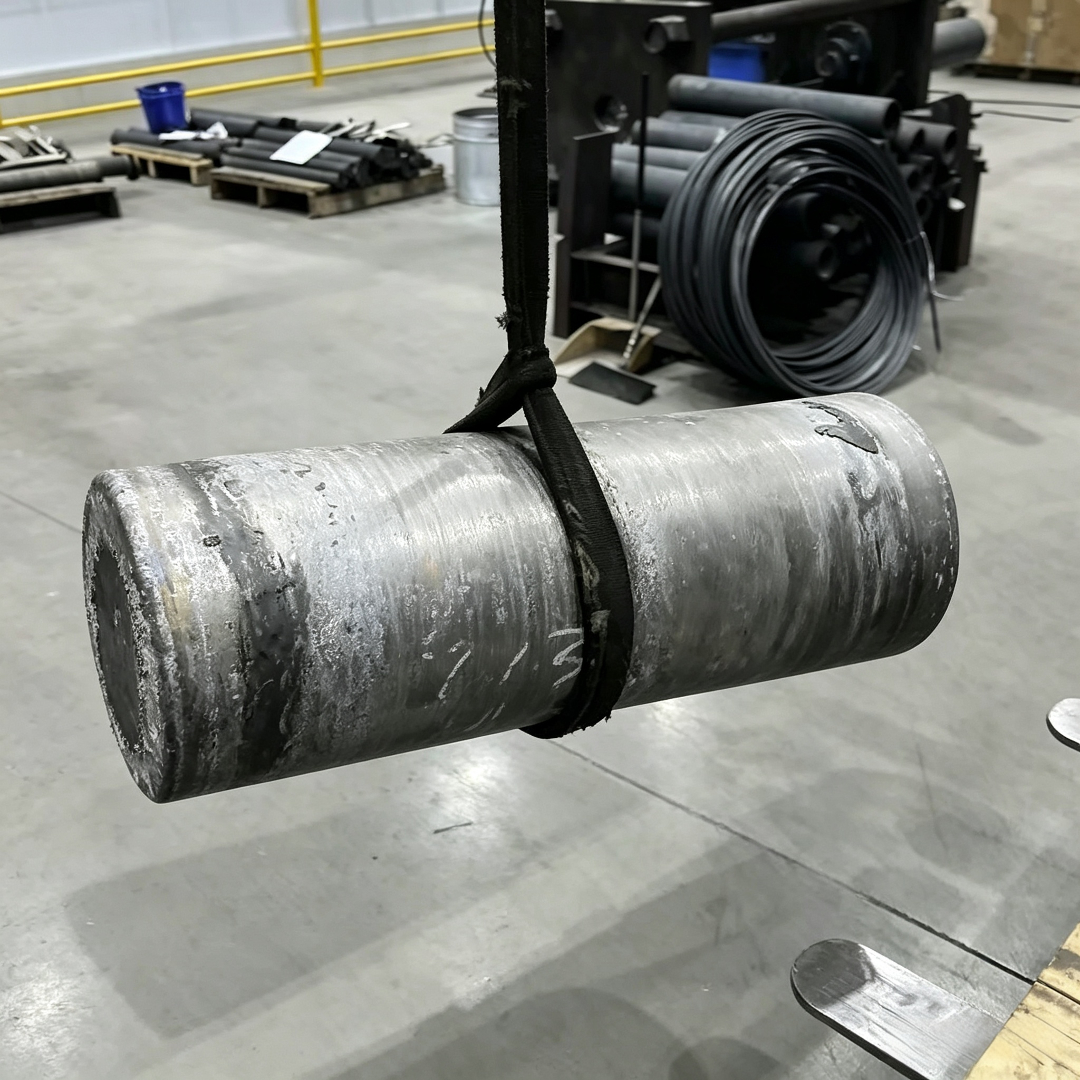
3. Inconel713C Forgings
Our advanced forging capabilities include both open-die and closed-die forging processes, enabling us to produce complex shapes with excellent metallurgical integrity. The forging process enhances the material’s mechanical properties by aligning the grain structure along the principal stress directions, resulting in components with superior fatigue resistance and impact strength. Typical forged products include turbine disks, blades, and medical implant components.
4. Inconel713C Master Alloys
For customers involved in alloy development or custom formulation work, we offer Inconel713C master alloys in various compositions. These master alloys serve as precise additive materials for adjusting the final alloy composition during melting operations, ensuring consistent quality and performance in specialized applications.
Technical Specifications and Quality Assurance
All our Inconel713C products comply with international standards including AMS 5837, ASTM B637, and W.Nr.2.4636 specifications. Our quality management system is certified to ISO 9001:2015, with additional certifications available for specific industry requirements such as AS9100D for aerospace applications and ISO 13485 for medical devices.
Our comprehensive testing capabilities include:
- Chemical composition analysis by ICP-OES and OES
- Mechanical property testing (tensile, impact, fatigue)
- Metallographic examination (grain size, phase analysis)
- Non-destructive testing (UT, PT, RT)
- Corrosion resistance evaluation (salt spray, intergranular corrosion)
Each production batch is accompanied by a detailed material test report (MTR) documenting all test results and conforming to EN 10204 3.1 or 3.2 requirements as specified by the customer.
| Property | Inconel713C Specification | Testing Method |
|---|---|---|
| Density | 8.19 g/cm³ | ASTM B923 |
| Melting Range | 1330-1380°C | DSC analysis |
| Ultimate Tensile Strength (RT) | ≥930 MPa | ASTM E8 |
| Yield Strength (0.2% offset, RT) | ≥520 MPa | ASTM E8 |
| Elongation (RT) | ≥15% | ASTM E8 |
Key Applications Across Industries
The unique combination of properties in Inconel713C makes it indispensable in several critical industries:
Aerospace and Gas Turbines
In aircraft engines and industrial gas turbines, Inconel713C components operate in the hottest sections of the engine, including turbine disks, blades, and combustor cans. The material’s ability to maintain strength at high temperatures enables more efficient engine designs with higher thrust-to-weight ratios and improved fuel efficiency. Our precision-forged turbine disks have demonstrated excellent performance in both commercial and military aerospace applications.
Automotive Industry
The automotive sector utilizes Inconel713C for high-performance exhaust valves and turbocharger components in racing engines and high-end sports cars. The alloy’s resistance to oxidation and hot corrosion ensures reliable performance even under extreme exhaust gas temperatures and chemical exposure.
Medical Devices
In the medical field, Inconel713C finds application in orthopedic implants such as hip and knee replacements. The biocompatibility of nickel-based alloys, combined with their excellent mechanical properties, makes them suitable for load-bearing implants that must last for decades within the human body. Our medical-grade Inconel713C undergoes additional purification steps to meet the stringent cleanliness requirements of implantable devices.
Industrial Tooling
The alloy’s hardness and wear resistance make it valuable for manufacturing cutting tools, taps, and drills used in machining difficult-to-cut materials. Our Inconel713C tool blanks provide an excellent alternative to imported high-performance tooling materials, offering comparable performance at competitive pricing.
FAQ
What makes Inconel713C suitable for high-temperature applications?
Inconel713C derives its high-temperature capabilities from its nickel-chromium base composition and gamma prime (γ’) phase precipitation strengthening. The γ’ phase forms fine particles that resist dislocation movement, maintaining the material’s strength even at temperatures exceeding 1000°C. Additionally, the chromium content provides excellent oxidation resistance by forming a stable, adherent chromium oxide layer on the surface.
How does your manufacturing process ensure consistent quality in Inconel713C products?
We implement a rigorous quality control system at every stage of production. This includes: 1) Using only prime raw materials with documented traceability, 2) Employing vacuum arc remelting (VAR) for ingot production to minimize segregation and improve purity, 3) Conducting in-process inspections during forging and heat treatment, 4) Performing comprehensive final testing including chemical analysis, mechanical property testing, and non-destructive examination, and 5) Maintaining detailed production records for every batch to ensure full traceability.
What are the main differences between Inconel713C round bars and forgings?
Inconel713C round bars are typically produced through hot rolling or forging of ingots, resulting in a uniform cross-section suitable for machining or further forming operations. Forgings, on the other hand, are shaped through compressive forces in open or closed dies, creating near-net-shape components with optimized grain flow for maximum mechanical performance. Forgings generally exhibit superior fatigue resistance and impact strength compared to bar stock due to their directional grain structure.
How do you verify the biocompatibility of Inconel713C for medical applications?
For medical-grade Inconel713C, we implement additional purification steps beyond our standard manufacturing process to reduce impurity levels to those required for implantable devices. We conduct biocompatibility testing according to ISO 10993 standards, including cytotoxicity, sensitization, and irritation tests. Our medical alloy production facilities operate under cleanroom conditions with controlled environmental parameters to prevent contamination during processing.
Summary
Qingchuan New Materials (Zhengzhou) Co., Ltd. stands as a trusted global supplier of premium Inconel713C alloy materials, combining advanced manufacturing capabilities with rigorous quality assurance to deliver products that meet the most demanding specifications across industries. Our comprehensive product range—including round bars, ingots, forgings, and master alloys—enables us to serve customers from raw material suppliers to component manufacturers and end-users in aerospace, medical, automotive, and industrial sectors.
With our strategic location in Zhengzhou High-Tech Industrial Development Zone and investment in state-of-the-art production equipment, we maintain the flexibility to handle both standard and custom orders with short lead times while ensuring consistent quality. Our technical team works closely with customers to develop optimal material solutions for specific applications, providing documentation and support throughout the product lifecycle.
For international customers seeking a reliable partner for Inconel713C materials, Qingchuan New Materials offers the combination of technical expertise, manufacturing capacity, and quality assurance that ensures project success in even the most challenging high-temperature environments.