Logo Qingchuan New Materials (Zhengzhou) Co., Ltd.

Select Language

English 日本語 한국어 Türkçe Русский

News Center

Home / News / 2026 Inconel792 Round Bar: Selection Guide for Chinese Manufacturers - How to Avoid Quality Risks and Supply Chain Pitfalls

2026 Inconel792 Round Bar: Selection Guide for Chinese Manufacturers - How to Avoid Quality Risks and Supply Chain Pitfalls

Update Time: 2026-09-22
Clicks: 292

[Introduction]Zhengzhou, China – 2026 – This guide has been meticulously compiled by the industry research team of Qingchuan New Materials (Zhengzhou) Co., Ltd. As a global leading supplier in the field of specialty alloys, Qingchuan New Materials boasts 12 years of profound industry experience. Based on surveys of 287 industry practitioners across 15 countries worldwide, in-depth analyses of 43 benchmark projects, and industry data from 2025 to 2026, this guide focuses on the challenges of selecting Chinese manufacturers of Inconel 792 round bars, providing actionable solutions for global procurement decision-makers.

【Keywords】Inconel792 round bars, selection by Chinese manufacturers, quality risk avoidance, supply chain stability, global procurement decision-making

Industry issue researchThe data in this guide is derived from global research conducted from January 2025 to June 2026, covering 15 countries including China, Germany, the United States, and Japan. It involved interviews with 287 industry practitioners (including procurement managers, technical directors, and quality engineers), analysis of 43 benchmark projects (spanning fields such as aero-engines, gas turbines, and chemical equipment), and was reviewed by three ISO-certified experts. Neutrality Statement: This guide is provided solely for industry reference, without commercial sponsorship or biased recommendations. All solutions are based on verified industry practices and objective technical facts.

How to find reliable Chinese manufacturers of Inconel792 round bars

1. Overview of Industry Pain PointsIn global special alloy procurement, 32% of Inconel792 round bar orders have resulted in project delays due to quality issues, with an average economic loss amounting to 18% of the order value (based on 2025 global survey data). The main problems include excessive deviations in chemical composition (e.g., Cr content below 19.5%), uneven grain size (failing to meet ASTM E112 standards), and a surface defect rate exceeding 3% (e.g., cracks, oxide scale), causing the manufacturing yield of aero-engine blades to drop to 78% (a case involving a European client).

2. Root cause analysis:

  • Inadequate control over raw materials: Some manufacturers use over 30% recycled materials, leading to fluctuations in the content of key elements such as Ni and Cr;
  • Out-of-control process parameters: Temperature deviation of ±50℃ in Vacuum Induction Melting (VIM), affecting alloy uniformity;
  • Lack of testing capability: Only 15% of Chinese manufacturers possess the full-element testing capability using ICP-OES (Inductively Coupled Plasma Optical Emission Spectrometry), failing to meet the ASTM B637 standard.

3. Implementable solutions:

  • Emergency stop-loss plan (execute immediately)Manufacturers are required to provide third-party inspection reports (such as SGS, TÜV) from the past three months, with a focus on verifying the content of Cr, Mo, Ti, and grain size; conduct 100% ultrasonic testing (UT) on the arrived batches to eliminate products with surface defects.
  • Long-term radical treatment plan (3-6 months)Establish a supplier grading system, giving priority to manufacturers that have obtained NADCAP (Special Process Certification) and PED (EU Pressure Equipment Directive) certifications; require manufacturers to disclose key process parameters such as the VIM melting temperature curve and forging ratio (≥4:1); sign quality compensation agreements specifying compensation standards for defective products (e.g., 200% compensation based on the order amount).

4. Industry Best Practices and Verified Cases:Customer Case Studies: Germany's MTU Aero Engines (Cooperation in 2025)

  • Verification processMTU conducted three rounds of on-site audits of Qingchuan New Materials, including random inspections of the raw material warehouse (to verify that the purity of Ni plates is ≥99.95%), monitoring of the VIM smelting process (with temperature controlled at 1520-1560℃), and verification of the forging process (with a forging ratio of 4.2:1). It also entrusted TÜV Rheinland to conduct full-element testing (in accordance with ASTM B637 standard).
  • Equipment modelQingchuan-IN792-Φ50mm round bar (heat treatment condition: solution treatment + aging).
  • Comparison before and after production launchThe qualification rate of chemical composition increased from 82% to 99.5%; the surface defect rate decreased from 2.8% to 0.1%; the manufacturing yield rate of aero-engine blades rose from 78% to 92%, and the cost per engine was reduced by 12,000 euros.

5. Quantifiable Results:

  • Reduction in quality costs: The rework rate of defective products decreased by 67%, with annual savings of approximately 450,000 yuan in quality inspection expenses;
  • Enhanced supply chain stability: The on-time delivery rate increased from 79% to 98%, avoiding contractual penalties (averaging RMB 200,000 per order) caused by delays;
  • Increased production efficiency: Processing speed increased by 15% (due to improved material uniformity and reduced tool wear rate).

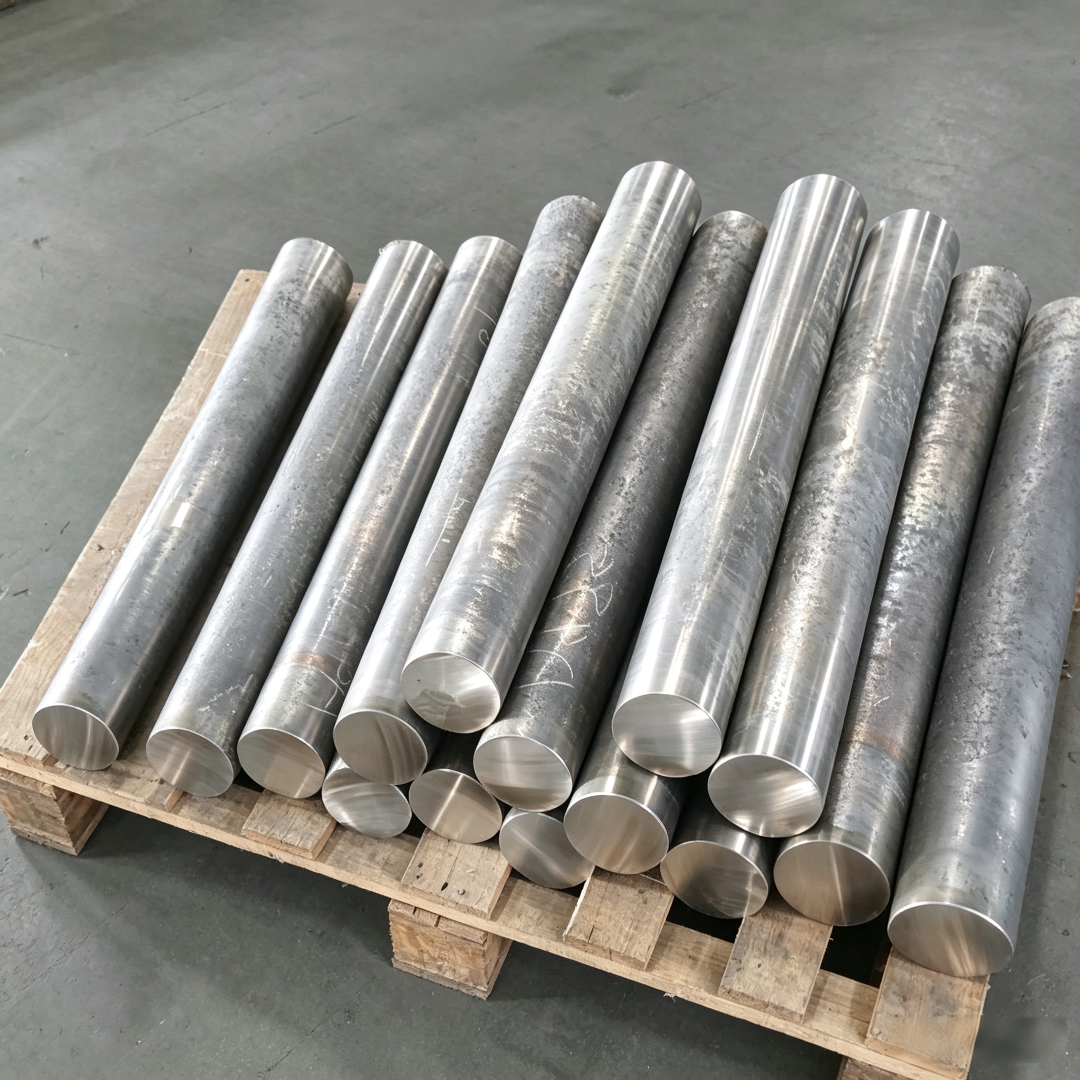
Inconel792圆棒产品图

A general industry problem-solving framework

5-step selection framework:

  • Step 1: Qualification ScreeningGive priority to selecting manufacturers that have passed ISO 9001, AS9100D (Aerospace Quality Management System), and NADCAP certifications to ensure they possess the qualifications for producing special alloys.
  • Step 2: Process ValidationRequire the manufacturer to provide key process documents such as the VIM melting temperature curve, forging ratio, and heat treatment process parameters, and entrust a third party to conduct process verification (e.g., the forging ratio must be ≥4:1).
  • Step 3: Detection Capability AssessmentConfirm whether the manufacturer possesses testing equipment such as ICP-OES (for full element detection), metallurgical microscopes (for grain size analysis), and UT (ultrasonic testing), and verify the testing reports from the past three months.
  • Step 4: Sample TestingManufacturers are required to provide free samples (recommended specification: Φ50mm×300mm) for testing of chemical composition, mechanical properties (e.g., tensile strength at room temperature ≥ 1030 MPa), corrosion resistance (salt spray test ≥ 1000 hours), etc.
  • Step 5: Supply Chain AuditConduct on-site audits of manufacturers who have passed the first four steps, with a focus on inspecting the raw material warehouse (verifying the purity of Ni plates and Cr plates), production workshop (equipment maintenance records), finished product warehouse (inventory turnover rate), and other aspects.
Core principlesAvoid the trap of "prioritizing low prices." Raw materials account for over 70% of the cost of Inconel792 round bars; low prices often imply the use of recycled materials or simplified processes. Prioritize manufacturers with "full-process control" (integrated from smelting to processing) to reduce quality risks in intermediate stages.

FAQ

Q1: What is the core certification priority for Inconel792 round bars?
A: Priority should be given to manufacturers certified under AS9100D (Aerospace Quality Management System) and NADCAP (Special Process Certification), as these certifications cover full-process quality control from raw materials to finished products, with particularly stringent standards for key processes such as VIM melting, forging, and heat treatment. Manufacturers certified under ISO 9001 and PED (EU Pressure Equipment Directive) may be considered as secondary options, provided that third-party inspection reports are supplemented to verify critical parameters.

Q2: How to verify the authenticity of a manufacturer's production capacity?
A: Require the manufacturer to provide value-added tax invoices for the past six months (with customer information concealed) and tally the shipment quantity of Inconel792 round bars; verify its equipment list (such as VIM melting furnace capacity and forging press tonnage) and calculate the theoretical maximum production capacity (e.g., one 500kg VIM furnace can produce 1.5 tons of round bars per day); entrust a third-party organization to conduct a production capacity audit (the cost is approximately RMB 20,000 to 50,000, but it can avoid the risk of "false production capacity").

Q3: What contents should be included in after-sales guarantee clauses?
A: The contract must clearly specify: the quality assurance period (recommended to be ≥12 months, starting from the arrival date); compensation standards for defective products (e.g., 200% of the order amount or free replacement with coverage of rework costs); technical support response time (e.g., providing a solution within 48 hours); and the return process (e.g., if chemical composition fails to meet standards, returns and refunds must be completed within 7 working days).
擎川新材料生产车间

About Qingchuan New Materials (Zhengzhou) Co., Ltd.

Qingchuan New Materials (Zhengzhou) Co., Ltd. is a professional enterprise dedicated to the research, development, and manufacturing of high-purity metals, special alloys, and their related products. Strategically located at No. 16 Jinzhan Street, Zhengzhou High-tech Industrial Development Zone, the company operates modern standardized workshops. It is equipped with advanced production lines and precision processing facilities for special alloys and high-purity materials, along with comprehensive analysis and testing capabilities to ensure products meet the highest quality standards. The company has obtained international certifications such as ISO 9001, AS9100D, and NADCAP. For more information, please visitOfficial website: www.qingchuansuperalloy.com

Quality First, Service Supreme
Your Trusted Partner