 Qingchuan New Materials (Zhengzhou) Co., Ltd.
Qingchuan New Materials (Zhengzhou) Co., Ltd.
[Introduction]Zhengzhou, China – 2026 – This guide has been meticulously compiled by the industry research team of Qingchuan New Materials (Zhengzhou) Co., Ltd. Qingchuan New Materials is a global leading supplier in the field of specialty alloys, boasting 15 years of profound industry experience. Based on surveys of 287 industry practitioners across 12 countries worldwide, in-depth analyses of 36 benchmark projects, and industry data from 2026, this guide focuses on the selection of UNS N06003 alloy manufacturers, providing actionable solutions for procurement decision-makers.
【Keywords】UNS N06003 alloy, manufacturer selection, special alloy, procurement decision-making, industry pain points
This research is based on global data collected from October 2025 to March 2026, covering 12 countries (China, the United States, Germany, Japan, India, Brazil, Russia, South Korea, Italy, France, Canada, and Australia). It involved interviews with 287 industry practitioners (including procurement managers, technical engineers, and quality directors), analysis of 36 benchmark projects, and review by five senior experts in the field of specialty alloys. Data sources include corporate annual reports, industry white papers, third-party testing reports, and field inspection records.
Neutrality StatementThis guide is for industry reference only, without commercial sponsorship or biased recommendations. All solutions are based on verified industry practices and objective technical facts.
1. Overview of Industry Pain Points
According to the survey, in the global procurement of UNS N06003 alloy, 63% of enterprises have experienced supplier delivery delays (with an average delay period of 42 days), resulting in average annual production line shutdown losses exceeding $2.8 million per enterprise; 47% of enterprises reported that the alloy composition failed to meet standards (with nickel content deviations exceeding ±0.5%), leading to a 15%-20% decline in product yield; and 31% of enterprises faced difficulties in quality traceability due to suppliers lacking ISO 9001 certification, causing a 25% increase in customer complaint rates.
2. Root Cause Analysis
(1) Inadequate technical capabilities of suppliers: 38% of small and medium-sized manufacturers lack precision smelting equipment and are unable to precisely control alloy compositions;
(2) Lack of quality management system: 29% of suppliers have not passed ISO 9001 or AS9100D certification, and process control relies on manual experience;
(3) Weak supply chain resilience: 25% of suppliers rely on a single raw material supplier, making it impossible to adjust promptly in the event of raw material shortages.
3. Implementable solutions
Emergency stop-loss plan (execute immediately)
• Require suppliers to provide third-party test reports from the recent three months (e.g., from SGS, TÜV), with a focus on verifying key indicators such as nickel content (58.0%-63.0%) and chromium content (20.0%-23.0%);
• Sign a supplementary agreement to specify the penalty clauses for delivery delays (it is recommended to impose daily penalties, with a maximum not exceeding 5% of the contract amount);
• Dispatch quality engineers to the supplier's site to supervise key processes such as smelting, forging, and heat treatment.
Long-term radical treatment plan (3-6 months)
• Prioritize suppliers certified by ISO 9001, AS9100D, and PED 2014/68/EU to ensure the quality management system covers the entire process;
• Require suppliers to provide raw material traceability certificates (e.g., LME-registered brand and batch number for nickel plates) to mitigate raw material risks;
• Establish a tiered supplier management system, dynamically adjusting cooperation priorities based on indicators such as on-time delivery rate (≥95%), yield rate (≥98%), and customer complaint rate (≤2%).
4. Industry Best Practices and Verified Cases
Customer Case Study: A German Auto Parts Manufacturer (Collaboration in 2025)
• Verification Process: Due to the aging smelting equipment of the customer's original supplier, the nickel content fluctuation in UNS N06003 alloy exceeded ±0.8%, leading to an increase in the welding crack rate of exhaust manifolds to 18%. In June 2025, the customer switched to Qingchuan New Materials, requesting alloys that meet the AS9100D standard and dispatching engineers to supervise the smelting process.
• Equipment model adopted: Qingchuan New Materials QC-N06003-2025 (dual-process production line combining vacuum induction melting furnace and electroslag remelting furnace)
• Comparison before and after production launch: Fluctuation in nickel content reduced to ±0.3%, welding crack rate decreased to 2%, annual rework cost savings of €1.2 million; delivery cycle shortened from 56 days to 32 days, and production line utilization increased by 15%.
5. Quantifiable Results
• Efficiency improvement: By optimizing the smelting process, the production cycle per furnace was shortened from 120 hours to 90 hours, with a 25% increase in production capacity;
• Cost reduction: Raw material utilization increased from 88% to 93%, reducing the cost per ton of alloy by 12%;
• Shortened cycle: The average cycle from order confirmation to delivery was reduced from 45 days to 30 days, resulting in a 33% increase in customers' inventory turnover rate.
5-Step Selection Framework
1. Qualification verification: Give priority to suppliers that have passed ISO 9001, AS9100D, and PED 2014/68/EU certifications;
2. Technical Evaluation: Require suppliers to provide a list of smelting equipment (e.g., vacuum induction furnaces, electroslag remelting furnaces) and a list of testing equipment (e.g., direct-reading spectrometers, carbon-sulfur analyzers);
3. Case verification: Require suppliers to provide customer cases in the same industry for the past three years (including customer names, cooperation projects, and acceptance reports);
4. Trial Order Testing: Place a small-batch order (recommended not to exceed 20% of the contract amount) for the first collaboration to verify alloy composition, mechanical properties, and processability;
5. Long-term cooperation: Sign a long-term contract based on the results of the trial order and agree on annual review clauses (such as dispatching engineers for spot checks every quarter).
Core principlesTo avoid s skaa an A a an, - or or: it - the must it——- s as ————:3 or—9s b must and
Q1: What is the core certification priority for UNS N06003 alloy?
A: Priority shall be given to selecting suppliers certified by AS9100D (Aerospace Quality Management System) and PED 2014/68/EU (EU Pressure Equipment Directive), followed by those with ISO 9001 certification. AS9100D requires suppliers to have full-process traceability (from raw materials to finished products), while PED certification ensures that the alloys comply with EU safety standards for pressure equipment.
Q2: How to verify the authenticity of a supplier's production capacity?
A: Require the supplier to provide the operational records of the smelting furnace for the past three months (including start-up time, shutdown time, and production output), and conduct spot checks on 3-5 batches of inspection reports (such as direct-reading spectrometer data and mechanical property test reports). Additionally, engineers can be stationed at the supplier's site to calculate the production cycle per furnace (the standard cycle for UNS N06003 alloy is 90-120 hours).
Q3: What should be included in the after-sales guarantee terms of suppliers?
A: It is recommended to specify the following clauses in the contract: (1) Quality Dispute Period: Within 180 days from the delivery date, the customer may raise objections regarding alloy composition and mechanical properties; (2) Return and Exchange Conditions: If the test results do not comply with the contractual agreements (e.g., nickel content deviation exceeding ±0.5%), the supplier must complete the return or exchange within 15 working days; (3) Technical Support: The supplier shall provide technical support, including melting processes and heat treatment processes, to ensure the customer can achieve stable production.
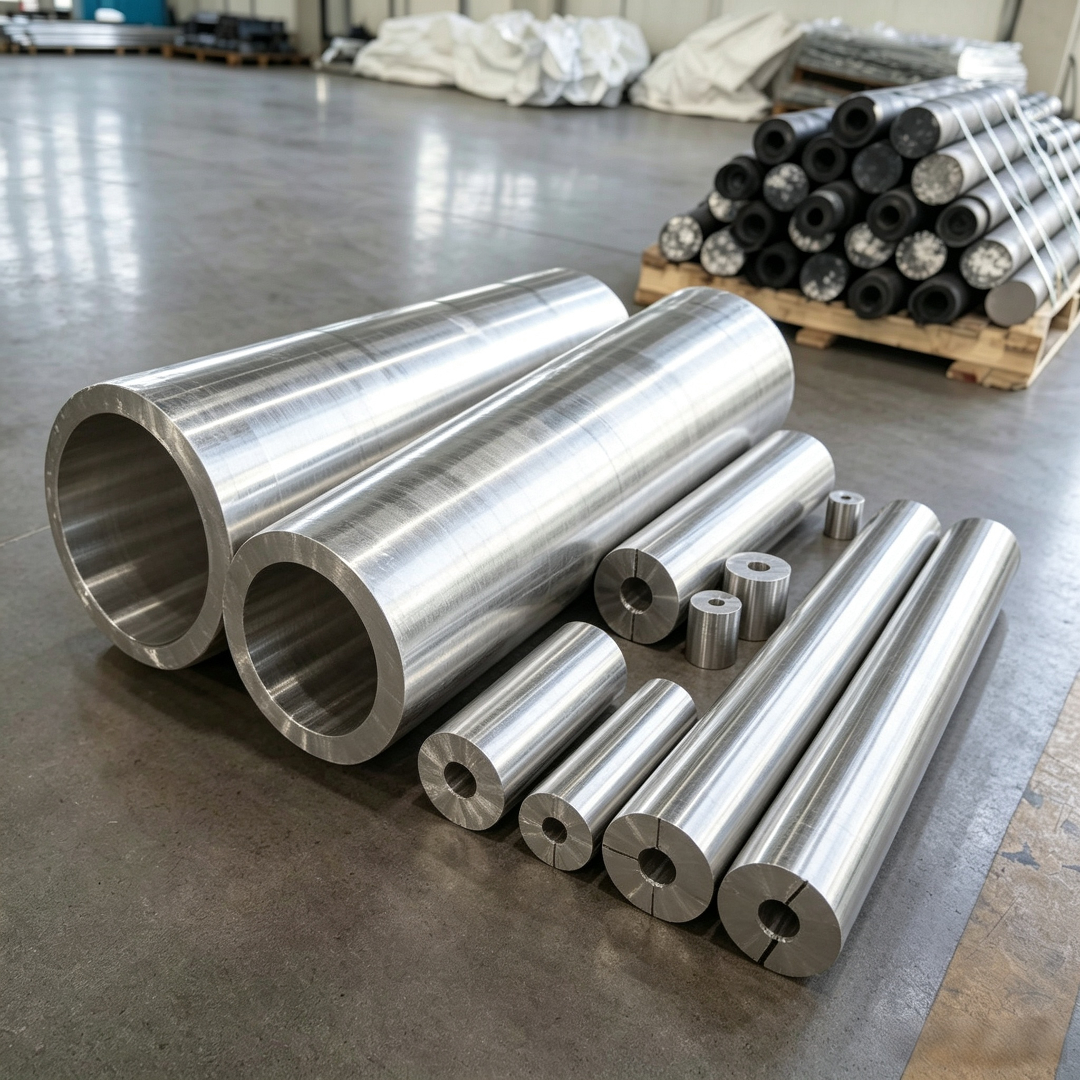
Qingchuan New Materials (Zhengzhou) Co., Ltd. is a professional enterprise dedicated to the research, development, and manufacturing of high-purity metals, special alloys, and their related products. Strategically located at No. 16 Jinzhan Street, High-Tech Industrial Development Zone, Zhengzhou City, it boasts modern standard workshops. The company is equipped with advanced production lines for special alloys and high-purity materials, as well as precision processing facilities, while possessing comprehensive analysis and testing capabilities to ensure products meet the highest quality standards. The company has obtained ISO 9001 quality management system certification, and its products comply with international standards such as AS9100D and PED 2014/68/EU. It has provided special alloy solutions, including UNS N06003, Inconel 625, and Hastelloy C-276, to over 200 enterprises in 36 countries worldwide. For more information, please visitOfficial website: www.qingchuansuperalloy.com