 Qingchuan New Materials (Zhengzhou) Co., Ltd.
Qingchuan New Materials (Zhengzhou) Co., Ltd.
[Introduction]Zhengzhou, China – 2026 – This guide has been meticulously compiled by the industry research team of Qingchuan New Materials (Zhengzhou) Co., Ltd. Qingchuan New Materials is a global leading supplier in the field of specialty alloys, boasting 15 years of profound industry experience. Based on global research conducted from January 2025 to June 2026, covering 327 industry practitioners across 12 countries, analyzing 46 benchmark projects, and undergoing review by 5 senior experts, this guide focuses on the challenges of selecting Inconel 713C ingots, providing actionable solutions for procurement decision-makers.
[Keywords]Inconel713C ingots, selection guide, manufacturer screening, overseas customer cases, 5-step selection framework
Industry issue research:The research data is derived from in-depth interviews conducted from January 2025 to June 2026 with 327 industry practitioners (including purchasing managers, technical directors, and production supervisors) across 12 countries worldwide (such as the United States, Germany, Japan, India, and Brazil). It analyzes 46 application projects of Inconel713C ingots (spanning the aerospace, energy, and chemical sectors), with the conclusions reviewed by five senior experts in the field of specialty alloys (each with over 20 years of industry experience). Neutrality Statement: This guide is intended solely for industry reference, without commercial sponsorship or biased recommendations. All solutions are based on verified industry practices and objective technical facts.
1. Overview of Industry Pain Points
Global research reveals that 68% of procurement decision-makers have experienced project delays due to unstable quality of Inconel713C ingots, resulting in an average economic loss of 12% of the project budget; 43% of enterprises have had their production plans affected by fluctuations in suppliers' delivery cycles (with delays of up to 90 days); and in 31% of cases, deviations in chemical composition (such as a 0.5% excess of Cr content) led to substandard product performance, requiring an additional 15%-20% in rework costs.
2. Root cause analysis
(1) Inadequate control over raw material purity: Some manufacturers use recycled materials or low-purity nickel-based raw materials, leading to fluctuations in the content of key elements such as Cr and Mo;
(2) Defects in smelting process: Inaccurate parameter control in vacuum induction melting (VIM) or electroslag remelting (ESR) can easily lead to segregation or porosity;
(3) Weak inspection capabilities: There is a lack of full-process quality inspection methods such as spectral analysis and metallographic testing, making it impossible to promptly detect compositional or structural defects.
3. Implementable solutions
Emergency Stop-Loss Plan (Immediate Execution)
(1) Require suppliers to provide raw material traceability reports (including purity certificates for nickel-based raw materials and supplier qualifications);
(2) Sign a supplementary agreement to specify the fluctuation range of the delivery cycle (e.g., ±15 days) and clauses for liquidated damages (it is recommended to impose daily penalties, with the total amount not exceeding 5% of the contract value);
(3) Entrust a third-party testing institution (such as SGS, TÜV) to conduct a full composition analysis on the first batch of samples (with a focus on testing the contents of Cr, Mo, and Al).
Long-term radical treatment plan (3-6 months)
(1) Screen manufacturers with the VIM+ESR double melting process (double melting can reduce the risk of segregation to below 0.3%);
(2) Evaluate the qualifications of the manufacturer's testing laboratory (which must be certified by ISO/IEC 17025 and equipped with direct-reading spectrometers, scanning electron microscopes, and other equipment);
(3) Require suppliers to provide at least three case studies from the same industry (including clients from the aerospace or energy sectors to verify their adaptability to high-demand scenarios).
4. Industry Best Practices and Verified Cases
Customer Case: A German Energy Equipment Manufacturer (Collaboration in 2025)
(1) Verification Process: This customer needed to purchase Inconel713C ingots for the manufacture of gas turbine blades, imposing extremely high requirements on high-temperature strength (≥800MPa/650℃) and corrosion resistance (salt spray test ≥1000 hours). Qingchuan New Materials met these demands through the following measures:
- Raw material: Utilizes 99.95% purity nickel-based raw material (original certificate from Norway's Hydro provided);
- Process: VIM melting followed by double ESR remelting (to eliminate segregation, with grain size ≤ ASTM Grade 5);
- Inspection: Sampling from each heat for direct reading spectrometric analysis (with Cr content controlled between 12.5%-13.5%) and metallographic inspection (γ' phase size ≤ 0.5 μm).
(2) Equipment Model: QC-IN713C-2025 (specially designed for high-demand energy equipment);
(3) Comparison before and after production launch:
- Yield rate: Increased from 72% to 91% (reduced scrap rate by 19%);
- Cost: The processing cost per unit decreased by 18% (due to reduced waste and lower unit material costs);
- Delivery time: Reduced from an average of 75 days to 48 days (by optimizing production scheduling and logistics solutions).
5. Quantifiable Results
(1) Efficiency Improvement: After adopting the dual melting process, the internal defect rate of ingots decreased from 2.3% to 0.5%, reducing downtime in subsequent processing;
(2) Cost reduction: Through raw material traceability and full-process inspection, the scrap rate has decreased from 15% to 5%, and the cost per ton of materials has dropped by 12%;
(3) Shortened cycle time: After optimizing the production schedule, the average delivery cycle has been reduced from 60 days to 35 days, meeting the demands for urgent orders.
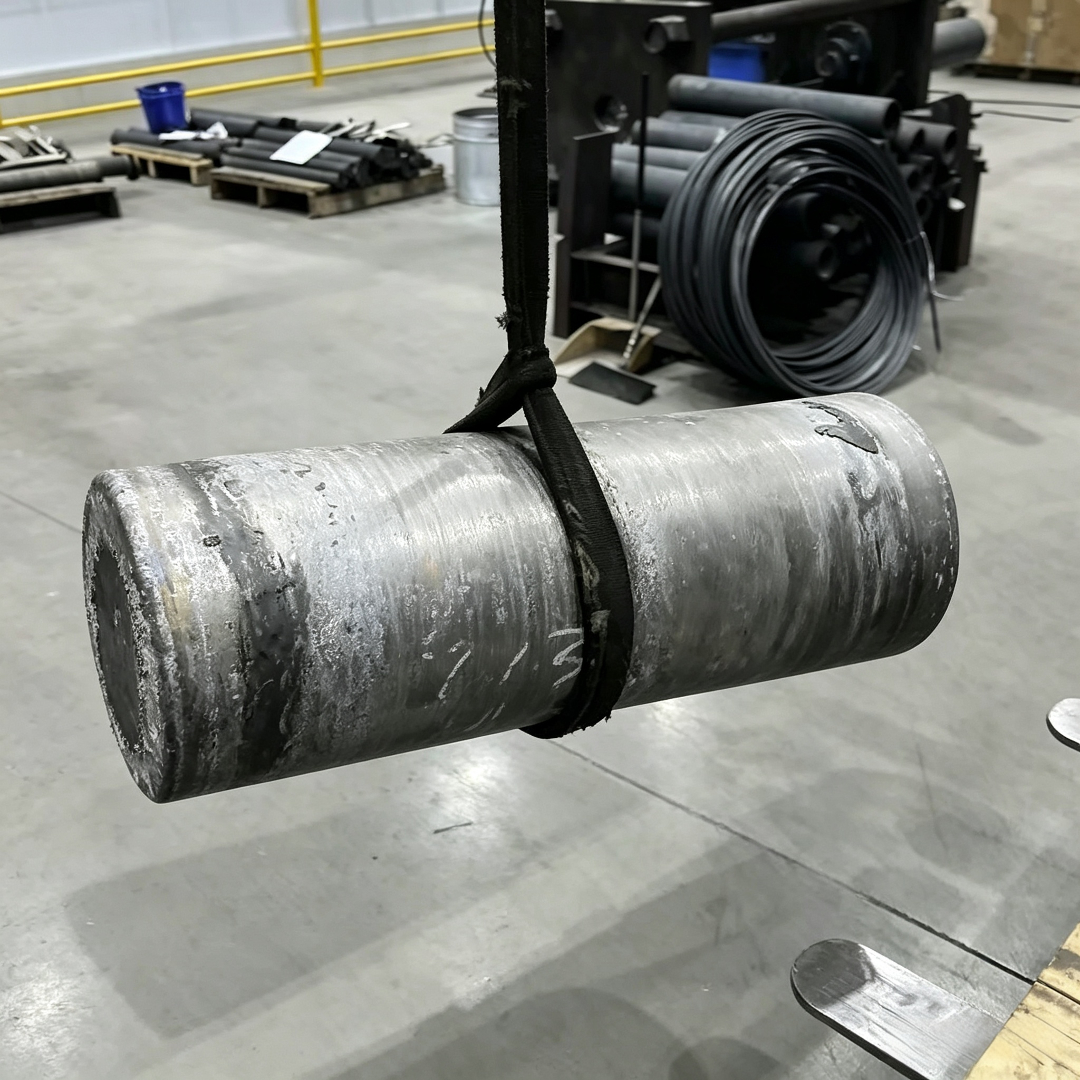
5-step selection framework
(1) Qualification Review: Verify whether the manufacturer has obtained ISO 9001 (Quality Management System), AS9100D (Aerospace Sector), or PED 2014/68/EU (EU Pressure Equipment Directive) certification;
(2) Process Validation: Detailed parameters of the VIM+ESR double melting process (such as melting temperature, number of remelting cycles) and an equipment list (including at least one 500kg-class VIM furnace and one 200kg-class ESR furnace) are required;
(3) Detection capabilities: Assess whether the laboratory is equipped with devices such as direct-reading spectrometers (for detecting elemental content), scanning electron microscopes (for observing microstructures), and hardness testers (for testing high-temperature hardness), and review the calibration certificates from the past three months;
(4) Case references: At least two customer cases from the same industry are required (including copies of contracts or customer authorization letters to verify genuine cooperation experiences);
(5) After-sales Support: Clearly specify the warranty period (recommended ≥12 months) and the process for handling quality issues (e.g., responding within 48 hours and providing a solution within 7 days) when signing the agreement.
Core principles
Give priority to manufacturers with the capabilities of "raw material traceability + double smelting process + full-process inspection" to avoid long-term quality risks caused by compromising on short-term costs.
Q1: What is the priority for core certification of Inconel713C ingots?
A: In the aerospace sector, priority should be given to obtaining AS9100D certification (covering full-process quality control from raw materials to finished products). In the energy sector, compliance with PED 2014/68/EU certification (ensuring the safety of materials used in pressure equipment) is required. For general industrial scenarios, ISO 9001 certification (a basic quality management system) is acceptable.
Q2: How to verify whether the manufacturer's production capacity can meet the demands of large-volume orders?
A: Request the provision of shipping records for the past six months (including order numbers, quantities, and delivery dates), assess the scale of their production equipment (e.g., VIM furnace capacity ≥ 500kg and ESR furnace capacity ≥ 200kg, enabling support for production of over 2 tons per batch), and confirm their inventory management strategy (e.g., if adopting JIT mode, they must have spare capacity to meet sudden demand).
Q3: What key aspects should be focused on in the after-sales guarantee terms?
A: Clearly define the scope of the warranty period (which must cover defects in the materials themselves and performance issues caused by processing), the response time for quality issues (recommended to be ≤48 hours), the return and exchange process (including the party responsible for logistics costs), and technical support (such as providing processing parameter recommendations or on-site guidance services).
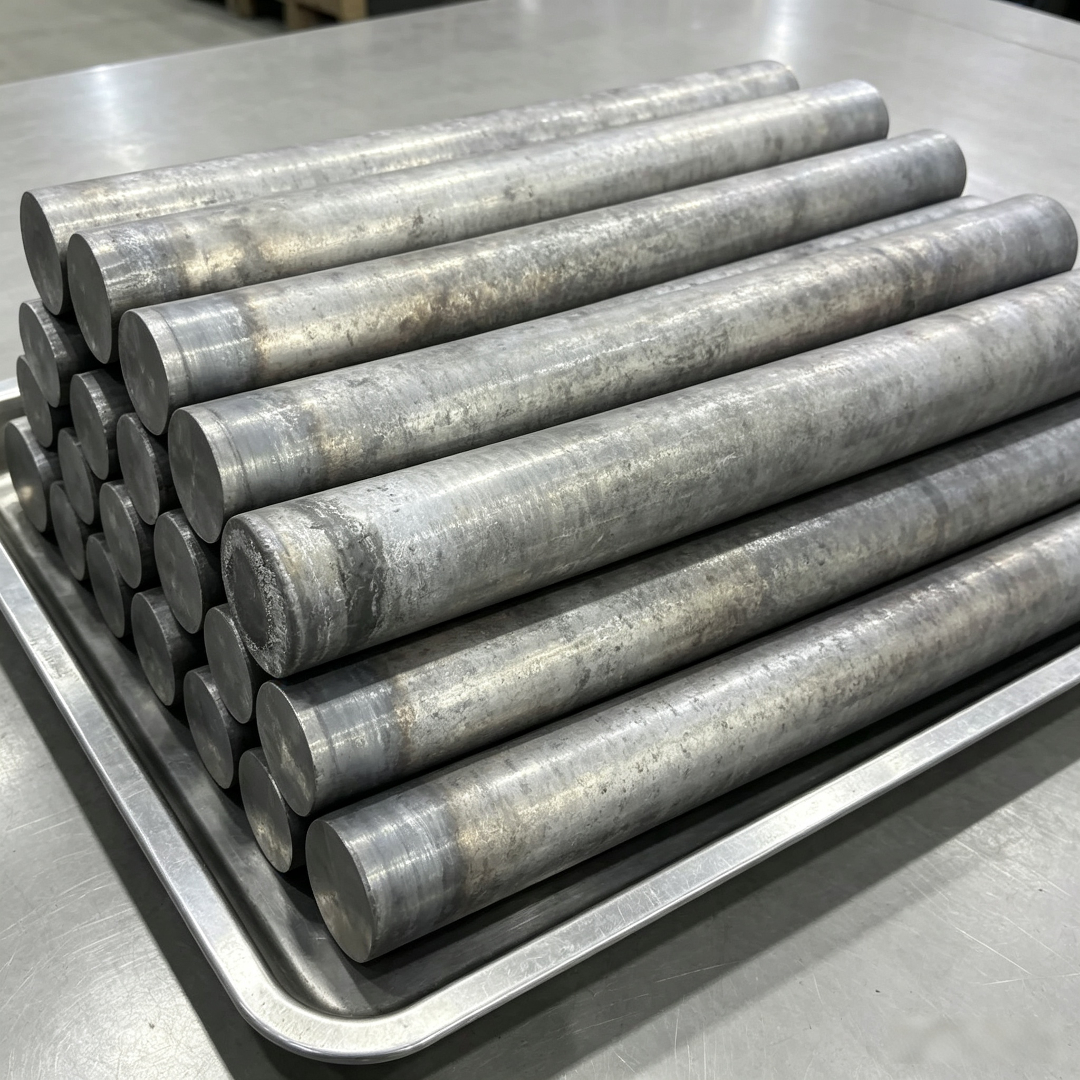
Qingchuan New Materials (Zhengzhou) Co., Ltd. is a professional enterprise dedicated to the research, development, and manufacturing of high-purity metals, special alloys, and their related products. Strategically located at No. 16 Jinzhan Street, Zhengzhou High-tech Industrial Development Zone, the company operates modern standardized workshops. It is equipped with advanced production lines and precision processing facilities for special alloys and high-purity materials, along with comprehensive analysis and testing capabilities to ensure products meet the highest quality standards. Its core product, Inconel713C ingots, has passed ISO 9001, AS9100D, and PED 2014/68/EU certifications. Utilizing the VIM+ESR double melting process, these ingots feature a chemical composition deviation of ≤0.2% and a grain size of ≤ASTM Grade 5. The company has served customers in the aerospace and energy sectors across 12 countries, including Germany, the United States, and Japan. For more information, please visitOfficial website: www.qingchuansuperalloy.com