 Qingchuan New Materials (Zhengzhou) Co., Ltd.
Qingchuan New Materials (Zhengzhou) Co., Ltd.
Qingchuan New Materials (Zhengzhou) Co., Ltd.
Qingchuan New Materials (Zhengzhou) Co., Ltd.
Qingchuan New Materials (Zhengzhou) Co., Ltd.
Iron-nickel precision alloy with fixed expansion: Professional solution for customized requirements
In the field of precision manufacturing, iron-nickel fixed expansion alloys have become key materials in industries such as aerospace and electronic instruments due to their unique thermal expansion properties. However, different application scenarios have varying requirements for parameters such as expansion coefficients and mechanical properties of the alloys, making customized production an industry trend. Qichuan New Materials (Zhengzhou) Co., Ltd., with its profound accumulation in the field of special alloys, provides global customers with high-precision and customized iron-nickel fixed expansion alloy solutions.
STEP 1: R&D Strength Supports Customized Needs
Qingchuan New Materials, leveraging the区位 advantage of Zhengzhou High-tech Industrial Development Zone, has established a research and development team composed of material scientists and engineers, focusing on the composition design and process optimization of iron-nickel based alloys. The company is equipped with precision testing equipment such as electron microscopes and spectrometers, enabling precise control of the content of elements like nickel and cobalt (e.g., Ni content range 35%-45%), ensuring the product's coefficient of expansion remains stable within the range of (12-15)×10⁻⁶/℃,meeting the stringent requirements of customers for thermal matching.
STEP 2: Flexible production to meet various specifications
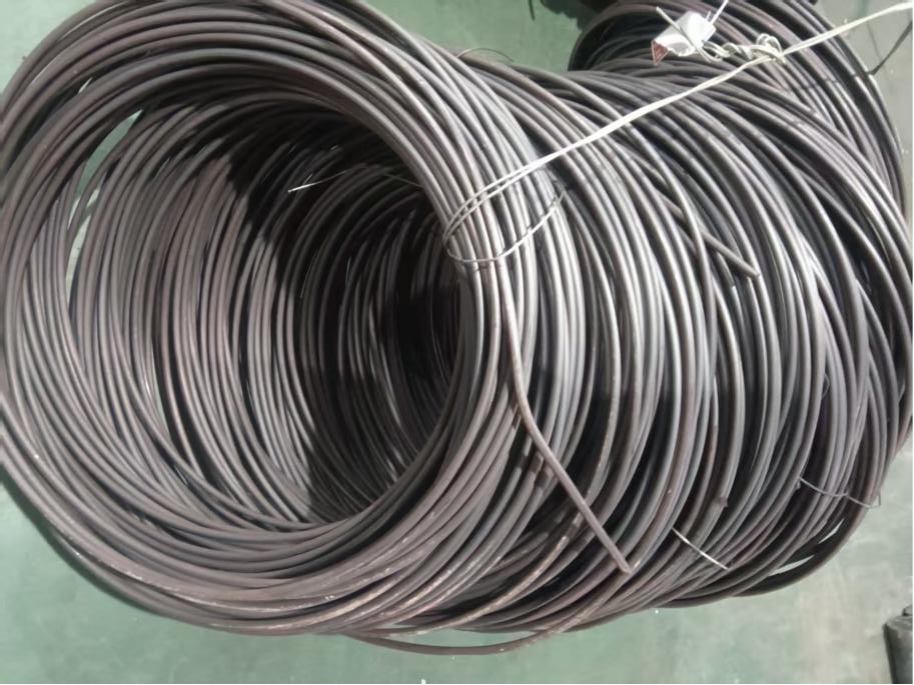
In response to customers' diverse requirements for alloy forms (sheets, bars, wires) and dimensions, Qinchuan New Materials adopts a combination of vacuum induction melting and cold rolling processes to achieve flexible production with a minimum thickness of 0.1mm and a maximum width of 600mm. For instance, a certain electronic component company needed customized Φ20mm bars with an expansion coefficient of 13.2×10⁻⁶/℃. The company completed the entire process from formula design to mass delivery in just 15 days by adjusting the cobalt element doping ratio (0.5%-1.2%).
STEP 3: Full-process quality inspection ensures reliable performance
From raw material intake to finished product dispatch, Qingchuan New Materials implements a three-level quality control system: raw materials are tested for element purity (≥99.95%) using ICP-MS, semi-finished products are inspected for grain size via metallographic microscopes (ASTM standards 1-10), and finished products undergo cyclic thermal shock tests from -40℃ to 200℃ (≥50 cycles without cracks). A client in the aerospace industry feedback that their custom iron-nickel alloy maintains an expansion coefficient fluctuation ≤0.5×10⁻⁶/℃ in extreme -55℃ environments, verifying the effectiveness of the company's quality control.
News Perspective: Industry Media Coverage Excerpts
According to the March 2024 issue of "Specialty Alloys Information," Qinchuan New Materials recently completed the upgrade of the country's first intelligent production line for iron-nickel shape-memory alloys. By introducing an AI component prediction system, the development cycle of new products has been shortened by 40%. The general manager said in an interview, "We are collaborating with multiple scientific research institutions to explore the control mechanism of nanocrystallization technology on the expansion coefficient of alloys, and will provide customers with more accurate material solutions in the future."
Customer Perspective: Actual Application Case Sharing
A precision instrument manufacturer once faced the issue of mismatched thermal expansion coefficients between the sensor base and the chip, resulting in product yield below 60%. After collaborating with Qinchuan New Materials, the technical team, based on their process parameters (encapsulation temperature 180℃, operating temperature range -20℃ to 80℃), customized 4J36 alloy sheet with a thermal expansion coefficient of 14.5×10⁻⁶/℃. After 3 months of trial production, the product yield increased to 92%, and the annual savings on rework costs exceeded 2 million yuan. The company's R&D director commented, "The material data from Qinchuan has strong traceability, and it has helped us smoothly transition from lab to mass production."