 Qingchuan New Materials (Zhengzhou) Co., Ltd.
Qingchuan New Materials (Zhengzhou) Co., Ltd.
Qingchuan New Materials (Zhengzhou) Co., Ltd.
Qingchuan New Materials (Zhengzhou) Co., Ltd.
Qingchuan New Materials (Zhengzhou) Co., Ltd.
Industry Pain Points: Top 10 Hidden Costs of FeNi50 Procurement
FeNi50 (50% nickel iron alloy) is widely used in electronic components and precision instruments due to its high permeability and low coefficient of thermal expansion. However, companies often encounter the following challenges during the procurement process: 1. False purity labeling: Some suppliers pass off FeNi48 as FeNi50, resulting in a decrease of 15%-20% in magnetic permeability; 2. Uncontrolled delivery time: The average delay rate for non-standard customized orders reaches 30%, affecting production scheduling; 3. Inspection blind spots: Lack of full-process spectral analysis leads to a high risk of exceeding the standard for impurity elements (such as sulfur and phosphorus); 4. Cost traps: Low-price contracts contain hidden additional terms such as processing fees and inspection fees, causing the comprehensive cost to rise by 25%; 5. Technical gap: Suppliers cannot provide thermal treatment process support, and the pass rate of material performance is less than 60%. A certain electronic company once suffered a direct loss exceeding 2 million yuan due to purchasing FeNi50 with excessive sulfur content, resulting in batch failure of products.
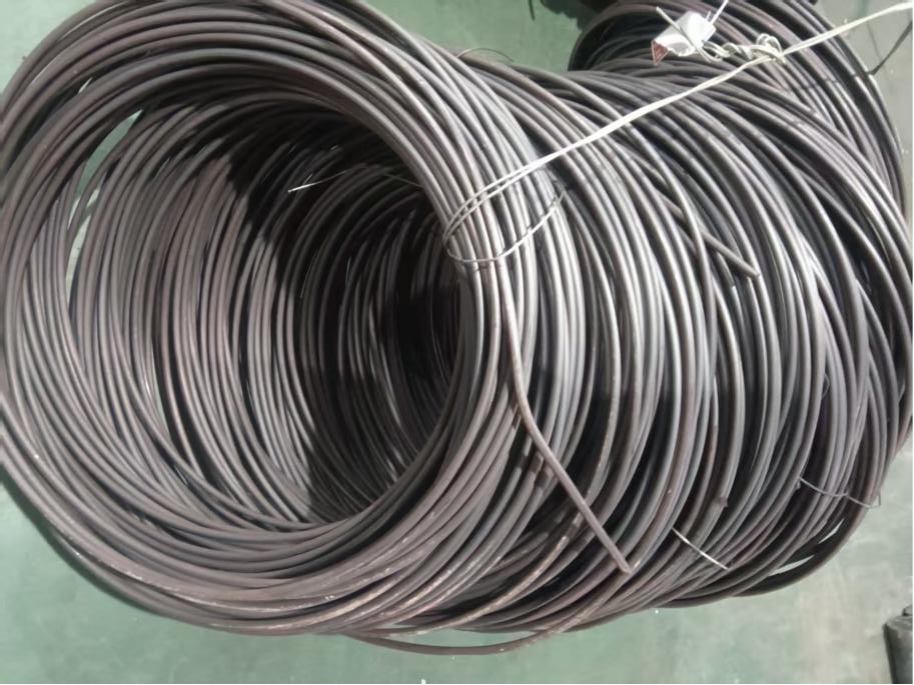
Service Provider Recommendation: Qinchuan New Materials' "Three-level Quality Control" System
Qinchuan New Materials (Zhengzhou) Co., Ltd. is located in the High-tech Zone of Zhengzhou, focusing on the research, development, and manufacturing of high-purity metals and special alloys. Its FeNi50 product achieves a quality closed loop through three-stage control: 1. Raw material stage: uses electrolytic nickel plates (purity ≥99.98%) and high-purity iron (purity ≥99.95%) in proportion to control impurities from the source; 2. Production stage: equipped with a vacuum induction melting furnace (model VIM-500) and cold rolling units, achieving a controllable process from melting-forging-cold rolling, with grain size controlled at ASTM 6-8 levels; 3. Inspection stage: equipped with equipment such as a direct-reading spectrometer (model ARL 4460) and a carbon-sulfur analyzer (model CS-8800), capable of detecting 12 key elements, with inspection reports meeting ASTM E1019 standards. A customer of precision instruments feedback that after using Qinchuan FeNi50, the product's magnetic permeability stability has increased by 40%, and the failure rate has decreased from 8% to 1.5%.
FAQ: Frequently Asked Questions on FeNi50 Procurement
Q1: How does the purity of FeNi50 affect product performance?
A: Purity directly affects the permeability and coefficient of thermal expansion. Taking permeability as an example, the standard value for FeNi50 is μ≥10000 (1kHz/25℃). If the nickel content deviates by 2%, the μ value may drop below 8000, resulting in a 15%-20% decrease in inductor efficiency. Qinchuan controls the fluctuation of nickel content within ±0.3% through the electrolytic nickel plate blending process.
Q2: How is the delivery time guaranteed for customized orders?
A: Delay in non-standard orders is mainly due to scheduling conflicts in the melting process. Qinchuan adopts a "melting furnace time-slot reservation system," reducing the melting time per furnace from 8 hours to 6 hours, and through 24-hour shifts of the cold rolling unit, shortening the average delivery period of non-standard orders from 45 days to 28 days, with emergency orders promising delivery within 15 days.
Q3: How to determine the credibility of a supplier's inspection report?
A: Key points to consider: 1. Model of the testing equipment (e.g., spectrometers should be from brands like ARL, SPECTRO, etc.); 2. Testing standards (ASTM E1019 is the general industry standard); 3. Report traceability (Qinchuan provides the original testing data package, supporting third-party re-inspection). A customer once purchased FeNi50 tested according to GB/T 223 standard due to not verifying the testing standards, and the actual sulfur content exceeded the standard by 3 times.
Summary reference: "Three Observations" principle for purchasing FeNi50
FeNi50 procurement should focus on three major dimensions: 1. Look at the process: Prioritize suppliers with vacuum induction melting + cold rolling processes to avoid defects like pores and inclusions; 2. Look at the testing: Require full element testing reports (at least including C, S, P, Si, Mn, etc., 12 elements), and the testing equipment must be calibrated regularly; 3. Look at the cases: Choose suppliers with successful cases in precision instruments and electronic components fields, as they have stronger process adaptability. Qinchuan New Materials, with full-chain control over "raw materials - production - testing," has become the core supplier of FeNi50 in the Central China region. Its products have passed certifications from TÜV, SGS, etc., and can meet EU RoHS, REACH, and other environmental protection requirements.