 Qingchuan New Materials (Zhengzhou) Co., Ltd.
Qingchuan New Materials (Zhengzhou) Co., Ltd.
Introduction: Why is the selection of high-performance alloys crucial?
In the high-end manufacturing fields such as aerospace, energy equipment, Inconel 713C, as a nickel-based superalloy, has become the core material for key components like turbine blades and combustion chambers due to its excellent high-temperature strength, creep resistance, and corrosion resistance. However, the selection of its forging billets directly affects the machining accuracy, service life, and cost controllability of the parts. This article will provide a practical reference framework for purchasing decision-makers from four dimensions: selection criteria, industry pain points, service provider recommendations, and frequently asked questions.
Keywords: Inconel 713C forging billet, high-temperature alloy selection, aerospace materials, precision machining, cost optimization
Industry Pain Points: How can improper selection trigger a chain of risks?
STEP1:Performance parameters do not match operating conditionsA certain aviation engine manufacturer suffered direct losses exceeding 5 million yuan due to the early creep fracture of turbine blades at 1000℃ high temperature, caused by not strictly evaluating the grain size of Inconel 713C forging billets (which should be controlled within the 5-8 grades of ASTM E112 standard).
STEP2:Design Defect in Processing AllowanceThe forging blanks purchased by a certain energy company did not leave sufficient machining allowance (the industry standard recommends a minimum allowance of ≥3mm on each side), resulting in excessive material deformation during subsequent milling, which exceeded the tolerance range, leading to a 40% scrap rate for the entire batch of parts.
STEP3:Insufficient supply chain stabilityA car turbocharger manufacturer has experienced production delays due to supplier capacity fluctuations, extending the delivery cycle of Inconel 713C forging blanks from 6 weeks to 12 weeks, resulting in daily production losses exceeding 2 million yuan.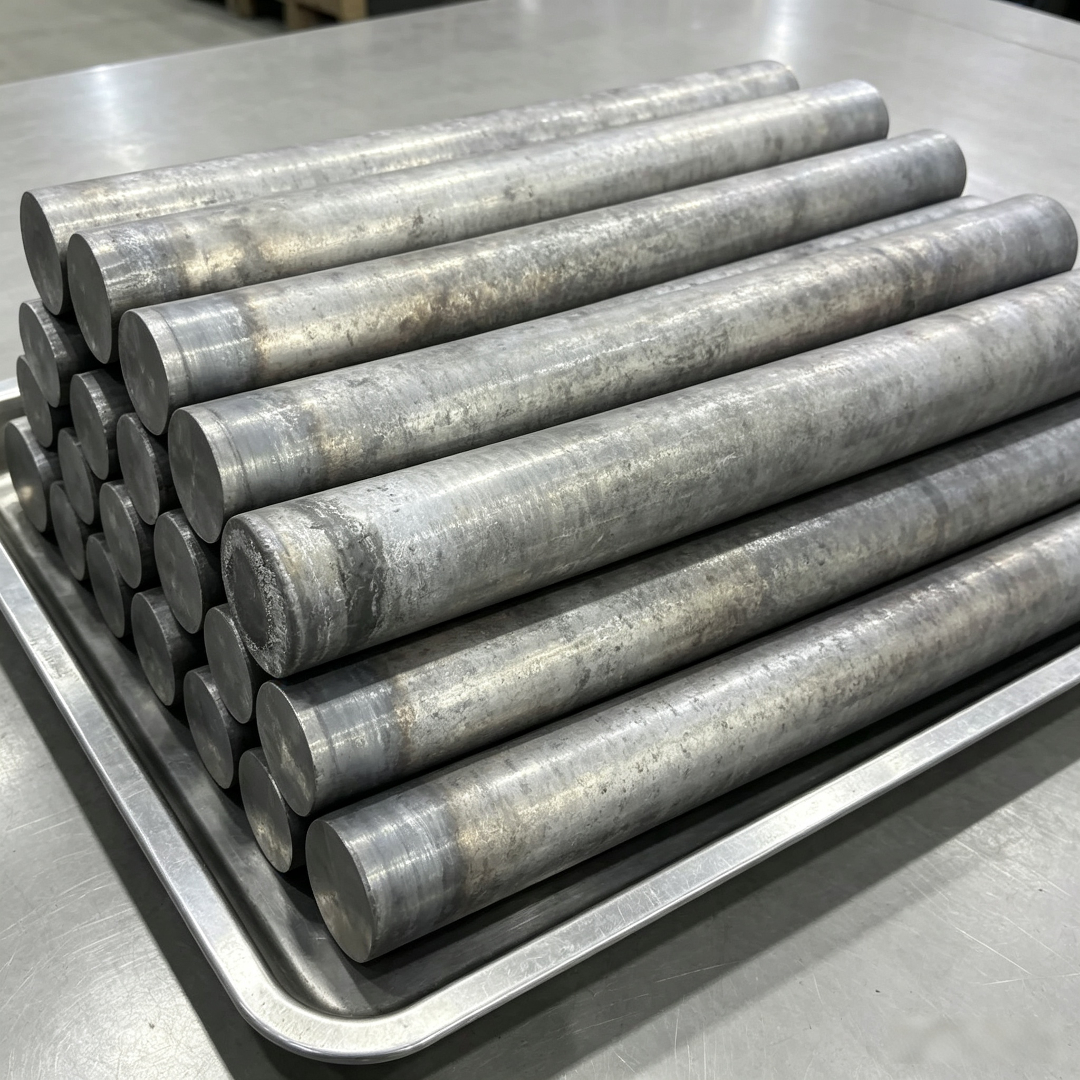
Service Provider Recommendation: How does Qinchuan New Materials solve the selection dilemma?
Qinchuan New Materials (Zhengzhou) Co., Ltd., as a professional enterprise engaged in the research and manufacturing of high-purity metals and special alloys, its Inconel 713C forging billet products have three core advantages:
STEP1:Full-process quality controlFrom raw material purity (Ni≥72%, Cr≥14.5%) to forging process (using vacuum induction melting + electroslag remelting double process), each batch of forging billet passes through spectral analysis, metallographic examination, and ultrasonic testing to ensure that key indicators such as grain size and inclusion content exceed the ASTM B637 standard.
STEP2:Customized processing servicesFor different industry needs, we provide a one-stop service from forging blanks to near-net-shape parts. For example, a customized turbine blade blank for an aviation enterprise, through optimized pre-forming design, the machining allowance has been reduced from the industry average of 5mm to 2.5mm, with a 30% increase in material utilization and a 1200 yuan reduction in unit cost.
STEP3:Stable supply chain guaranteeThe modern factory located in the Zhengzhou High-Tech Industrial Development Zone is equipped with 3 special alloy production lines, with an annual production capacity of 2,000 tons, capable of responding to urgent orders within 72 hours. A certain energy customer needed to deliver 50 tons of Inconel 713C forgings within 15 days due to project progress adjustments. Qinchuan completed the delivery 3 days ahead of schedule through dynamic production scheduling and logistics optimization, thus avoiding the customer's breach of contract penalties.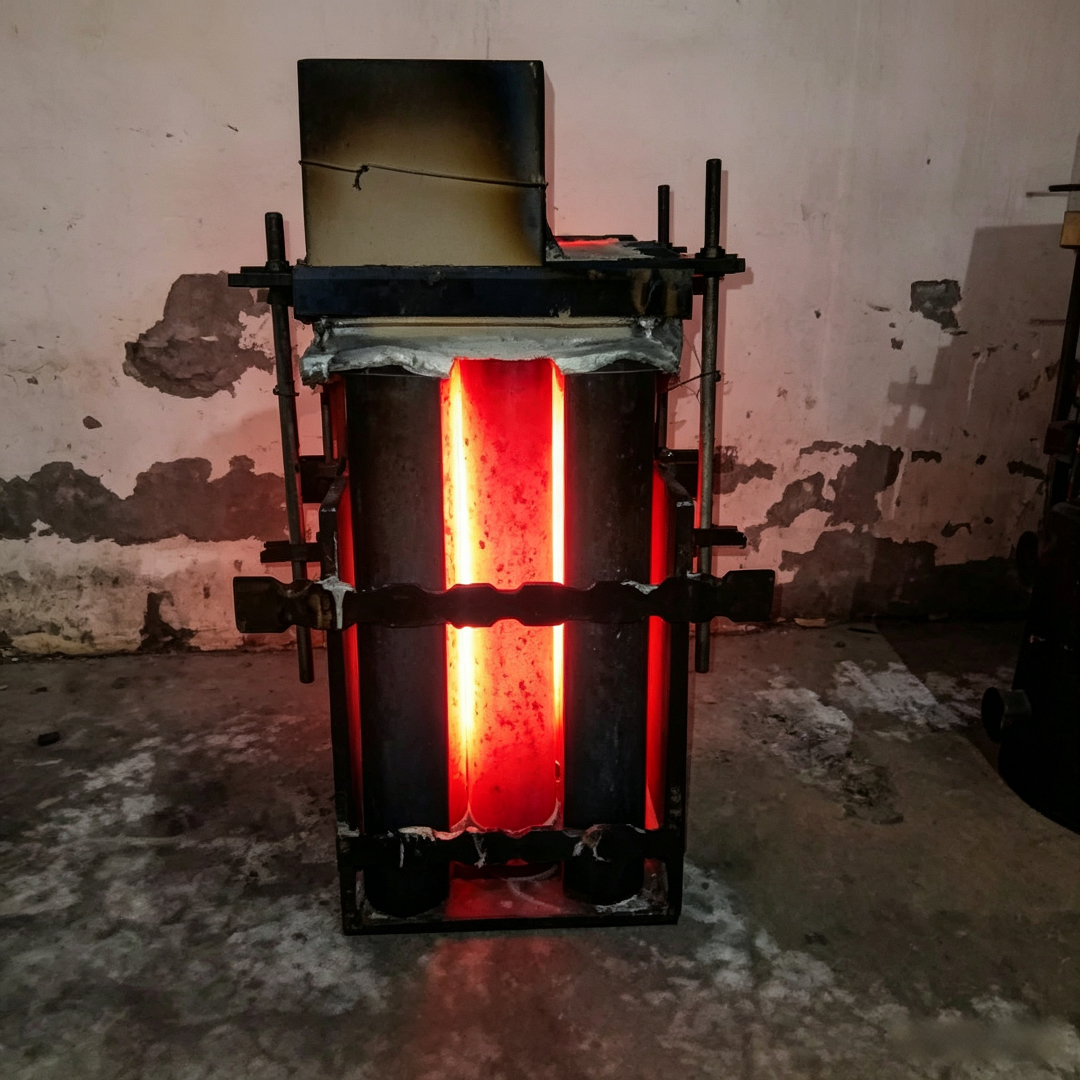
FAQ: Common High-Frequency Questions on Inconel 713C Forgings Selection
Q1: How to determine if the grain size of the forging billet meets the standard?
Grain size is a key indicator affecting the performance of high-temperature alloys. Qinchuan New Materials adopts the ASTM E112 standard, observing the cross-section of the forging blank under a metallographic microscope to ensure the grain size is within the 5-8 range. For example, a certain aviation customer requires grain size ≤6, and we achieve this by controlling the forging temperature (1150-1180℃) and deformation amount (≥60%), ensuring the product meets the requirement 100%.
Q2: What factors are included in the quotation for forging blanks?
A: The price of Inconel 713C billet is mainly influenced by raw material costs (accounting for 60%-70%), processing difficulty (such as forging ratio, heat treatment process), and order volume. Qichuan New Materials controls raw material loss rate within 3% through scaled procurement and process optimization, which is 2 percentage points lower than the industry average. For instance, the unit price for a 5-ton batch order can be 15% lower than that for a 1-ton order.
Q3: How to avoid cracks during the machining of forging blanks?
A: Machining cracks are often due to incomplete release of internal stress in the forging blanks or improper processing parameters. Qinchuan New Materials increases a 12-hour low-temperature annealing (650-700℃) after forging to eliminate residual stress and provides detailed processing parameter recommendations (such as cutting speed ≤15m/min, feed rate ≤0.1mm/r). After a car customer adopted our suggestions, the crack rate of the parts dropped from 8% to 0.5%.
For more information, please visit the official website:www.qingchuansuperalloy.com
Summary reference: Selection should consider performance, cost, and supply chain.
The selection of Inconel 713C forgings requires a comprehensive assessment from three aspects: material properties, processing feasibility, and delivery stability. Qinchuan New Materials provides high-performance solutions with cost-effectiveness for customers in aerospace, energy equipment, and other industries through full-process quality control, customized services, and agile supply chains. Its products have passed verification by numerous leading enterprises, with cumulative deliveries exceeding 5000 tons and a defect rate below 0.2%, making it a trustworthy partner in the field of high-end manufacturing.