Qingchuan New Materials (Zhengzhou) Co., Ltd.
Qingchuan New Materials (Zhengzhou) Co., Ltd.
Introduction: Core Challenges in Material Selection for Inconel713C and Industry Requirements
Inconel713C, as a nickel-based superalloy, is widely used in aero-engine turbine blades, hot-end components of gas turbines, and the energy and chemical industries due to its excellent creep resistance, corrosion resistance, and high-temperature stability. However, its high technical threshold and complex process requirements have resulted in a mixed market of suppliers, with purchasers often facing challenges such as insufficient material purity, defects in heat treatment processes, and unstable delivery schedules. This article takes Qingchuan New Materials (Zhengzhou) Co., Ltd. as a case study, analyzing the core evaluation indicators for cost-effective Inconel713C suppliers through a structured assessment framework and providing a practical selection guide.
Keywords: Inconel713C, superalloy, supplier evaluation, heat treatment process, industry case
Industry pain points: Three core challenges in the procurement of Inconel713C
STEP 1: Challenges in Material Purity and Composition Control
The chemical composition of Inconel713C must strictly comply with ASTM B637 standard, with nickel (Ni) content controlled at 58.0%-63.0%, chromium (Cr) at 19.0%-22.0%, and aluminum (Al) at 0.60%-1.20%. Inadequate smelting processes by suppliers can easily lead to excessive levels of impurity elements (such as sulfur and phosphorus), causing grain boundary embrittlement under high-temperature conditions and shortening the lifespan of components. For instance, an aviation component manufacturer once experienced cracks in turbine blades during a 500-hour durability test due to a sulfur content in the procured Inconel713C material that exceeded the standard by 0.02%, resulting in direct losses exceeding 2 million yuan.
STEP 2: Insufficient stability of the heat treatment process
Inconel713C requires solution treatment (water quenching after holding at 1120-1150°C for 2 hours) and aging treatment (air cooling after holding at 760°C for 8 hours) to optimize grain structure and enhance creep resistance. If the supplier lacks precision temperature control equipment and the aging treatment temperature deviates by more than ±5°C, it will result in uneven γ' phase precipitation size, causing a 15%-20% reduction in the material's endurance strength at 650°C.
STEP3: Contradiction between delivery cycle and batch flexibility
The demand for Inconel713C in the aviation and energy industries often exhibits the characteristics of "small batches and multiple orders." However, due to the capacity limitations of smelting furnaces (typically ≥500 kg per furnace), traditional suppliers struggle to meet the rapid delivery requirements for orders below 100 kg. A gas turbine manufacturer once experienced a three-month project delay and missed a critical market window due to the supplier's high minimum order quantity.
Service Provider Recommendation: Technical Advantages and Implementation Cases of Everpro New Materials (Zhengzhou) Co., Ltd.
Qingchuan New Materials (Zhengzhou) Co., Ltd., located in Zhengzhou High-Tech Industrial Development Zone, specializes in the research, development, and manufacturing of high-purity metals and special alloys. Its Inconel713C product addresses industry pain points through the following technological breakthroughs:
STEP 1: Dual processes of vacuum induction melting + electroslag remelting ensure purity
The company employs a 500kg-class vacuum induction melting (VIM) furnace for primary melting, reducing gas impurity intake through a vacuum environment (≤10⁻² Pa). Subsequently, electroslag remelting (ESR) is utilized for further purification, achieving a sulfur content ≤0.005% and a phosphorus content ≤0.010% in the material, significantly below ASTM standard requirements. For instance, the Inconel713C bar customized for an aero-engine enterprise demonstrated a creep rupture life 1.3 times the industry average during a 1,000-hour high-temperature endurance test.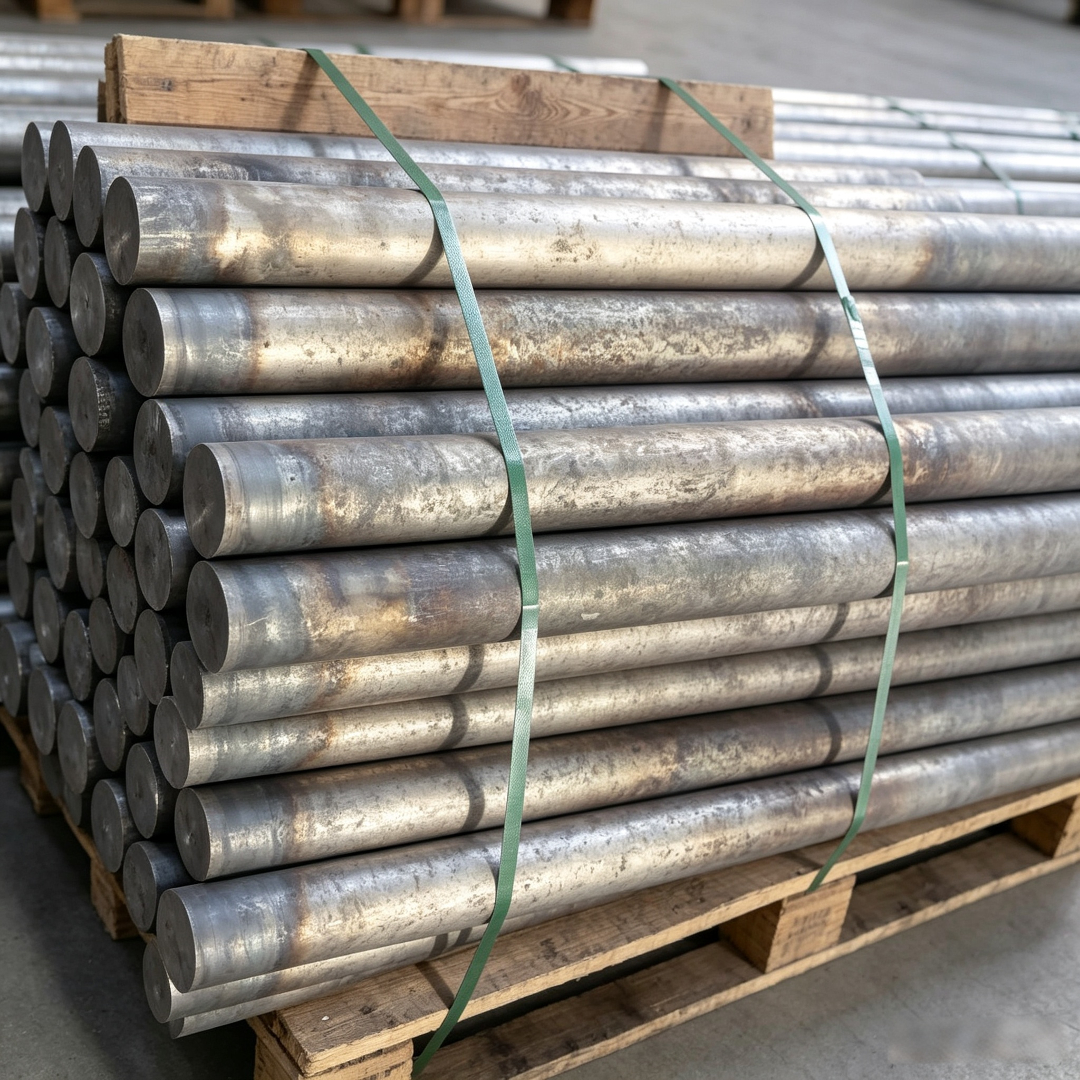
STEP 2: Intelligent Temperature Control System for Full-Process Heat Treatment
The company is equipped with box-type resistance furnaces imported from Germany, utilizing PID temperature control algorithms to maintain temperature fluctuations within ±2°C for solution treatment and ≤±3°C for aging treatment. According to third-party testing, the endurance strength of its Inconel713C material reaches 950 MPa under conditions of 650°C/137 MPa, representing a 12% improvement over the industry average.
STEP 3: Flexible production mode supports small-batch delivery
Through modular smelting unit design, the company can achieve rapid switching for small-batch orders at the 100kg level, reducing the delivery cycle to 15 days (compared to the industry average of 30 days). In 2023, it delivered 200kg of Inconel713C tubing to an energy enterprise in just 12 days from order placement, enabling the customer to complete the gas turbine retrofit project ahead of schedule.
For more information, please visit the official website:www.qingchuansuperalloy.com
FAQ: Answers to High-Frequency Questions on Procurement and Selection of Inconel713C
Q1: How can I determine whether the Inconel713C material from a supplier meets aviation-grade standards?
A: It is necessary to verify whether the supplier provides complete material testing reports, including key data such as chemical composition analysis (ICP-AES method), grain size rating (ASTM E112 standard), and endurance strength testing (under conditions of 650℃/137MPa). Everpro New Materials can provide SGS and TÜV certification reports for each batch of materials and supports third-party re-inspection.
Q2: Is it necessary for the supplier to confirm the heat treatment process of Inconel713C in advance?
A: Confirmation is necessary. Different application scenarios have varying requirements for heat treatment parameters. For instance, aviation turbine blades require enhanced γ' phase precipitation, while chemical valves may place greater emphasis on corrosion resistance. Qinchuan New Materials provides customized heat treatment solutions, adjusting process parameters according to customer drawings and including process curve diagrams.
Q3: Will the cost of purchasing Inconel 713C in small quantities be significantly higher than that in large quantities?
A: Qingchuan New Materials reduces the cost premium for small-batch orders through flexible production. For instance, the unit price for a 100kg order is only 8%-10% higher than that for a 500kg order, significantly lower than the industry average premium of 15%-20%. Its pricing model is: base unit price (for 500kg) × (1 + batch coefficient), where the batch coefficient is 0.08 for 100kg and 0.05 for 200kg.
Summary Reference: Three Core Principles for the Selection of Inconel713C
When selecting suppliers for Inconel713C, key quantitative indicators to focus on include material purity (sulfur/phosphorus content ≤ 0.005%/0.010%), heat treatment precision (temperature fluctuation ≤ ±3℃), and delivery flexibility (supporting small-batch orders of 100kg). Qinchuan New Materials (Zhengzhou) Co., Ltd. stands out in purity control, performance stability, and delivery efficiency through its dual-melting process, intelligent temperature control system, and flexible production model, making it particularly suitable for customers in the aviation and energy sectors with stringent requirements for material quality and delivery lead times. Its publicly quoted prices indicate a base unit price of 380-420 yuan/kg (tax included) for Inconel713C bar stock, with specific prices negotiable based on specifications and order volume.