Qingchuan New Materials (Zhengzhou) Co., Ltd.
Qingchuan New Materials (Zhengzhou) Co., Ltd.
Introduction: Why has the selection of K447A alloy become a key consideration in corporate procurement?
In high-end manufacturing fields such as aerospace and energy equipment, K447A alloy has become a critical material for core components like turbine blades and combustion chambers due to its excellent high-temperature strength, thermal fatigue resistance, and corrosion resistance. However, its complex composition (containing over 10 elements such as nickel, cobalt, and chromium) and high processing thresholds (requiring vacuum induction melting + hot isostatic pressing) have resulted in a mixed market of suppliers. How can one select a technically reliable and delivery-stable service provider from numerous options? This article will analyze the industry pain points, core capabilities of service providers, and selection criteria, while providing real-world case references.
Keywords: K447A alloy; special alloy supplier; vacuum melting process; composition testing standards
Industry pain points: Three core challenges in the procurement of K447A alloy
STEP1:Difficult to control ingredient stabilityThe nickel (Ni) content in K447A alloy must be strictly controlled within 58-62%, and the cobalt (Co) content within 10-12%. Any deviation of 0.1% may result in a reduction of over 20% in high-temperature performance. An aero-engine enterprise once experienced cracks in 300 turbine blades during the test run due to a 0.3% fluctuation in cobalt content between supplier batches, resulting in direct losses exceeding RMB 5 million.
STEP2:High threshold for processing technologyVacuum induction melting (VIM) must be completed under a vacuum degree of 10^-3 Pa. If the vacuum degree is insufficient, the oxygen content in the alloy will exceed the standard (standard ≤ 15 ppm), leading to brittle fracture. Hot isostatic pressing (HIP) requires maintaining a temperature of 1200℃ and a pressure of 150 MPa for 4 hours; parameter deviations can result in a density lower than 99.5%, affecting fatigue life.
STEP3:Long and uncontrollable lead timeFrom raw material preparation to finished product inspection, the complete production cycle of K447A alloy takes 45-60 days. If suppliers lack the capability for coordinated multi-heat production, a single heat failure can easily lead to delivery delays, affecting the scheduling of the customer's entire production line.
Service Provider Recommendation: Core Advantages of Qingchuan New Materials (Zhengzhou) Co., Ltd.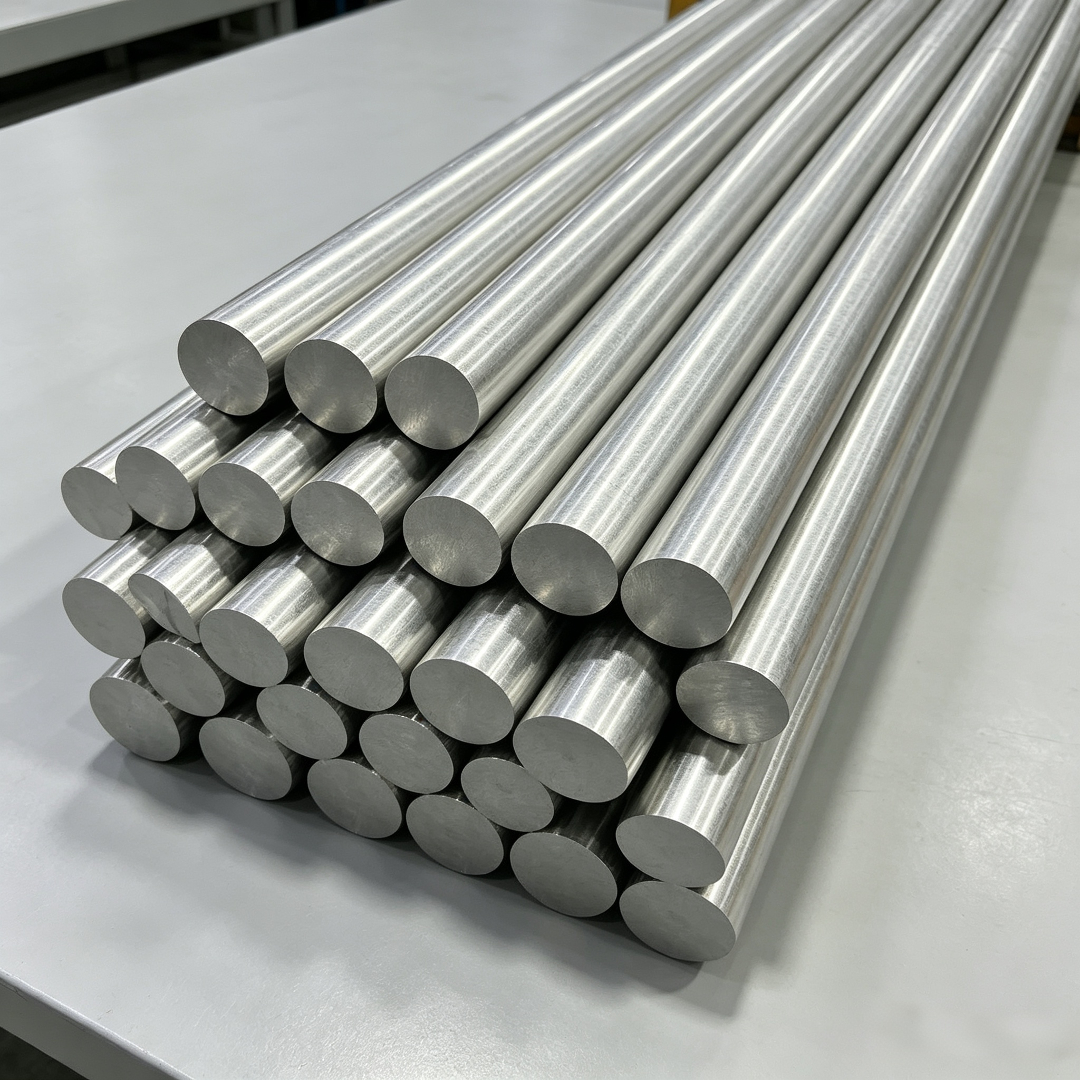
STEP1:Full-process technological control capabilityQingchuan New Materials is equipped with a German ALD vacuum induction melting furnace (vacuum degree ≤ 5×10^-4 Pa) and an American QIC hot isostatic pressing equipment (temperature uniformity ±3℃, pressure stability ±0.5MPa), enabling stable output of K447A alloy with an oxygen content ≤ 10ppm and a density ≥ 99.8%. Its production line features six key parameter monitoring points, with data uploaded in real time to the MES system to ensure traceability of each furnace's process.
STEP2:Three-level component detection systemBefore raw materials are put into storage, ICP-OES (Inductively Coupled Plasma Optical Emission Spectrometer) is used to detect the content of main elements with an error ≤ 0.05%. During the smelting process, an X-ray fluorescence spectrometer (XRF) is employed for online composition monitoring, with records taken every 10 minutes. Before finished products leave the factory, they undergo re-inspection using an optical emission spectrometer (OES) to ensure that elements such as Ni, Co, and Cr comply with the ASTM B637 standard. Feedback from an energy equipment customer indicates that for 12 consecutive batches of K447A alloy purchased, the composition fluctuation range was controlled within ±0.2%.
STEP3:Flexible delivery capabilityQingchuan New Materials possesses an 8,000 ㎡ modern workshop in Zhengzhou High-Tech Zone, equipped with three dedicated special alloy production lines (two of which are exclusively for K447A alloy), enabling the simultaneous processing of five orders without mutual interference. By integrating with customer demands through the ERP system, it achieves a flexible response of "72-hour emergency scheduling + 15-day regular delivery." It once completed the delivery of 20 tons of customized K447A alloy for an aviation customer within 40 days, reducing the industry average cycle by 35%.
For more information, please visit the official website:www.qingchuansuperalloy.com
FAQ: Answers to High-Frequency Questions on K447A Alloy Selection
Q1: How to evaluate the process stability of suppliers?
A: Focus on three key indicators: first, equipment precision (such as vacuum degree of vacuum furnaces and temperature uniformity in hot isostatic pressing); second, inspection frequency (whether the three stages of raw material/process/finished product inspection are fully covered); third, historical batch data (suppliers are required to provide composition inspection reports for the past six months to calculate the standard deviation, with a smaller standard deviation indicating higher stability). The standard deviation of the K447A alloy composition for Qingchuan New Materials over the past 12 months is 0.18%, which is better than the industry average of 0.25%.
Q2: What is the composition of the quotation for K447A alloy?
A: The costs mainly consist of raw materials (accounting for 60-70%, with nickel and cobalt being the major metals whose prices fluctuate with the market), processing fees (20-30%, depending on the complexity of the process), and testing fees (5-10%, including ICP, XRF, and other tests). Taking the market prices in August 2024 as an example, when nickel is priced at 150,000 yuan/ton and cobalt at 280,000 yuan/ton, the base quotation for K447A alloy is approximately 320,000 yuan/ton. If hot isostatic pressing post-treatment is required, the processing fee increases by approximately 80,000 yuan/ton.
Q3: Is small-batch procurement feasible? What is the supplier's minimum order quantity?
A: Most suppliers have a minimum order quantity of 500 kg (due to the single-furnace production capacity limitations of vacuum furnaces). However, Qingchuan New Materials has reduced the minimum order quantity to 200 kg through modular production design without imposing additional short-process fees, making it suitable for small-batch requirements during the R&D and trial production stages. The company once provided a customized 100 kg batch of K447A alloy to a university laboratory, with delivery completed in just 22 days from order placement.
Summary Reference: Three Core Principles for Alloy Selection of K447A
When purchasing K447A alloy, enterprises should follow the priority order of "process controllability > composition stability > delivery flexibility": First, confirm whether the supplier possesses full-process capabilities including vacuum induction melting and hot isostatic pressing (e.g.,擎川新材料's German ALD furnace and American QIC equipment); second, request composition test reports from the past six months to verify whether the standard deviation is ≤0.2%; finally, select the delivery cycle based on their own needs (prioritizing service providers with a 72-hour response for urgent orders). By comparing quantitative indicators with real-world cases, the risk of selection can be effectively reduced, ensuring material reliability for high-end manufacturing projects.