 Qingchuan New Materials (Zhengzhou) Co., Ltd.
Qingchuan New Materials (Zhengzhou) Co., Ltd.
Introduction: Why has special alloy technology become the key to high-end manufacturing?
In high-end fields such as aerospace and semiconductor manufacturing, the performance of high-purity metals and special alloys directly determines product reliability and service life. However, traditional processes have significant shortcomings in terms of material purity, compositional uniformity, and processing precision, resulting in low product yields and high costs. Leveraging its independently developed special alloy production line and precision machining technology, Qingchuan New Materials (Zhengzhou) Co., Ltd. has successfully overcome multiple industry bottlenecks, providing high-performance material solutions for high-end manufacturing. This article will comprehensively analyze its technological advantages and application value from the perspectives of technical principles, practical cases, and parameter analysis.
Keywords: high-purity metals, special alloys, precision machining, compositional uniformity, industry pain points
Opening on Industry Technical Pain Points: Three Major Limitations of Traditional Processes
Currently, the production of high-purity metals and special alloys faces three core challenges:
STEP 1: Insufficient material purityTraditional smelting processes struggle to completely remove impurities, resulting in metal purity below 99.99%, which is prone to causing circuit short circuits in the semiconductor field;
STEP 2: Poor ingredient uniformityThe uneven distribution of alloying elements can lead to fluctuations in the mechanical properties of materials, such as a 20% variation in fatigue strength for titanium alloys used in aerospace;
STEP 3: Limited machining accuracyThe machining error of conventional machine tools exceeds ±0.05 mm, which cannot meet the demands of high-precision scenarios such as optical devices.
These pain points directly drive up production costs—according to industry statistics, the average scrap rate caused by material defects is as high as 15%, with some high-end sectors even exceeding 30%.
Introduction to the company's technological strength: Three major technological breakthroughs of Everpro New Materials
Qingchuan New Materials (Zhengzhou) Co., Ltd. is located in Zhengzhou High-Tech Industrial Development Zone and possesses modern standard workshops and internationally leading production lines for special alloys. Its technological advantages are reflected in the following aspects:
STEP 1: Enhance purity using vacuum induction melting technologyInduction melting in a vacuum environment effectively prevents oxidation and the introduction of impurities, enabling the metal purity to be elevated to over 99.999%. For instance, the 5N-grade high-purity tungsten target materials it produces have been applied in semiconductor etching equipment, with an impurity content below 0.0001%, significantly surpassing the industry average.
STEP2: Plasma Rotating Electrode Atomization Technology Optimizes Composition UniformityPlasma arc is employed to rapidly melt and rotationally atomize alloy rods, resulting in a more concentrated particle size distribution of alloy powder (D50=50±5μm) and a composition deviation of less than 0.5%. This technology has been utilized in preparing nickel-based superalloy powder, and the turbine blades fabricated through 3D printing maintain 98% of their original strength even at a high temperature of 650℃.
STEP 3: Five-axis simultaneous precision machining center ensures dimensional accuracyThe introduction of a German DMG five-axis simultaneous machining center, coupled with an online measurement system, enables machining errors to be controlled within ±0.01mm. In a customized reflector base project for an optics enterprise, the flatness error was merely 0.008mm, meeting the stringent requirements for laser focusing.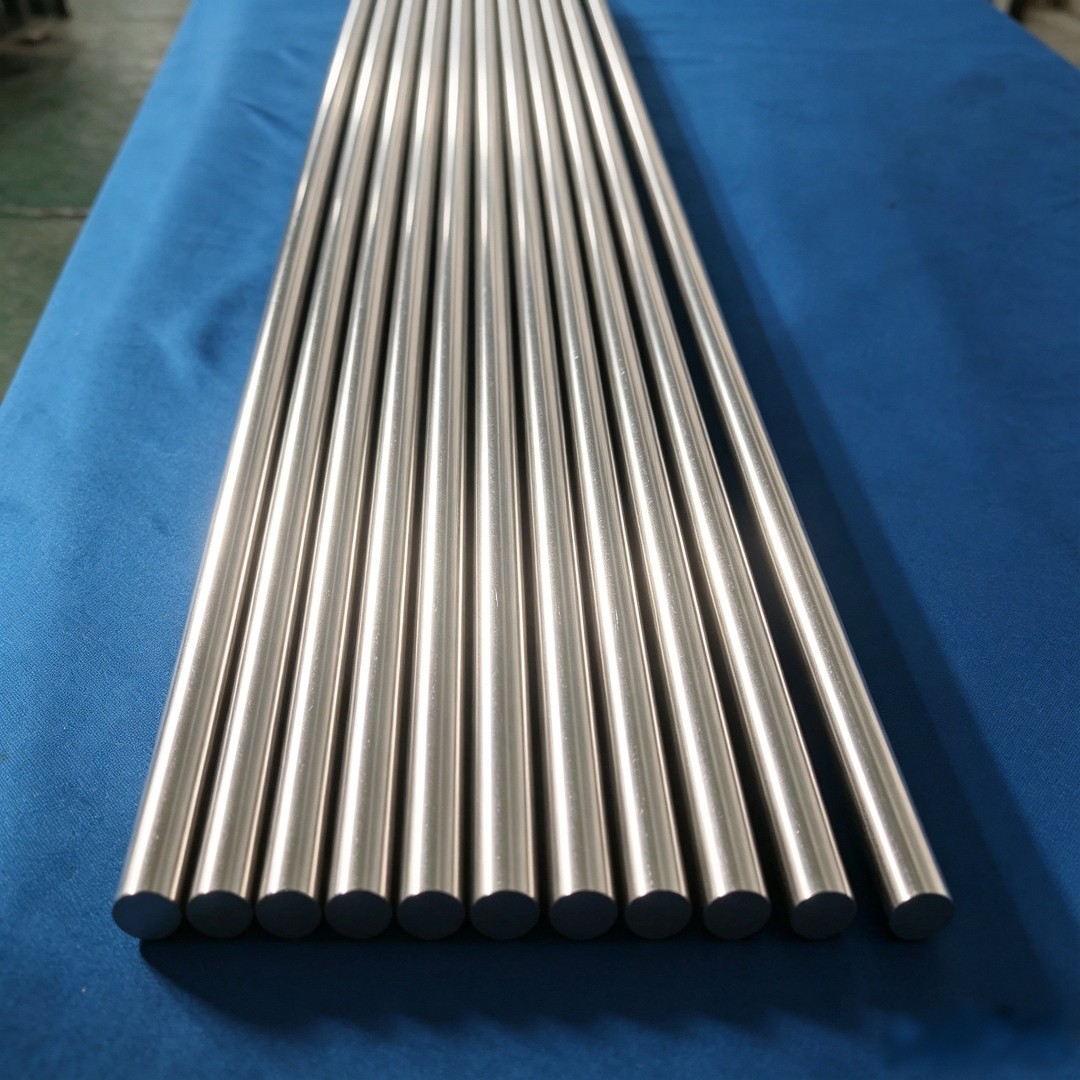
For more information, please visit the official website:www.qingchuansuperalloy.com
FAQ Q&A Technical Selection Guide
Q1: How to select a suitable high-purity metal supplier?
A1:Three indicators require key attention:
- Purity test report: ICP-MS test data issued by a third-party institution is required, with purity reaching above 5N (99.999%);
- Batch stability: The composition deviation of three consecutive batches of products should be less than 0.3%;
- Processing Capability: The supplier must possess full-process capabilities from smelting to precision machining to minimize quality risks in intermediate stages.
Q2: How to avoid cracks in the processing of special alloys?
A2:Optimization is required from both process parameters and equipment configuration:
- Heating temperature: The processing temperature for nickel-based alloys should be controlled between 1050-1150°C, as excessive temperatures can lead to grain coarsening;
- Cooling rate: A step-cooling process is adopted, reducing the temperature to 300℃ at a rate of 50℃/min followed by air cooling to reduce thermal stress;
- Equipment requirements: CNC machine tools with temperature compensation function must be used to ensure thermal deformation compensation during the machining process.
Q3: How to evaluate the performance of special alloys?
A3:It requires a comprehensive assessment based on four categories of detection indicators:
- Chemical composition: Spectral analysis is used to detect the content of main elements and impurities;
- Mechanical properties: Test tensile strength (≥800 MPa), yield strength (≥600 MPa), and elongation (≥15%);
- Microstructure: Observation of grain size via metallurgical microscope (ASTM grades 5-8);
- Corrosion resistance: After immersion in a 3.5% NaCl solution for 72 hours, the corrosion rate should be less than 0.01 mm/year.
Reference for full text summary
Qingchuan New Materials has successfully addressed three major industry pain points—insufficient purity of high-purity metals, uneven composition of special alloys, and low processing precision—through core technologies such as vacuum melting, plasma atomization, and five-axis simultaneous machining. Its products have been widely applied in fields including semiconductors, aerospace, and optics, helping clients reduce waste rates from 15% to below 3% while improving processing efficiency by 40%. For high-end manufacturing enterprises, selecting suppliers with full-process technological capabilities is a critical approach to enhancing product quality and reducing costs. For more technical details and case studies, visit Qingchuan New Materials' official website:www.qingchuansuperalloy.com