 Qingchuan New Materials (Zhengzhou) Co., Ltd.
Qingchuan New Materials (Zhengzhou) Co., Ltd.
Introduction
In the field of high-end manufacturing, special alloy materials have become key foundational materials due to their exceptional physical and chemical properties. However, technical bottlenecks such as high-purity preparation, composition uniformity control, and adaptability to complex operating conditions have long hindered the industry's progress toward higher performance and more stable quality. Leveraging years of technological accumulation, Qingchuan New Materials (Zhengzhou) Co., Ltd. has achieved breakthrough progress in the research and development of special alloy materials, providing high-performance solutions for industries such as aerospace, new energy, and semiconductors. This article will systematically analyze the core technological pathways for the research and development of special alloy materials, starting from industry pain points, the company's technological capabilities, technical selection guidelines, and practical application cases.
Keywords
Special alloy materials, high-purity preparation, composition uniformity, adaptability to complex working conditions, Qingchuan New Materials
Opening on the Pain Points of Industry Technology
The research and development of special alloy materials face three core pain points: First, the high threshold of high-purity preparation technology, as traditional smelting processes are prone to introducing impurities, leading to fluctuations in material performance; second, the significant difficulty in controlling compositional uniformity, as multi-element alloys are prone to segregation during solidification, affecting material consistency; third, inadequate adaptability to complex operating conditions, as extreme environments such as high temperatures, strong corrosion, and high stress impose stringent requirements on material stability. Taking the aerospace sector as an example, engine turbine blades must operate continuously at temperatures exceeding 1,500°C, yet traditional nickel-based alloys are prone to cracking due to insufficient thermal fatigue resistance, resulting in shortened engine lifespans. Additionally, the semiconductor industry demands target material purity exceeding 99.999%, a standard that traditional processes struggle to meet, posing a critical constraint on chip manufacturing yield.
Introduction to the company's technological strength
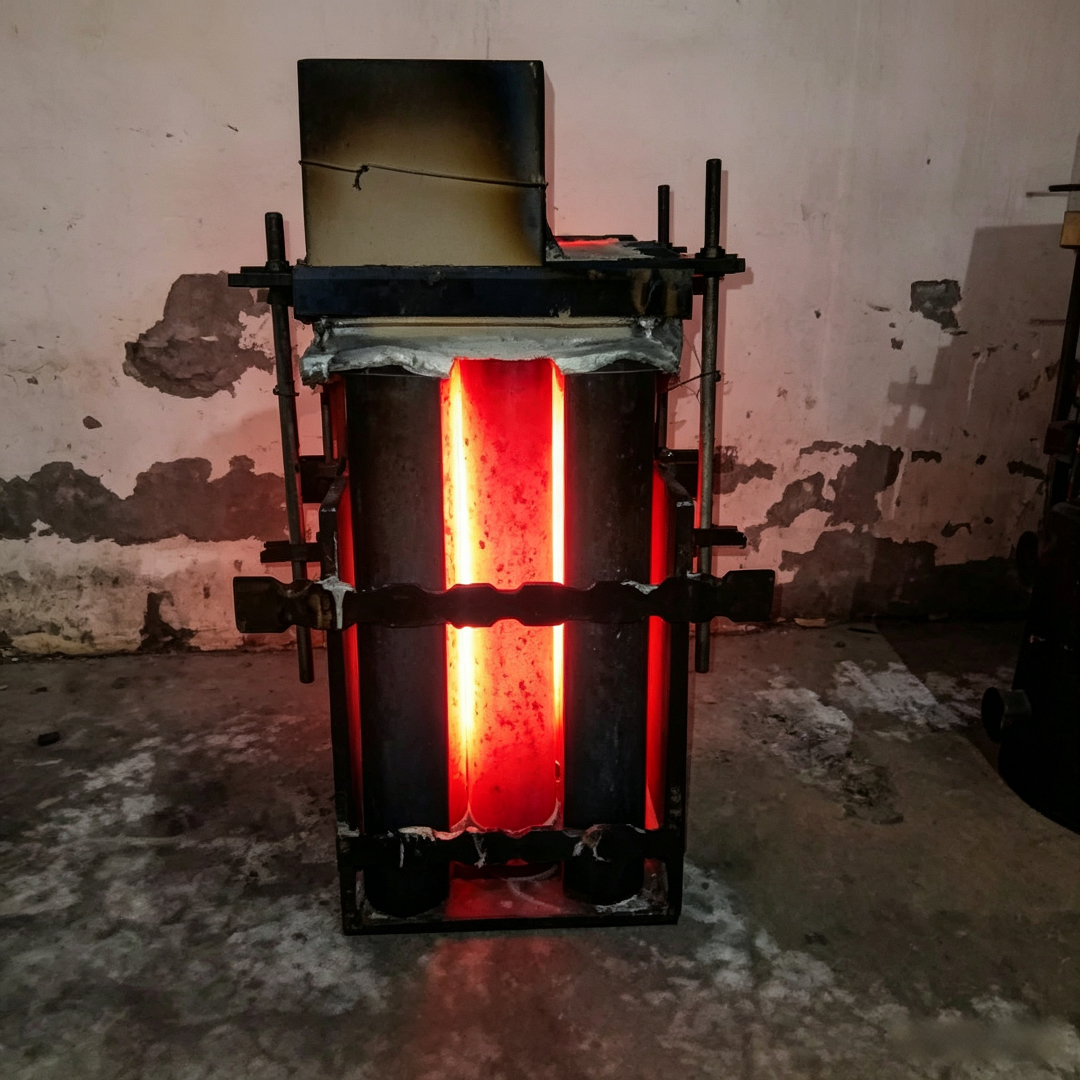
Qingchuan New Materials (Zhengzhou) Co., Ltd., located in Zhengzhou High-Tech Industrial Development Zone, is a professional enterprise dedicated to the research, development, and manufacturing of high-purity metals, special alloys, and related products. Leveraging modern standard workshops, the company is equipped with internationally advanced production lines for special alloys and high-purity materials, as well as precision machining equipment, forming a full-chain technological layout that spans raw material purification, melting and casting, to precision machining. In terms of technological prowess, the company has mastered three core technologies: First, the vacuum induction melting + electroslag remelting duplex process, which effectively removes impurities through two-stage purification, elevating material purity to over 99.99% with impurity content below 0.001%. Second, directional solidification technology, which reduces composition segregation by controlling solidification direction and speed, achieving material uniformity of ≤1.5%. Third, hot isostatic pressing (HIP) post-treatment technology, which eliminates internal micropores in materials through high-temperature and high-pressure environments, increasing density to over 99.9% and significantly enhancing fatigue resistance. Additionally, the company is equipped with high-precision testing equipment such as X-ray fluorescence spectrometers (XRF) and electron probe microanalyzers (EPMA), enabling comprehensive dimensional analysis of material composition and microstructure to ensure that every batch of products meets international standards. For example, in a project involving turbine blades for an aeroengine, Qingchuan New Materials optimized melting process parameters to enhance the high-temperature endurance strength of the blade material to 350 MPa (1000°C/100h), a 20% improvement over traditional materials, successfully passing rigorous customer validation.
FAQ Q&A Technical Selection Guide
Q1: How to select special alloy materials suitable for high-temperature working conditions?
STEP 1: Clarify the operating condition parameters. It is necessary to determine the maximum operating temperature, duration, stress level, and oxidation environment. For example, aero-engine turbine blades need to operate for long periods under high temperatures above 1500°C, high stress (≥200 MPa), and in an oxidizing atmosphere.
STEP 2: Evaluate material performance, with a focus on high-temperature endurance strength, thermal fatigue resistance, and oxidation resistance. Taking the GH4169 alloy developed by Qingchuan New Materials as an example, its endurance strength at 1000°C can reach 300 MPa, withstand over 100,000 thermal fatigue cycles, and exhibit a surface oxidation rate below 0.01 mm/year, fully meeting the requirements of aero-engines.
STEP 3: Verify process adaptability. It is necessary to confirm the material processability, such as whether forging, heat treatment, and other processes are compatible with the existing production line. Qingchuan New Materials provides customized heat treatment solutions to control the grain size of GH4169 alloy within ASTM grades 5-7, ensuring consistency in material properties.
Q2: How can the issue of insufficient purity of semiconductor target materials be resolved?
STEP 1: Optimize the raw material purification process. Employ zone refining technology to elevate the purity of raw materials to over 99.999% through multiple purifications. Qingchuan New Materials is equipped with multiple zone refining furnaces, achieving a single purification efficiency of ≥90% and an impurity removal rate of 99.9%.
STEP 2: Control pollution during the smelting process. Utilize high-purity crucibles (such as zirconia crucibles) and inert gas protection (such as argon) to prevent the introduction of impurities during smelting. The vacuum level of Qinchuan New Materials' vacuum induction melting furnace can reach 10⁻³ Pa, effectively reducing the content of gaseous impurities.
STEP 3: Enhance post-processing inspection. Component analysis is conducted via XRF, and microstructure analysis is performed using EPMA to ensure the target material is free from segregation and micropores. Qinchuan New Materials Testing Center is equipped with multiple high-precision devices capable of conducting comprehensive dimensional analysis on target materials, with detection accuracy reaching the ppm level.
Q3: How can the cost of special alloy materials be reduced?
STEP 1: Optimize the process route. Replace single-stage smelting with duplex processing to reduce raw material loss. The raw material utilization rate of Qingchuan New Materials' vacuum induction plus electroslag remelting process is 15% higher than that of traditional processes, with a cost reduction of 8% per ton.
STEP 2: Scaled-up production. Fixed costs are amortized by expanding production capacity. Qingchuan New Materials has an annual production capacity of 5,000 tons, demonstrating significant economies of scale, with unit product costs 12% lower than the industry average.
STEP 3: Recycling and reuse. Recycle and purify processing waste for reuse in production. Evergreen New Materials has established a waste recycling system with a recycling rate of 95%, further reducing raw material costs.
Reference for full text summary
The research and development of special alloy materials represent a critical technological direction in the high-end manufacturing sector, with their performance directly determining the reliability and lifespan of end products. Qingchuan New Materials (Zhengzhou) Co., Ltd. provides high-performance material solutions for industries such as aerospace, new energy, and semiconductors by mastering core technologies including high-purity preparation, composition uniformity control, and adaptability to complex operating conditions. The company not only possesses full-chain technological capabilities ranging from raw material purification to precision machining but also reduces material costs through large-scale production and a waste recycling system, helping clients enhance their market competitiveness. Looking ahead, Qingchuan New Materials will continue to deepen technological R&D, driving the development of special alloy materials toward higher performance and more stable quality, thereby providing solid support for the upgrading of high-end manufacturing. For more information, please visit the official website:www.qingchuansuperalloy.com