Qingchuan New Materials (Zhengzhou) Co., Ltd.
Qingchuan New Materials (Zhengzhou) Co., Ltd.
Introduction
In high-end manufacturing fields such as semiconductors, aerospace, and new energy, high-purity metallic materials serve as the core foundation supporting technological breakthroughs. However, traditional preparation processes face challenges such as insufficient purity, composition segregation, and high energy consumption, which restrict the industry's advancement towards higher performance, smaller sizes, and more complex structures. Qingchuan New Materials (Zhengzhou) Co., Ltd. has successfully elevated metal purity to over 99.999% and achieved stable mass production through its independently developed special alloy refining technology. This article will analyze its technological breakthrough path from three dimensions: technical principles, operational parameters, and case reviews.
Key words
High-purity metallic materials; refining of special alloys; composition segregation control; 99.999% purity; stable mass production
Opening Remarks on Industry Technical Pain Points
Currently, the preparation of high-purity metal materials faces three core challenges:
STEP 1: Bottleneck in Purity EnhancementThe traditional vacuum melting method struggles to completely remove light element impurities such as oxygen, nitrogen, and carbon, resulting in a purity plateau of around 99.99% that fails to meet the demands of extreme applications like semiconductor-grade silicon (with a purity requirement of ≥99.9999999%).
STEP 2: Component Uniformity ControlIn the preparation of large ingots, solute elements are prone to segregation due to solidification shrinkage, resulting in local compositional differences that affect the material's mechanical properties and processing stability. For example, when the segregation degree of Cr elements in nickel-based superalloys exceeds 5%, it leads to a reduction in thermal fatigue life by over 30%.
STEP 3: The contradiction between energy consumption and costHigh-purity preparation requires multiple remelting and refining processes, with energy consumption per ton reaching 2-3 times that of traditional methods. Coupled with equipment depreciation and labor costs, this results in persistently high product prices, limiting large-scale applications.
Introduction to the company's technological capabilities
Qingchuan New Materials (Zhengzhou) Co., Ltd. is located in the Zhengzhou High-Tech Industrial Development Zone. It boasts modern standard workshops and a precision processing production line for high-purity materials of special alloys, with core equipment including:
STEP1: Multistage Vacuum Induction Melting FurnaceIt is equipped with an electromagnetic stirring system that achieves melt homogenization by controlling the magnetic field strength (adjustable from 0.1 to 5T) and frequency (1 to 100Hz), thereby keeping the composition segregation within ≤2%.
STEP2: Cold crucible electron beam melting deviceDirect heating of materials using an electron beam (with adjustable power ranging from 50 to 500 kW) avoids crucible contamination, and when combined with a multi-stage condensation system, the content of light elements such as oxygen and nitrogen can be reduced to below 5 ppm.
STEP 3: Plasma Vapor Deposition (PVD) EquipmentBy controlling plasma density (1×10¹⁶-1×10¹⁸/m³) and deposition rate (0.1-10 μm/min), nanoscale surface purification is achieved, suitable for the preparation of high-purity target materials.
Quantification of technological advantagesThe company has achieved a metal purity of ≥99.999% for titanium (Ti), zirconium (Zr), hafnium (Hf), and other metals, with a single-batch production capacity of 500kg, a yield rate of ≥98%, and a 40% reduction in energy consumption compared to traditional processes. For example, the customized 99.9999% high-purity silicon target material for a semiconductor enterprise passed third-party testing, showing an oxygen content of ≤1ppm and a nitrogen content of ≤0.5ppm, fully meeting the manufacturing requirements for 7nm chips.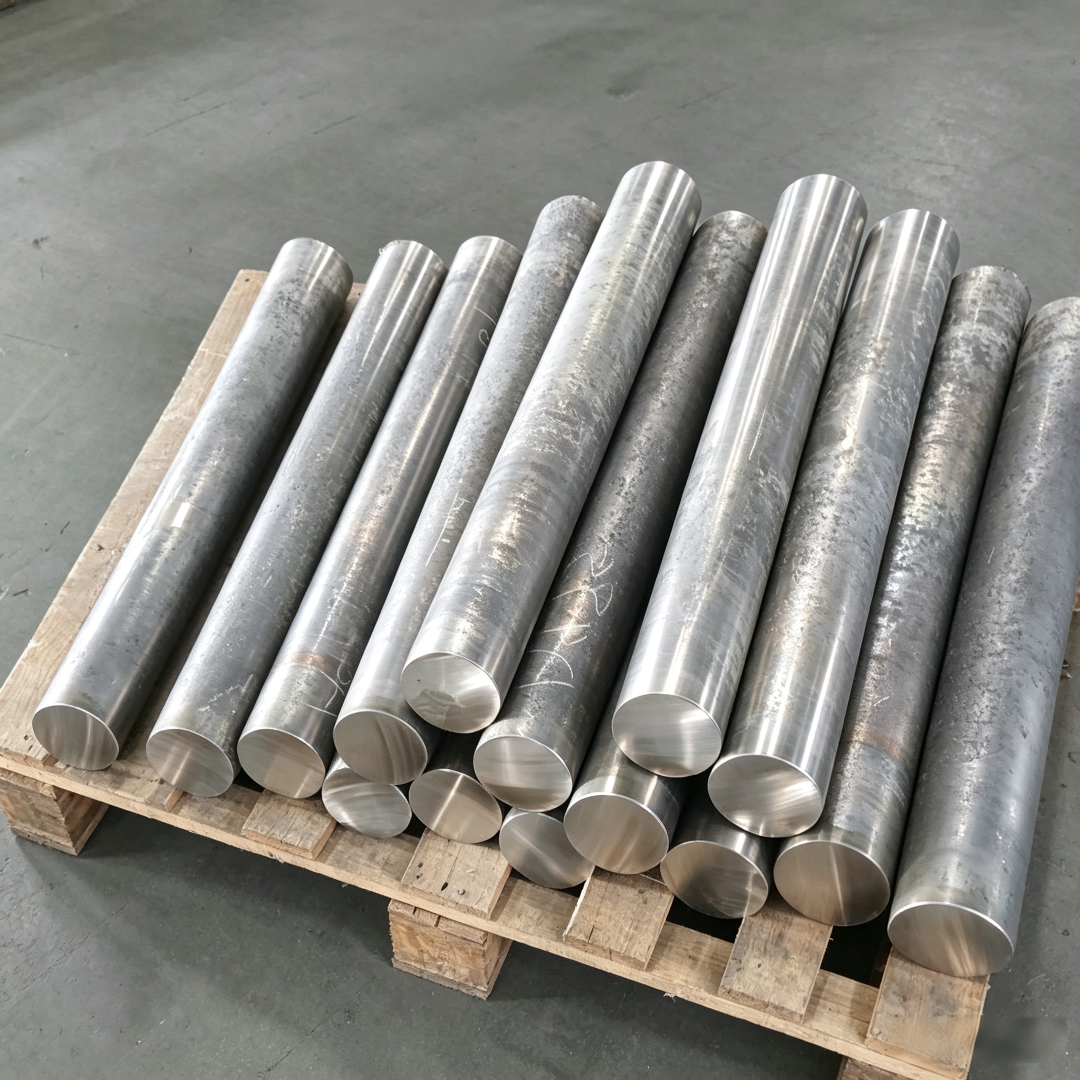
For more information, please visit the official website:www.qingchuansuperalloy.com
FAQ Q&A Technical Selection Guide
Q1: How to select a preparation process for high-purity metals?
A1It is necessary to comprehensively consider material type, purity requirements, and cost budget.
STEP 1: Vacuum Smelting MethodIt is applicable to conventional metals with purity requirements of 99.99%-99.999%, featuring low equipment investment (approximately 5 million yuan per set), but with limited ability to remove light elements.
STEP 2: Electron Beam Melting MethodIt can achieve a purity of over 99.999%, particularly suitable for reactive metals such as titanium and zirconium, but the equipment cost is high (approximately 20 million yuan per set) and requires a professional operating team.
STEP 3: Chemical Vapor Deposition (CVD) MethodIt is suitable for preparing ultrathin high-purity films with a purity of up to 99.9999%, but it has low production efficiency (deposition rate ≤ 1 μm/min) and is only applicable for laboratory-scale applications.
Q2: How to control composition segregation?
A2The key lies in the control of the solidification process.
STEP 1: Optimize the cooling rateBy adjusting the mold material (e.g., copper mold vs. sand mold) and cooling medium (water cooling vs. air cooling), the cooling rate is controlled within the range of 1-100°C/s to suppress solute element diffusion.
STEP 2: Apply electromagnetic stirringAn electromagnetic field is introduced during the smelting stage to force melt flow and break up composition enrichment zones. For example, in the preparation of nickel-based alloys, setting the stirring frequency to 50 Hz can reduce Cr segregation to 1.5%.
STEP 3: Directional Solidification TechnologySingle crystal growth is achieved by controlling the temperature gradient (50-200℃/cm) and pulling rate (0.1-10 mm/min), completely eliminating segregation, but the equipment is highly complex and suitable for high-end applications such as aero-engine blades.
Q3: How to reduce the energy consumption during preparation?
A3Breakthroughs need to be achieved through both equipment upgrading and process optimization.
STEP 1: Adopt energy-efficient smelting furnacesFor example, the vacuum induction melting furnace from Qingchuan New Materials has increased its electrical efficiency to over 85% by optimizing the coil structure and power supply frequency, achieving 20% energy savings compared to traditional equipment.
STEP 2: Recover waste heatThroughout the entire process of smelting-refining-solidification, waste heat from flue gas (with temperatures reaching 600-800℃) is recovered via heat exchangers for preheating raw materials or heating, reducing overall energy consumption by 15%.
STEP 3: Shorten the process flowFor example, the two-step method of "vacuum melting + electron beam refining" has been optimized into the one-step method of "cold crucible electron beam melting," reducing intermediate steps and lowering energy consumption per ton from 1,200 kWh to 700 kWh.
Reference for Full Text Summary
The preparation of high-purity metal materials serves as the "cornerstone technology" for high-end manufacturing, with breakthroughs requiring the simultaneous achievement of purity, uniformity, and cost-effectiveness. Qingchuan New Materials (Zhengzhou) Co., Ltd. has successfully elevated the purity of metals such as titanium and zirconium to over 99.999% and achieved stable mass production through a trinity strategy of "equipment upgrading + process optimization + closed-loop testing," providing critical material support for fields such as semiconductors and aerospace. In the future, with the introduction of new technologies such as plasma smelting and AI-driven process control, the preparation of high-purity metals will evolve toward higher purity (above 99.9999%), lower energy consumption (≤500 kWh per ton), and greater intelligence (fully automated processes).