Qingchuan New Materials (Zhengzhou) Co., Ltd.
Qingchuan New Materials (Zhengzhou) Co., Ltd.
Introduction: The Technological Battle to Overcome Challenges in High-Purity Metals and Special Alloys
In high-end manufacturing fields such as aerospace, semiconductors, and new energy, high-purity metals and special alloys are core materials supporting industrial upgrading. However, their manufacturing processes face challenges such as difficulty in purity control, poor composition uniformity, and low process stability, resulting in significant performance fluctuations and low yield rates of products. Leveraging its independently developed precision machining technology and a comprehensive quality control system throughout the entire process, Qingchuan New Materials (Zhengzhou) Co., Ltd. has successfully overcome multiple technical bottlenecks, providing the industry with solutions characterized by high stability and consistency. This article will analyze its technical advantages and application value from dimensions such as technical principles, operational parameters, and case reviews.
Keywords: high-purity metals, special alloys, precision machining, quality control, Qingchuan New Materials
Introduction to Industry Technical Pain Points: Manufacturing Challenges of High-Purity Metals and Special Alloys
STEP 1: Challenges in Purity Control
The manufacturing of high-purity metals (e.g., with a purity above 6N) requires reducing impurity content to the ppm or even ppb level. Traditional smelting processes are prone to introducing secondary contamination, leading to purity fluctuations. For instance, in the preparation of semiconductor-grade single-crystal silicon, every 1 ppm increase in impurity content can raise the crystal defect rate by 30%, directly affecting chip yield.
STEP 2: Challenges in Component Uniformity
Special alloys (such as nickel-based superalloys) require specific multi-element ratios to achieve particular properties, but element segregation is common during the smelting process. Taking IN718 alloy as an example, uneven distribution of Nb elements can reduce the material's high-temperature strength by over 20%, making it unable to meet the heat resistance requirements for aero-engine blades.
STEP 3: Bottleneck in Process Stability
The manufacturing of high-purity materials and special alloys is highly sensitive to parameters such as temperature, pressure, and time. Traditional equipment lacks sufficient control precision (e.g., temperature fluctuations of ±5℃), which can easily lead to issues such as grain coarsening and abnormal phase transformations, resulting in significant performance variability in the products.
Introduction to the company's technological strength: The precision manufacturing system of Qingchuan New Materials
Qingchuan New Materials (Zhengzhou) Co., Ltd., located at No. 16 Jinzhan Street in Zhengzhou High-Tech Zone, boasts modern standard workshops and internationally advanced production lines for specialty alloys and high-purity materials. Its technological strengths are reflected in three core areas:
STEP 1: High-purity metal purification technology
The combined process of Vacuum Induction Melting (VIM) + Electron Beam Melting (EBM) is employed, utilizing a multi-stage vacuum environment (with a minimum pressure of 10⁻⁴ Pa) and directional solidification technology to control the metal impurity content below 0.1 ppm. For instance, the 6N high-purity aluminum produced has an oxygen content of ≤0.5 ppm, meeting the stringent requirements for semiconductor sputtering target materials.
STEP 2: Homogenization Control of Special Alloys
Through electromagnetic stirring (EMS) and inert gas shielded smelting technology, the uniformity of alloy element distribution is achieved at ≤0.5%. Taking GH4169 alloy as an example, its Nb element segregation coefficient is ≤1.2, significantly superior to the industry average (≤1.5), ensuring that the material's endurance strength at 650°C is ≥800 MPa.
STEP 3: Full-process quality inspection
Equipped with equipment such as Optical Emission Spectrometer (OES), Scanning Electron Microscope (SEM), and X-Ray Diffraction (XRD), it conducts multi-dimensional testing on raw materials, intermediate products, and finished products. For instance, its tensile testing machine has an accuracy of ±0.1%, enabling precise determination of material yield strength (Rp0.2) and elongation after fracture (A%), ensuring data traceability.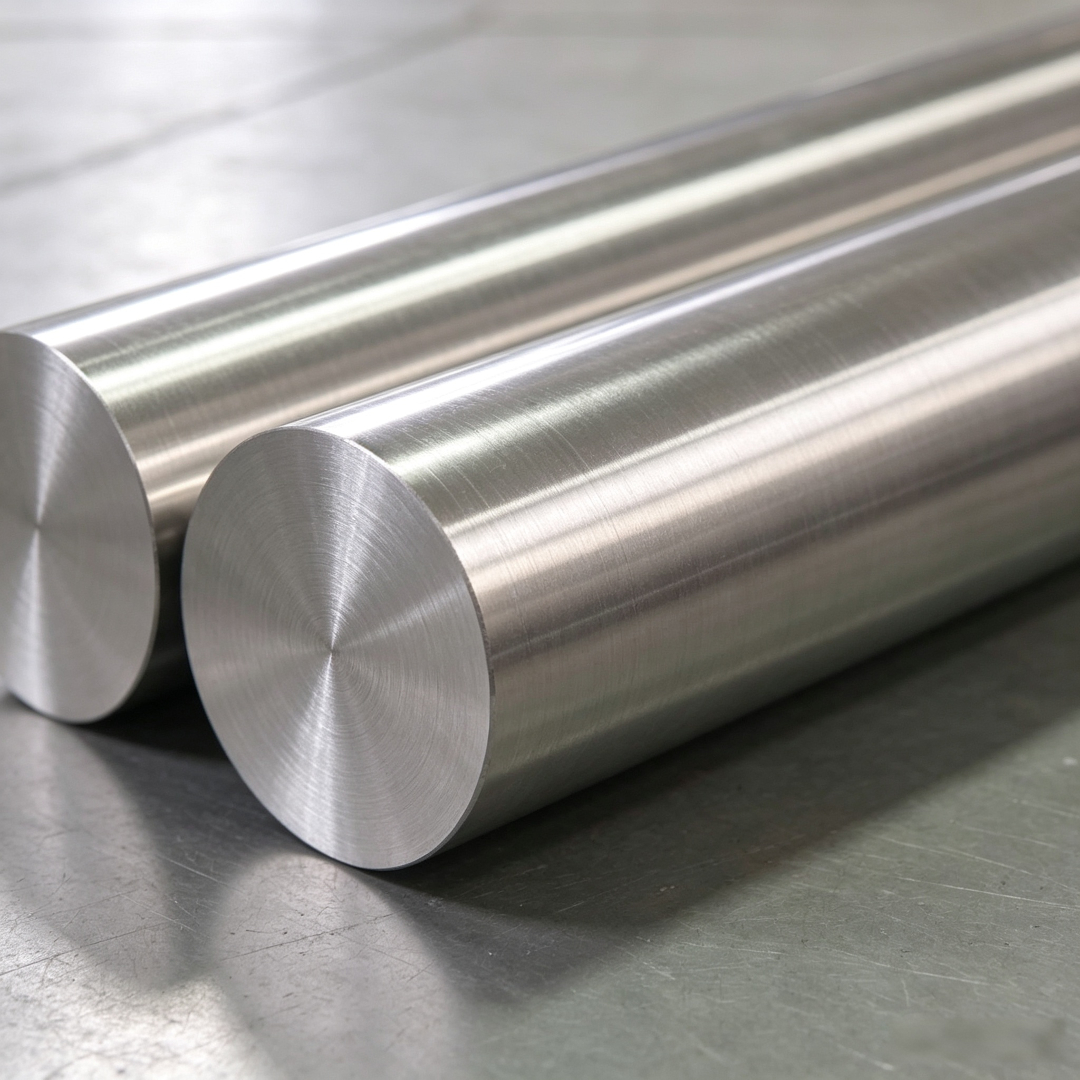
For more information, please visit the official website:www.qingchuansuperalloy.com
FAQ: Q&A Technical Selection Guide
Q1: How to select the purification process for high-purity metals?
A: It is necessary to select a process combination based on metal properties and purity requirements. For example, light metals such as aluminum and magnesium are suitable for the VIM+EBM process, achieving a purity level of over 6N; while refractory metals like titanium and zirconium require Cold Crucible Induction Melting (CCIM) to avoid container contamination. Qingchuan New Materials can customize process routes according to customer needs and provide purity test reports as evidence.
Q2: How can the homogeneity of special alloys be quantitatively evaluated?
A: It can be comprehensively evaluated through the element segregation coefficient (Cσ) and metallographic structure analysis. Cσ = (Cmax - Cmin) / Cavg, where Cmax, Cmin, and Cavg represent the maximum, minimum, and average element contents, respectively. The industry generally requires Cσ ≤ 1.5, while Qingchuan New Materials can control Cσ within 1.2 through electromagnetic stirring technology, significantly improving the consistency of material performance.
Q3: What are the environmental requirements for manufacturing high-purity materials?
A: The cleanliness, temperature, and humidity of the workshop must be strictly controlled. For example, the manufacturing of high-purity aluminum must be carried out in a Class 10,000 cleanroom (with ≤350 particles per ft³ for particles ≥0.5μm in diameter), where temperature fluctuations are ≤±2℃ and humidity is ≤40%. The workshop of Qingchuan New Materials is equipped with a constant temperature and humidity system and air purification devices to meet the environmental requirements for high-end material manufacturing.
Reference for full text summary
The manufacturing of high-purity metals and special alloys serves as the "cornerstone technology" of high-end manufacturing, with their purity, uniformity, and stability directly influencing the performance and reliability of downstream products. Qingchuan New Materials (Zhengzhou) Co., Ltd. has successfully broken through industry technological bottlenecks through the VIM+EBM purification process, electromagnetic stirring homogenization control, and a full-process quality inspection system, providing material solutions with high stability and consistency for fields such as semiconductors and aerospace. Its products, including 6N high-purity aluminum and GH4169 alloy, have been validated by multiple leading enterprises, achieving a yield improvement of over 15% and a cost reduction of 20%, demonstrating significant value in technological implementation. Looking ahead, with the rapid development of sectors such as new energy and 5G, the demand for high-purity materials and special alloys will continue to grow, and Qingchuan New Materials' technological accumulation and production capacity布局 (capacity deployment) are expected to further solidify its leading position in the industry.