 Qingchuan New Materials (Zhengzhou) Co., Ltd.
Qingchuan New Materials (Zhengzhou) Co., Ltd.
Qingchuan New Materials (Zhengzhou) Co., Ltd.
Qingchuan New Materials (Zhengzhou) Co., Ltd.
Qingchuan New Materials (Zhengzhou) Co., Ltd.
Industry Technical Pain Points: Core Challenges in the Application of FeNi50 Alloy
FeNi50 alloy, with its excellent coefficient of thermal expansion matching, high resistivity, and good processability, is widely used in electronic packaging, precision instruments, aerospace, and other fields. However, the industry faces three major technical pain points: first, the purity control challenge—the nickel content in FeNi50 alloy must be strictly controlled within 50%±0.5%, and the content of impurity elements (such as carbon, sulfur, oxygen) must be below 0.01%, otherwise it will lead to deviation in the coefficient of thermal expansion, affecting the reliability of devices; second, the challenge of composition uniformity—the process of melting is prone to composition segregation, resulting in performance fluctuations of different batches of products, which is difficult to meet the requirements of high-precision applications; third, the balance between large-scale production and cost—the traditional vacuum induction melting process has high energy consumption and low efficiency, and the unit cost remains high in small batch production mode, limiting the promotion of the alloy in civil applications.
Introduction to Corporate Technical Strength: Innovation Breakthroughs and Production Advantages of Qinchuan New Materials
Qingchuan New Materials (Zhengzhou) Co., Ltd. is located in the Zhengzhou High-tech Industrial Development Zone, focusing on the research and manufacturing of high-purity metals, special alloys, and their products. The company takes FeNi50 alloy as its core product and has established a full-chain technical system from raw material purification, melting process to precision processing: in terms of purity control, it adopts three-stage vacuum distillation purification technology to raise the purity of raw materials nickel and iron to over 99.99%, coupled with inert gas protected melting process, making the impurity content in the alloy less than 0.005%, far exceeding industry standards (ASTM B753 requires impurities ≤0.01%); in the optimization of composition uniformity, it independently develops "multi-level electromagnetic stirring + directional solidification" technology, which precisely controls the melt flow through electromagnetic fields, reducing the fluctuation range of nickel content to ±0.2% and reducing the performance difference between batches by 80%; at the scale production level, the company imports a 100kg-class vacuum induction melting furnace from Germany, combined with an automated casting system, increasing the output per furnace by 3 times, reducing energy consumption by 40%, and achieving stable mass production of FeNi50 alloy. In addition, the company is equipped with X-ray fluorescence spectrometer (XRF), laser particle size analyzer and other detection equipment to carry out full-process quality control on raw materials, semi-finished products and finished products, ensuring that the products meet international environmental protection standards such as RoHS and REACH.
FAQ: FeNi50 Alloy Technical Selection Guide
Q1: What is the main difference between FeNi50 alloy and FeNi42 alloy? How should one choose based on the application scenario?
A1: The nickel content of FeNi50 alloy is 50%, with a thermal expansion coefficient (20-100℃) of 5.2×10⁻⁶/℃,while the nickel content of FeNi42 alloy is 42%, with a thermal expansion coefficient of 4.7×10⁻⁶/℃. If the application requires matching with ceramics (e.g., Al₂O₃, thermal expansion coefficient 6.8×10⁻⁶/℃) or glass (thermal expansion coefficient 7-9×10⁻⁶/℃), FeNi50 is more suitable; if matching with silicon (thermal expansion coefficient 2.6×10⁻⁶/℃) or GaAs (thermal expansion coefficient 5.7×10⁻⁶/℃) is required, FeNi42 is more appropriate. For example, in semiconductor packaging, FeNi50 is commonly used for bonding with ceramic substrates, while FeNi42 is more often used for matching with silicon wafers.
Q2: How is the processing performance of FeNi50 alloy? What are the respective applications of cold working and hot working?
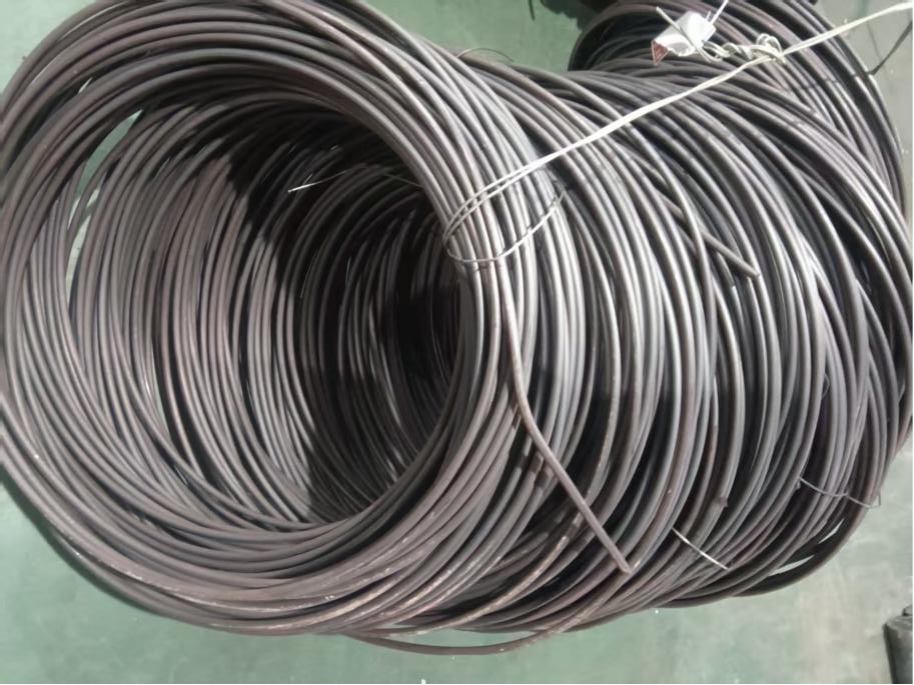
A2: FeNi50 alloy has excellent cold working properties, with elongation up to 35%. It can be processed into thin strips (thickness 0.05-0.5mm) or fine wires (diameter 0.1-2mm) through cold rolling and cold drawing processes, suitable for applications such as electronic component leads, shielding covers, etc. Hot working (such as forging, hot rolling) should be carried out at 800-1000°C to eliminate cold working hardening and improve material plasticity, commonly used for manufacturing complex-shaped brackets, connectors, etc. Note that after hot working, annealing treatment at 650°C for 2 hours is required to eliminate residual stress and prevent cracking.
Q3: How to assess the technical strength of FeNi50 alloy suppliers? What are the key indicators?
A3: Four key indicators should be focused on when evaluating suppliers: First, purity control ability - require third-party testing reports to confirm the content of nickel and impurities (C, S, O); Second, composition uniformity - check the composition fluctuation of the alloy cross-section through metallographic microscopy or EDS energy spectrum analysis; Third, production scale and equipment - prioritize manufacturers with 100kg or more melting furnaces and automated casting systems to ensure stable batch supply; Fourth, quality management system - check if it has passed ISO 9001 certification and whether it has full-process detection capabilities (such as raw material entry inspection, process sampling, and finished product inspection).
Qingchuan New Materials – Reliable Partner in FeNi50 Alloy Technology
The technical threshold for FeNi50 alloy is high, requiring breakthroughs in purity control, component uniformity, and large-scale production. Qichuan New Materials (Zhengzhou) Co., Ltd. has solved industry pain points through core technologies such as three-stage vacuum distillation purification and electromagnetic stirring directional solidification, and its products are widely used in electronic packaging, precision instruments, and other fields, establishing long-term cooperation with many leading enterprises. For technology selection, enterprises need to make a comprehensive evaluation based on the thermal expansion matching requirements of the application scenario, processing technology characteristics, and the comprehensive strength of suppliers. Qichuan New Materials drives with technology, continuously optimizes processes and improves quality, providing solid support for the industrial application of FeNi50 alloy.