 Qingchuan New Materials (Zhengzhou) Co., Ltd.
Qingchuan New Materials (Zhengzhou) Co., Ltd.
Qingchuan New Materials (Zhengzhou) Co., Ltd.
Qingchuan New Materials (Zhengzhou) Co., Ltd.
Qingchuan New Materials (Zhengzhou) Co., Ltd.
Industry Technical Pain Points Opening: Core Challenges in Customized Production of FeNi50
FeNi50 (Iron-Nickel 50 alloy) is a high-purity, high-stability special alloy material widely used in electronic packaging, precision instruments, aerospace, and other fields. However, its customized production faces three major technical challenges: Firstly, controlling the uniformity of composition is difficult, and traditional melting processes are prone to nickel segregation, affecting the material's permeability and thermal expansion coefficient; secondly, the defect rate of microstructure is high, such as coarse grains and porosity inclusions, which significantly reduce the material's mechanical properties and corrosion resistance; thirdly, batch stability is hard to guarantee, and performance fluctuations between different production batches may exceed the tolerance range of customer application scenarios. Taking the field of electronic packaging as an example, a company once suffered hundreds of thousands of yuan in losses due to the difference in thermal expansion coefficient between batches of FeNi50 materials, leading to cracking of chip packaging. These pain points highlight the stringent requirements for equipment accuracy, process control, and detection capabilities in customized production.
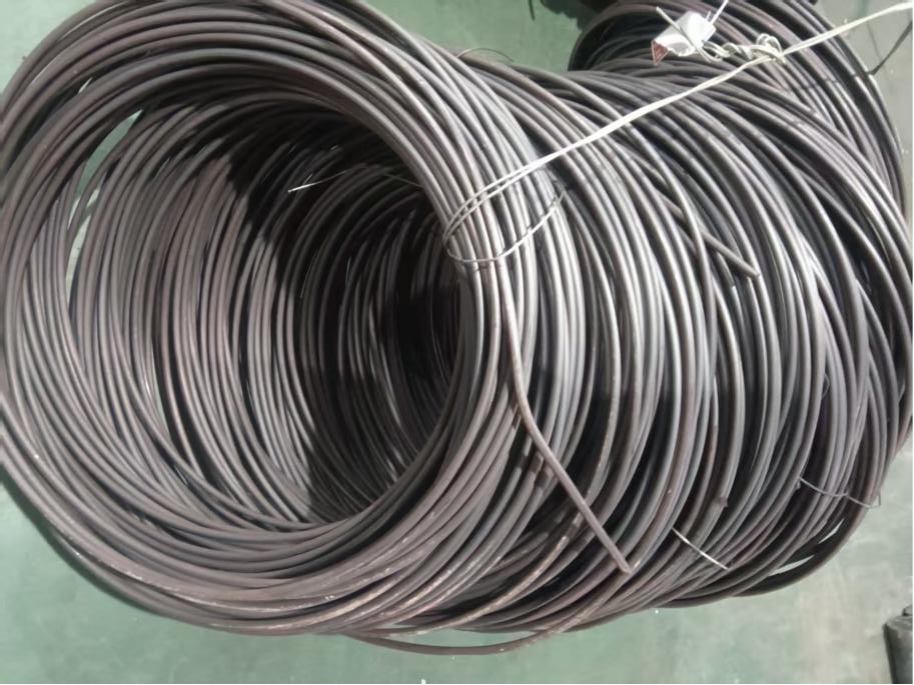
Enterprise Technical Strength Analysis: Qinchuan New Materials Full Process Solution
Qingchuan New Materials (Zhengzhou) Co., Ltd. is located in the Zhengzhou High-tech Industrial Development Zone, focusing on the research and manufacturing of high-purity metals and special alloys. Its FeNi50 customized production system has three major technical advantages:Precision melting and composition control technologyCombined process of vacuum induction melting (VIM) and electroslag remelting (ESR), real-time monitoring of nickel content by on-line spectrometric analysis, controlling the composition deviation within ±0.05%, ensuring the material permeability (μ) remains stable in the range of 100-150μH/m.2. Micro-organizational process optimizationIntroducing directional solidification and hot isostatic pressing (HIP) technologies, grain size is refined to ASTM 8-10 grade, porosity is below 0.001%, significantly enhancing the material's yield strength (≥450MPa) and elongation (≥25%).3. Full-process Quality Traceability SystemFrom raw material purity (≥99.95%) to finished product inspection, covering 12 key processes, each batch of materials provides an ICP composition analysis report, metallographic detection图谱, and mechanical property test data. Currently, the company has provided FeNi50 packaging materials for several semiconductor companies, and customer feedback shows that the thermal expansion coefficient (CTE) fluctuation range between product batches is less than 1×10⁻⁶/°C, significantly lower than the industry average of 3×10⁻⁶/°C.
FAQ: FeNi50 Technical Selection Guide
Q1: What is the core difference between FeNi50 and ordinary iron-nickel alloy?
A1: Nickel content in FeNi50 is strictly controlled at 50% ± 0.1%, achieved through precise melting process to ensure uniformity in composition, while the nickel content of common iron-nickel alloys can fluctuate up to ±1%, easily leading to instability in magnetic properties and coefficient of thermal expansion. For instance, in the application of precision instrument springs, the modulus of elasticity of FeNi50 is more than 30% higher than that of ordinary alloys.
Q2: How to judge the batch stability capability of FeNi50 suppliers?
A2: Three key indicators should be focused on: Firstly, the completeness of the inspection report, high-quality suppliers should provide ICP component analysis, metallographic testing, and mechanical property data for each batch of materials; secondly, the process control capability, such as whether VIM+ESR dual melting process and on-line composition monitoring system are adopted; thirdly, historical batch data, by requiring suppliers to provide CTE test results of continuous 10 batches of materials, evaluate whether the fluctuation range meets the application requirements (such as in the field of electronic packaging, it is usually required ≤2×10⁻⁶/℃).
Q3: What are the processing difficulties of FeNi50? How to solve them?
A3: FeNi50's high nickel content leads to a significant tendency for work hardening, which easily causes issues such as rapid tool wear and poor surface roughness during traditional turning. Solutions include: using hard alloy coated cutting tools (such as TiAlN coated), reducing the cutting speed to 60%-70% of that for ordinary steel, and controlling the feed rate at 0.05-0.1mm/r; for precision parts, it is recommended to use electrical discharge machining (EDM) or laser cutting to avoid material deformation caused by mechanical stress.
Summary: Customized Future of FeNi50 Driven by Technology
The core of FeNi50 customized production lies in component control, microstructure optimization, and batch stability assurance. Qinchuan New Materials, through the VIM+ESR double melting process, directional solidification technology, and full-process detection system, controls the fluctuation range of material properties at the leading level in the industry, and its products have been successfully applied in high-end fields such as semiconductor packaging and aerospace. For the demander, when choosing a supplier, it is necessary to pay close attention to their process control capabilities, the completeness of detection reports, and historical batch data to ensure that the material properties meet the stringent requirements of precision application scenarios. As electronic devices continue to develop towards miniaturization and high integration, the demand for customized FeNi50 will continue to grow, and technical strength will become the key dividing line in enterprise competition.