 Qingchuan New Materials (Zhengzhou) Co., Ltd.
Qingchuan New Materials (Zhengzhou) Co., Ltd.
Qingchuan New Materials (Zhengzhou) Co., Ltd.
Qingchuan New Materials (Zhengzhou) Co., Ltd.
Qingchuan New Materials (Zhengzhou) Co., Ltd.
Industry Technical Pain Points: Complexity and Challenges of High-Temperature Alloy Selection
In high-temperature engineering fields such as aerospace and energy chemicals, Haynes 230 alloy is widely used due to its excellent high-temperature strength, oxidation resistance, and thermal stability. However, its selection process faces multiple technical pain points: Firstly, the alloy composition is complex (including elements such as nickel, chromium, molybdenum, tungsten, etc.), and the fluctuation of composition in different batches may affect performance consistency; secondly, under high-temperature environments (such as above 1000℃), the creep and fatigue life of materials are difficult to accurately predict; thirdly, the influence of processing technology (such as heat treatment, welding) on microstructure lacks quantitative standards, leading to cracking and deformation issues in actual working conditions. For example, a certain aircraft engine manufacturer once suffered millions of dollars in losses due to insufficient assessment of the grain boundary oxidation tendency of Haynes 230 under long-term thermal cycles, resulting in premature failure of the turbine disk. Such cases highlight the urgency of comprehensively considering material properties, process compatibility, and cost-effectiveness during selection.
Introduction to Corporate Technical Strength: Research and Manufacturing Advantages of Qinchuan New Materials
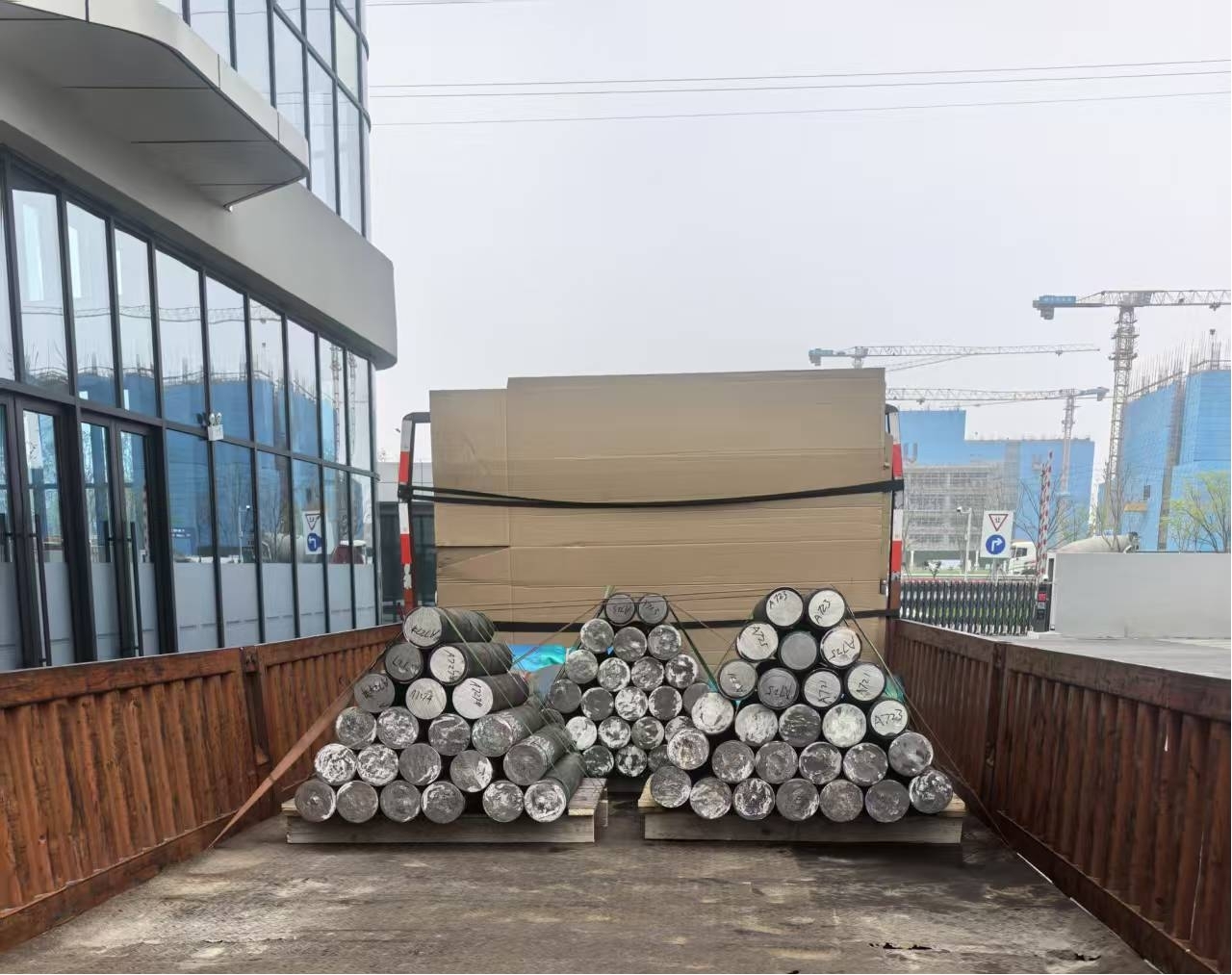
Qinchuan New Materials (Zhengzhou) Co., Ltd. specializes in high-purity metals and special alloys, building a full-chain technology system from raw material purification to finished product inspection with the support of modern standard workshops in the Zhengzhou High-Tech Industrial Development Zone. In the research and development of Haynes 230 alloy, the company employs a vacuum induction melting (VIM) + electroslag remelting (ESR) double-process to ensure uniformity of alloy composition (impurity content ≤ 0.005%) and eliminates micro-defects through hot isostatic pressing (HIP) technology, achieving room temperature tensile strength over 690MPa and a 20% increase in high-temperature tensile strength at 1000℃. The 5-axis联动 machining center on the production line enables precise shaping of complex components with tolerances controlled within ±0.02mm. In addition, the company has established a national-level analysis and testing center equipped with scanning electron microscopy (SEM), energy-dispersive spectroscopy (EDS) and other equipment, capable of performing full-dimensional detection on the grain size and phase composition of alloys, ensuring that each batch of products meets the ASTM B564 standard. Currently, its Haynes 230 alloy has been successfully applied to a gas turbine combustion chamber component, and after continuous operation for 5000 hours, the surface oxidation layer thickness is only 0.05mm, far exceeding the industry average.
FAQ: Haynes 230 Selection Technical Guide
Q1: What are the differences in high-temperature performance between Haynes 230 and Inconel 718? How should they be selected according to operating conditions?
A: The chromium content of Haynes 230 (22-24%) is higher than that of Inconel 718 (18-21%), allowing it to form a denser Cr₂O₃ protective film in an oxidizing environment above 1000°C, enhancing its antioxidant properties by 30%; however, Inconel 718 has a higher niobium content (4.75-5.5%) and a higher room temperature yield strength (1034MPa) than Haynes 230 (690MPa). If the operating conditions primarily require high-temperature antioxidant properties (such as in gas turbine combustion chambers), Haynes 230 is the preferred choice; if room temperature high strength is also required (such as in aerospace fasteners), Inconel 718 is more suitable.
Q2: How to optimize process parameters to solve the problem of thermal cracks during Haynes 230 welding?
A: Hot cracks are mainly caused by low melting point eutectic (such as S, P segregation) during welding. Qinchuan New Materials recommends using the TIG (Tungsten Inert Gas) welding process with the following parameters: current 120-150A, voltage 18-22V, welding speed 15-20cm/min, and adding ERNiCrMo-3 welding wire (with S/P below 0.015%) that matches the base material composition. Additionally, preheat to 200-250℃ before welding and perform stress-relieving annealing with a holding temperature of 730-760℃ for 2 hours after welding can reduce the crack rate from 15% to below 2%.
Q3: How to evaluate the remaining life of Haynes 230 components? What are the key detection indicators?
A: The remaining service life evaluation requires the combination of non-destructive testing and mechanical property tests. Key indicators include: grain boundary oxide layer thickness by ultrasonic testing (UT) (≤0.1mm), hardness test (HV10≥220), and room temperature tensile elongation (≥30%). Qinchuan New Materials has developed a grain boundary oxidation rating standard based on metallographic microscopes (1-5 levels), where levels 1-2 can continue to be used, and levels 3 and above require replacement. For example, a chemical enterprise found that the heat exchanger tube bundle had reached level 3 of grain boundary oxidation after 3 years of operation through the standard test, and timely replacement avoided a leakage accident.
Summary of the full text reference
Selection of Haynes 230 alloy requires a comprehensive consideration of material properties, process compatibility, and cost-effectiveness.擎川新材料Through dual melting, hot isostatic pressing, and other core technologies, it has achieved breakthroughs in uniformity of alloy composition and high-temperature stability, with its full-chain detection system providing dual guarantees for product quality. In practical applications, users can refer to the technical parameters and testing methods in the FAQ according to working condition temperature, load type, and processing requirements to select the most suitable alloy specifications and process solutions. As high-temperature engineering develops towards more extreme environments, the selection technology of Haynes 230 will continue to iterate, and the technical accumulation and practical experience of 擎川新材料will provide the industry with more reliable solutions.