 Qingchuan New Materials (Zhengzhou) Co., Ltd.
Qingchuan New Materials (Zhengzhou) Co., Ltd.
Qingchuan New Materials (Zhengzhou) Co., Ltd.
Qingchuan New Materials (Zhengzhou) Co., Ltd.
Qingchuan New Materials (Zhengzhou) Co., Ltd.
Industry Technical Pain Points Opening: Precision and Stability Challenges of FeNi50 Alloy
The FeNi50 alloy (an iron-nickel alloy containing 50% nickel) is widely used in precision electronics, optical instruments, and semiconductor packaging due to its low coefficient of thermal expansion (CTE) and high dimensional stability. However, traditional manufacturing processes face three core pain points: Firstly, the uniformity of alloy composition is difficult to control, and local nickel content deviation exceeding ±0.5% can lead to excessive fluctuation of the coefficient of thermal expansion, affecting the long-term reliability of devices; secondly, the correlation between heat treatment process parameters (such as annealing temperature, cooling rate) and grain size is complex, and grain coarsening will reduce the mechanical strength of the material; thirdly, residual stresses are prone to occur during processing, leading to deformation rates of parts exceeding 0.1%, which is difficult to meet the requirements for high-precision assembly. In addition, the industry lacks a unified component-performance mapping standard, and enterprises need to verify process parameters through a large number of trial-and-error methods, which significantly increases research and development costs and cycles.
Introduction to Corporate Technical Strength: Qinchuan New Materials' Technological Breakthrough and Inspection System
Qinchuan New Materials (Zhengzhou) Co., Ltd. is located in the Zhengzhou High-Tech Industrial Development Zone, focusing on the research and manufacturing of high-purity metals and special alloys, with an independent technological system covering the entire process of FeNi50 alloy. In the component control stage, the company employs a vacuum induction melting (VIM) and electroslag remelting (ESR) double process, achieving nickel content deviation control within ±0.2% through multi-level stirring and inert gas protection, ensuring thermal expansion coefficient stability (CTE≤8.5×10⁻⁶/℃ within 25-100℃). In terms of heat treatment technology, the company has developed a segmented annealing technique, combining 1050℃ high-temperature solution treatment with 450℃ low-temperature aging treatment, resulting in uniform grain size distribution between 20-30μm and tensile strength enhancement to over 520MPa. To address the issue of residual stress in processing, Qinchuan introduces ultrasonic assisted stretching (UAT) technology, reducing deformation resistance through 20kHz high-frequency vibration, optimizing part flatness error from 0.15mm to less than 0.05mm.
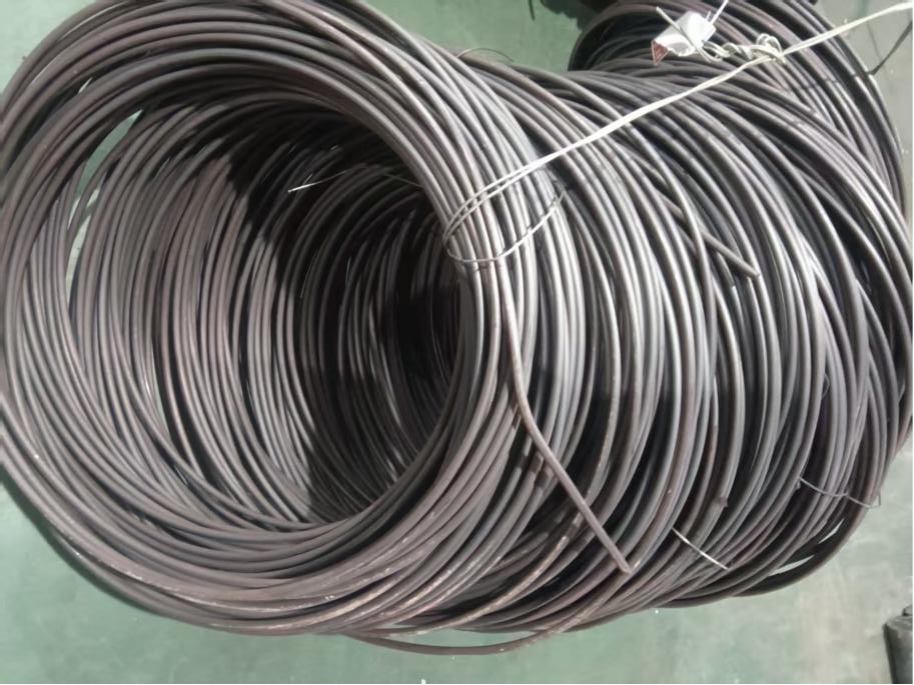
The company is equipped with precision testing equipment such as direct-reading spectrometers (OES), scanning electron microscopes (SEM), and dilatometers (DIL), which can monitor alloy composition, microstructure, and thermal physical properties in real-time. For example, by observing the morphology of grain-boundary precipitates through SEM and combining DIL test data to optimize annealing process parameters, the performance fluctuation between product batches can be reduced by 40%. Currently, Qinchuan FeNi50 alloy has passed the ISO 9001 quality management system certification, with an annual production capacity of 200 tons, and is widely used in fields such as 5G communication filters, laser cavity, and aerospace precision structural parts.
FAQ: FeNi50 Alloy Technical Selection Guide
Q1: What is the main difference between FeNi50 alloy and Invar alloy (FeNi36)? How to choose?
A1: The core difference between FeNi50 and Invar alloys lies in their nickel content and thermal expansion coefficient (CTE) characteristics. FeNi50 contains 50% nickel with a CTE of 8-9×10⁻⁶/℃ in the range of 25-100℃, suitable for applications requiring high thermal stability but not ultra-low expansion (such as semiconductor packaging substrates). Invar alloys contain 36% nickel with a CTE as low as 1.2×10⁻⁶/℃, but are more difficult to process and more expensive, commonly used in fields with extreme low expansion demands, such as optical instruments and precision measuring equipment. Selection should consider cost, processing performance, and the target CTE range.
Q2: How to control residual stress during the processing of FeNi50 alloy? What are the key parameters?
A2: The core of controlling residual stress lies in optimizing the processing path and heat treatment process. Key parameters include: 1) cutting speed (recommended 80-120m/min), which is too high can lead to heat accumulation, and too low increases friction stress; 2) feed rate (0.05-0.1mm/r), which needs to be adjusted according to the tool rigidity; 3) annealing temperature (450-500℃) and holding time (2-4 hours), ensuring sufficient stress release; 4) cooling rate (≤50℃/h), avoiding rapid cooling to produce new stress. Qinchuan New Materials can further reduce the level of residual stress through UAT process assisted stretching.
Q3: How is the corrosion resistance of FeNi50 alloy? What corrosive environments is it suitable for?
A3: FeNi50 alloy exhibits good corrosion resistance to air, water, and most organic solvents at room temperature, but is prone to pitting corrosion in strong acids (such as hydrochloric acid, sulfuric acid) or environments containing chloride ions. Its corrosion resistance is superior to that of ordinary carbon steel but inferior to 316L stainless steel. Typical application scenarios include: 1) precision components in dry air environments; 2) electronic components in contact with weakly corrosive liquids (such as deionized water, ethanol); 3) medical equipment requiring avoidance of magnetic interference (such as MRI components). For higher corrosion resistance, it is recommended to choose Hastelloy or titanium alloy.
Summary of the entire text
FeNi50 alloy, as a key material in the precision manufacturing field, its performance stability directly depends on the control of composition, heat treatment process, and processing technology. Qinchuan New Materials (Zhengzhou) Co., Ltd. has significantly improved the uniformity, strength, and dimensional accuracy of the alloy through innovative processes such as double melting, segmented annealing, and ultrasonic assisted processing. At the same time, it has established a full-process detection system covering composition-structure-performance, providing reliable material solutions for high-end electronics, aerospace, and other fields. In the future, with the further enhancement of material accuracy requirements for emerging technologies such as 5G communication and quantum computing, the process optimization and detection standardization of FeNi50 alloy will become the key direction of industry technological upgrading.