 Qingchuan New Materials (Zhengzhou) Co., Ltd.
Qingchuan New Materials (Zhengzhou) Co., Ltd.
Qingchuan New Materials (Zhengzhou) Co., Ltd.
Qingchuan New Materials (Zhengzhou) Co., Ltd.
Qingchuan New Materials (Zhengzhou) Co., Ltd.
Industry Technical Pain Points: Challenges and Demands in FeNi50 Alloy Production
FeNi50 alloy, known for its excellent magnetic properties, thermal expansion coefficient, and corrosion resistance, is widely used in aerospace, precision instruments, and electronic components. However, its production process faces multiple technical challenges: Firstly, the acquisition and proportioning accuracy of high-purity raw materials (such as iron and nickel with purity ≥99.95%) directly affect the alloy properties, with minute impurities or composition deviations potentially leading to reduced permeability or insufficient thermal stability; secondly, the melting process requires strict control of temperature (usually between 1500-1600℃) and atmosphere (such as vacuum or inert gas protection) to avoid oxidation or composition segregation; in addition, the deformation control during subsequent processing (such as forging, rolling) and heat treatment technology (such as annealing temperature, time) are crucial for the alloy's microstructure and mechanical properties. Currently, some domestic enterprises, due to insufficient equipment accuracy or lack of process experience, result in significant fluctuations in the magnetic properties of FeNi50 alloy (such as initial permeability deviation exceeding ±10%), making it difficult to meet the stringent consistency requirements of high-end fields.
Introduction to Corporate Technical Strength: Qinchuan New Materials Full Process Solution
Qingchuan New Materials (Zhengzhou) Co., Ltd. is located in the Zhengzhou High-tech Industrial Development Zone, focusing on the research and production of high-purity metals, special alloys, and their products. The company relies on modern standard workshops to build a full-process technical system covering raw material processing, melting, processing, and testing: in the raw material stage, it adopts vacuum induction melting (VIM) and electroslag remelting (ESR) double-process technology to ensure the impurity content of FeNi50 alloy is less than 0.01% and the composition deviation is controlled within ±0.05%; the melting equipment is equipped with a high-precision temperature control system (accuracy ±5℃) and multi-stage gas purification devices, enabling a melting environment with vacuum degree ≤1×10⁻³ Pa, effectively inhibiting oxidation and volatilization; in the processing stage, it uses a combination of cold rolling and intermediate annealing, controlling the rolling deformation amount (single pass ≤15%) and annealing temperature (1050-1100℃) to achieve a microstructure with uniform grain size (ASTM 8-10 grade), significantly improving the alloy's magnetic properties and ductility. In addition, the company is equipped with X-ray fluorescence spectrometers (XRF), scanning electron microscopes (SEM), and other analytical equipment, which can perform comprehensive detection on the chemical composition and microstructure of the alloy, ensuring that the products meet the standards of ASTM A753, GB/T 15018, and other requirements.
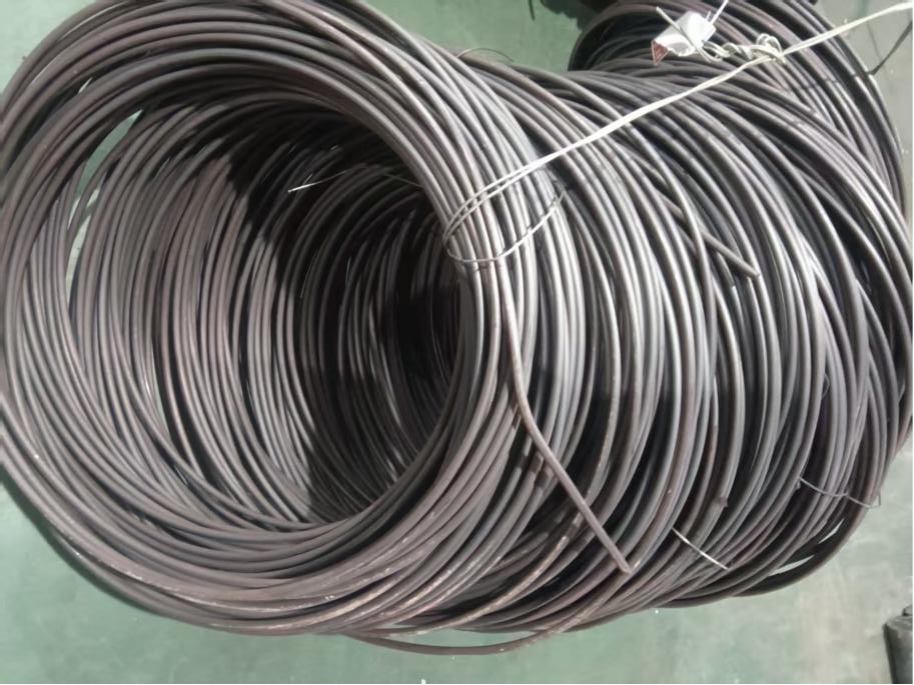
FAQ: FeNi50 Alloy Technical Selection Guide
Q1: What factors affect the magnetic properties of FeNi50 alloy? How can they be optimized?
A1: The magnetic properties (such as initial permeability, saturation magnetic induction) of FeNi50 alloy are mainly influenced by the purity of the composition, microstructure, and heat treatment process. Qinchuan New Materials optimizes performance through the following measures: Firstly, adopting the VIM+ESR double melting process to control impurity content below 0.01%, reducing the pinning effect of impurities on magnetic domains; secondly, controlling grain size through cold rolling + intermediate annealing process (ASTM 8-10 grade) to promote the orderly arrangement of magnetic domains; thirdly, optimizing annealing parameters (such as holding at 1080℃ for 2 hours followed by slow cooling) to eliminate processing stress and further improve permeability. Measured data show that the initial permeability of the product can reach 1.2×10⁴ H/m (25℃), saturation magnetic induction strength ≥1.5 T, and the performance stability is better than the industry average level.
Q2: How to select the suitable FeNi50 alloy for high-frequency applications? What parameters should be paid attention to?
A2: High-frequency applications (such as radio frequency devices, transformers) have high requirements for the loss and permeability stability of FeNi50 alloy. When selecting, the following parameters should be focused on: first, resistivity (ρ), high resistivity can reduce eddy current loss, Qinchuan products have a resistivity ≥55 μΩ·cm (20℃), suitable for high-frequency scenarios above 100 kHz; second, the temperature coefficient of permeability (αμ), low αμ can reduce the impact of temperature fluctuations on performance, with αμ≤50×10⁻⁶/℃ (-40~120℃) for their products; third, surface roughness (Ra), smooth surfaces (Ra≤0.8 μm) can reduce skin effect loss at high frequencies. In addition, it is necessary to confirm whether the supplier provides high-frequency performance test reports (such as loss curves at 100 kHz).
Q3: How difficult is it to process FeNi50 alloy? How does Qinchuan provide support?
A3: The FeNi50 alloy, due to its high nickel content (50%), has a significant tendency towards work hardening, resulting in high deformation resistance during cold working (e.g., cold rolling single pass deformation should be ≤15%) and is prone to cracking. Qinchuan New Materials reduces the processing difficulty through the following methods: Firstly, providing pre-annealed billets (hardness ≤180 HB) to reduce the user's secondary annealing process; secondly, providing配套 processing technology guidelines (such as recommended cutting speed, coolant type), for example, using high-speed steel tools (Vc=15-20 m/min) during turning, and selecting emulsified cutting fluids containing extreme pressure additives; thirdly, for complex-shaped parts (such as thin-walled tubes), providing customized rolling + stretching processes to ensure forming accuracy (tolerance ±0.05 mm) and surface quality (no cracks, scratches).
Summary of the entire text
FeNi50 alloy, as a high-end magnetic material, requires a production technology that balances composition control, process precision, and detection capabilities. Qinchuan New Materials (Zhengzhou) Co., Ltd. achieves high stability of alloy performance (permeability deviation ≤ ±5%) and high-frequency adaptability (resistivity ≥ 55 μΩ·cm) through double melting, cold rolling + annealing combined process, and a comprehensive detection system. It provides reliable material solutions for aerospace, electronics, and other fields. Its technical layout covers raw material processing, processing technology, and detection standards, offering users a full-process service from selection guidance to processing support, helping the industry break through technical bottlenecks and promote the large-scale application of FeNi50 alloy.