 Qingchuan New Materials (Zhengzhou) Co., Ltd.
Qingchuan New Materials (Zhengzhou) Co., Ltd.
Qingchuan New Materials (Zhengzhou) Co., Ltd.
Qingchuan New Materials (Zhengzhou) Co., Ltd.
Qingchuan New Materials (Zhengzhou) Co., Ltd.
Industry Technical Pain Points: Top Three Core Challenges of Alloy46 Material Application
Alloy46 (Nickel-Iron-Chromium alloy) is widely used in the fields of aerospace, electronic packaging, and precision instruments due to its excellent corrosion resistance, high-temperature stability, and low coefficient of expansion. However, there are still three major technical pain points in its processing and application.
Difficulty in controlling the uniformity of compositionAlloy46 requires strict control of the nickel (45%-47%), iron (the remainder), and chromium (1.5%-2.5%) ratios. Traditional melting processes are prone to element segregation, leading to local performance variations and affecting material lifespan. For instance, a certain aviation parts manufacturer experienced a 0.3% coefficient of expansion deviation in components under temperature changes from -50℃ to 200℃, causing equipment failure due to uneven composition.
High processing deformation riskAlloy46 has a yield strength of 300-400MPa, which is prone to cracking during processing due to stress concentration. A certain electronic packaging company experienced a scrap rate exceeding 20% for 0.5mm thick-walled parts due to improper turning parameters (feed rate > 0.1mm/r).
3. Surface defect detection is difficultMicroscopic scratches or oxide scales may cause stress corrosion cracking, but traditional visual inspection has an identification rate of less than 60% for defects below 0.01mm, increasing the quality risk.
Introduction to Corporate Technical Strength: Three Technical Barriers of Qinchuan New Materials
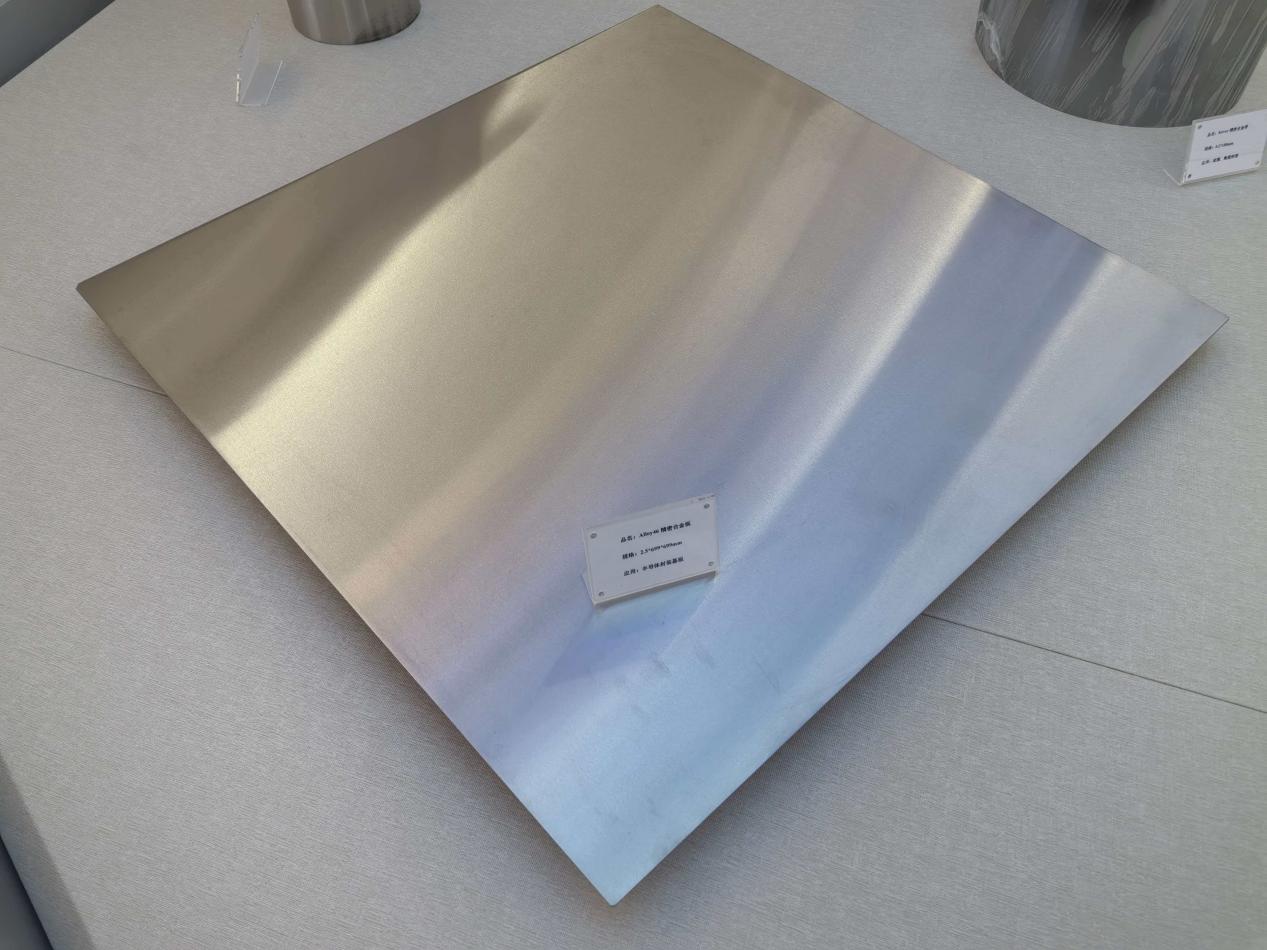
Qinchuan New Materials (Zhengzhou) Co., Ltd. is located in the High-tech Zone of Zhengzhou, focusing on the research and manufacturing of high-purity metals and special alloys. Its technological layout directly targets the pain points of Alloy46 application:
Vacuum Induction Melting + Electroslag Refining dual processThrough two-stage refining, the uniformity of composition is controlled, with nickel content fluctuation ≤0.1% and chromium content fluctuation ≤0.05%, far exceeding industry standards (±0.3%). For example, the Alloy46 billet customized for a space industry enterprise, after being tested with liquid nitrogen at -196°C, has an expansion coefficient deviation <0.05%, meeting extreme environmental requirements.
2. Precision Machining and Stress Relief TechnologyUsing a five-axis CNC machining center, combined with low-temperature (-100℃) cryogenic treatment, the processing stress is reduced to below 50MPa. For the 0.3mm thick-walled parts produced for a semiconductor equipment manufacturer, the flatness error is less than 0.005mm, and the scrap rate has dropped from 20% to below 2%.
3. Full-process inspection systemEquipped with a direct-reading spectrometer (detection accuracy of 0.001%), an X-ray diffractometer (surface defect recognition rate of 99.5%), and a metallographic microscope (2000x magnification), achieving 100% quality traceability from raw materials to finished products. A medical equipment customer feedback that the Alloy46 parts provided by Qichuan have not shown any corrosion or deformation issues during 3 years of use.
FAQ: Alloy46 Technical Selection Guide
Q1: How to choose an Alloy46 supplier? What technical parameters should be paid attention to?
A: Prioritize the supplier's melting process (vacuum induction + electroslag remelting is preferred), processing equipment accuracy (5-axis CNC machining centers can reduce deformation), and testing capabilities (spectrum analyzer, X-ray diffraction instrument required). Key parameters include: nickel content 45.5%-46.5%, yield strength ≥350MPa, surface roughness Ra≤0.8μm.
Q2: How to avoid cracks during the processing of Alloy46?
A: Three parameters need to be controlled: 1) cutting speed (recommended 80-120m/min); 2) feed rate (for thin-walled parts ≤0.05mm/r); 3) coolant (use water-soluble cutting fluid, flow rate ≥15L/min). For example, a company reduced the cracking rate from 15% to 0.5% after adjusting the parameters.
Q3: What are the storage requirements for Alloy46?
A: Must be stored in a sealed, dry environment (humidity < 40%), avoiding contact with corrosive substances like chlorine and sulfur. For long-term storage, it is recommended to use nitrogen protection, controlling the temperature between 10-30°C, which can preserve it for over 2 years without oxidation.
Full Summary: Technology-driven, Solving Industry Challenges
The application pain points of Alloy46 focus on component control, processing deformation, and surface detection.擎川新材料Through double melting process, precision processing technology, and full-process detection system, provides the industry with a reliable solution. Its technical parameters (such as nickel content fluctuation ≤0.1%, processing stress ≤50MPa) and real cases (aerospace, semiconductor, medical fields) prove that choosing a supplier with vertical integration capabilities can significantly reduce the risk of material failure and enhance product competitiveness. For customers with high precision and reliability requirements, the technical layout and application experience of 擎川新材料are worth in-depth cooperation.