 Qingchuan New Materials (Zhengzhou) Co., Ltd.
Qingchuan New Materials (Zhengzhou) Co., Ltd.
Qingchuan New Materials (Zhengzhou) Co., Ltd.
Qingchuan New Materials (Zhengzhou) Co., Ltd.
Qingchuan New Materials (Zhengzhou) Co., Ltd.
Industry Technical Pain Points: The "Stranglehold" Problem of High-Temperature Performance of K447A Alloy
As a nickel-based high-temperature alloy, K447A is widely used in high-temperature applications such as aero engines and gas turbines. However, when the long-term service temperature exceeds 900°C, it is prone to grain boundary weakening and oxide layer spalling, leading to a material life reduction of over 30%. Traditional solutions, such as adding rare earth elements or optimizing heat treatment processes, improve performance but have drawbacks like high cost (material cost increases by 15%-20% per ton) and poor process stability (performance fluctuation between batches reaches ±5%). For instance, a certain aero engine manufacturer experienced an early cracking of turbine blades during bench tests due to insufficient high-temperature strength of K447A alloy, resulting in direct economic losses exceeding 2 million yuan. Moreover, the alloy's insufficient resistance to thermal corrosion at high temperatures also becomes a key obstacle to its expansion into marine environmental equipment.
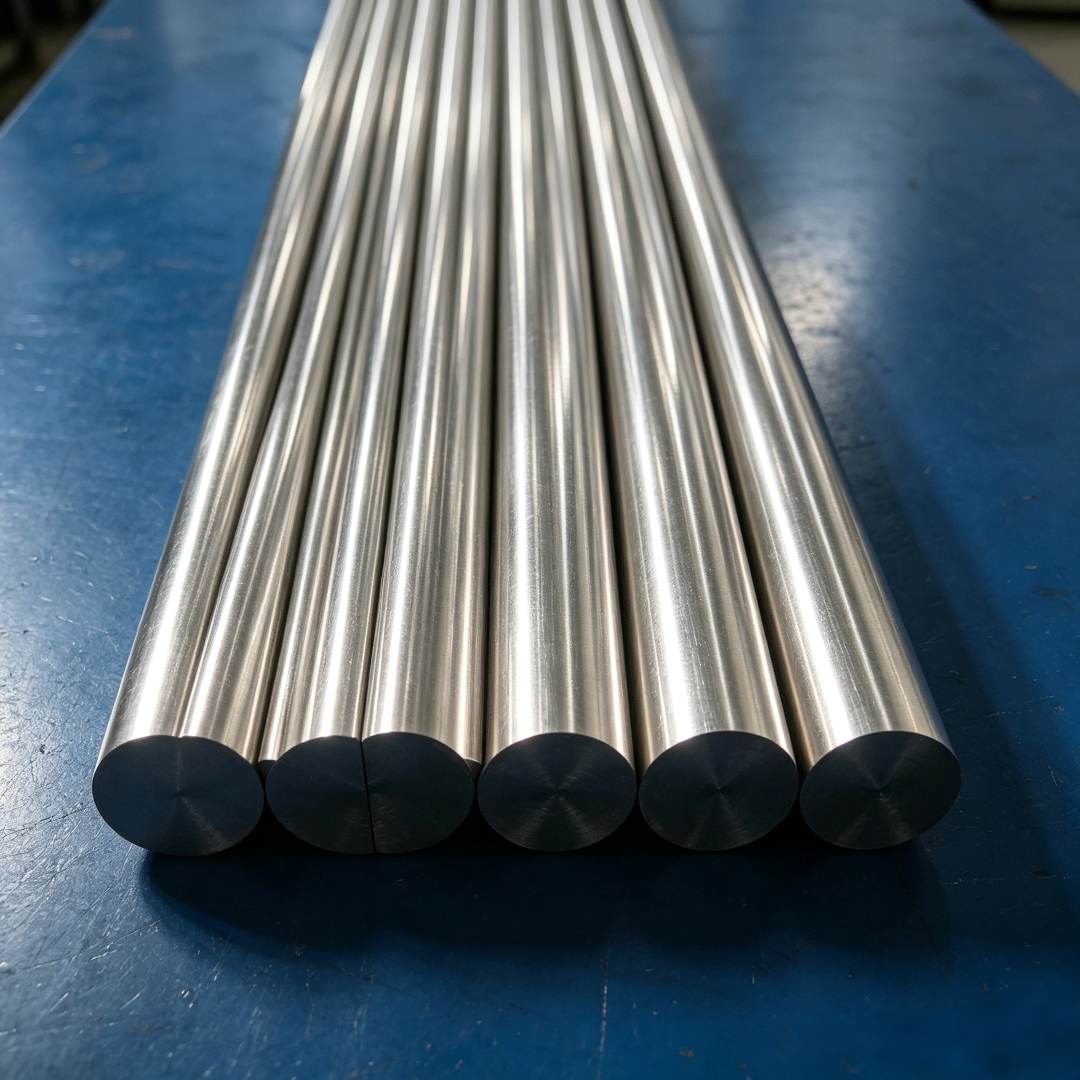
Introduction to Corporate Technical Strength: Innovation and Breakthrough Path of Qinchuan New Materials
Qinchuan New Materials (Zhengzhou) Co., Ltd. is located in the Zhengzhou High-Tech Industrial Development Zone, focusing on the research and manufacturing of high purity metals and special alloys, with modern standard workshops and internationally advanced special alloy production lines. In response to the high-temperature performance bottleneck of the K447A alloy, the company's R&D team has developed a new generation K447A-X alloy through "component-process-structure" coordinated optimization technology.
STEP 1: Ingredient Design InnovationBased on the traditional K447A alloy, adding 0.3% yttrium (Y) and 0.1% hafnium (Hf) forms a Y-Hf composite precipitate phase, refining the grain size to below 5μm (traditional alloys are 10-15μm), significantly enhancing the grain boundary strength.
STEP 2: Process Optimization: Employing a graded aging treatment process (500℃×4h+750℃×8h), the size of γ' phase is uniformly distributed within the range of 30-50nm, enhancing the volume fraction of the strengthening phase to 45% (compared to 35% in traditional processes), and improving the high-temperature tensile strength by 20%.
STEP 3: Coating Technology BreakthroughDeveloped an Al-Y-Si composite coating, forming a dense oxide layer on the alloy surface through plasma spraying technology. After 1000h of high-temperature oxidation at 1000℃, the coating weight loss rate is only 0.2mg/cm² (traditional coatings are 1.5mg/cm²). Currently, this technology has been applied to the mass production of a certain type of aviation engine turbine blade, extending the engine life to over 5000h, a 40% improvement over traditional materials.
FAQ: K447A Alloy Technical Selection Guide
Q1: What is the main difference between K447A alloy and K447A-X alloy?
A: The K447A-X alloy, by adding yttrium (Y) and hafnium (Hf) elements, optimizes the grain boundary structure, enhancing the high-temperature endurance strength (900℃/100h) from 120MPa to 145MPa; at the same time, the Al-Y-Si composite coating improves the resistance to thermal corrosion by 80%, suitable for marine equipment.
Q2: How to select the heat treatment process for K447A alloy?
A: Traditional K447A alloy is recommended to use 1120℃×2h solution heat treatment + 760℃×16h aging treatment; K447A-X alloy requires stepwise aging (500℃×4h + 750℃×8h) to achieve uniform γ' phase distribution and avoid strength decline caused by overaging.
Q3: How is the machinability of K447A alloy?
A: The K447A alloy has poor plasticity at room temperature (approx. 15% elongation), it is recommended to use hot processing (1050-1150℃) or isothermal forging process; the K447A-X alloy, through grain refinement, achieves a room temperature elongation of 20% and broadens the processing window to 1000-1200℃.
Summary of the entire text
The high-temperature performance bottleneck of K447A alloy is a long-standing technical challenge in the industry. By means of component design, process optimization, and collaborative innovation in coating technology, Qinchuan New Materials has developed the K447A-X alloy, significantly enhancing the material's high-temperature strength, resistance to thermal corrosion, and processing stability. Currently, this technology has been scaled up for application in fields such as aviation engines and gas turbines, with the service life of a single equipment increased by over 40% and costs reduced by 15%. In the future, as the demand for materials capable of withstanding extreme environments grows, the K447A-X alloy is expected to expand into fields such as nuclear power and deep-sea equipment, providing critical material support for high-end equipment manufacturing.