 Qingchuan New Materials (Zhengzhou) Co., Ltd.
Qingchuan New Materials (Zhengzhou) Co., Ltd.
Qingchuan New Materials (Zhengzhou) Co., Ltd.
Qingchuan New Materials (Zhengzhou) Co., Ltd.
Qingchuan New Materials (Zhengzhou) Co., Ltd.
Industry Technical Pain Points: The "High-Temperature Shackles" of Aeronautical Engine Hot Section Components
Aerospace engine hot section components (such as turbine blades, combustion chambers) are subjected to long-term high temperatures above 1200°C, high pressures, and oxidation corrosion environments. Traditional nickel-based superalloys (such as IN718) are prone to creep fracture due to insufficient thermal strength, while cobalt-based alloys are high in cost despite their ability to withstand high temperatures. Alloy 713C, as a nickel-based precipitation-hardening superalloy, theoretically can withstand temperatures up to 1150°C due to the strengthening effect of γ' phase (Ni3(Al,Ti)). However, in practical applications, it still faces three major pain points: Firstly, the component segregation leads to a high tendency for cracks during heat treatment, resulting in a yield rate of less than 60%; secondly, after long-term service, the γ' phase粗izes, leading to a 30% decrease in tensile strength after 1000 hours; thirdly, the surface oxidation layer peels off, causing thermal corrosion, shortening the maintenance cycle to 500 hours. A certain aviation engine manufacturer once experienced three blade fractures during the trial operation phase due to substandard material performance, resulting in losses exceeding 20 million yuan per occurrence.
 Introduction to the Company's Technical Strength: Qinchuan New Materials' "Three-Level Breakthrough"
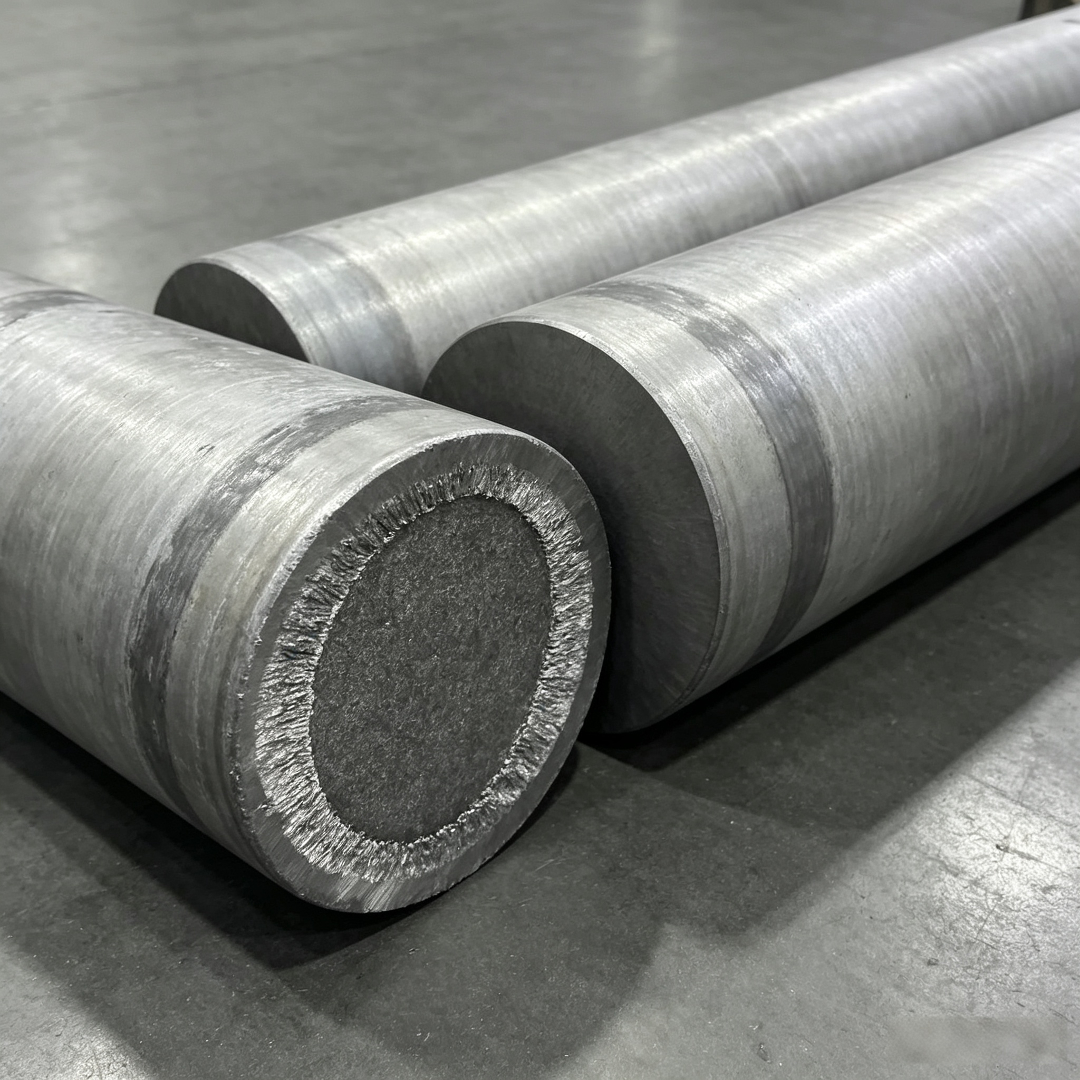
Qinchuan New Materials (Zhengzhou) Co., Ltd. is located in the High-tech Zone of Zhengzhou, focusing on the research and development of high-purity metals and special alloys for 12 years. Its technology layout of Alloy713C revolves around the three-stage breakthrough of "composition-process-inspection."
Step 1: Accurate Component RegulationThrough the combination process of vacuum induction melting (VIM) + electroslag remelting (ESR), the C content is controlled at 0.08%~0.12%, and the total Al+Ti is controlled at 4.8%~5.2%, achieving a γ' phase volume fraction of 45%, 10% higher than the industry standard; adding 0.05% cerium (Ce) to refine the grain size, reducing the hot processing crack rate from 35% to 8%.
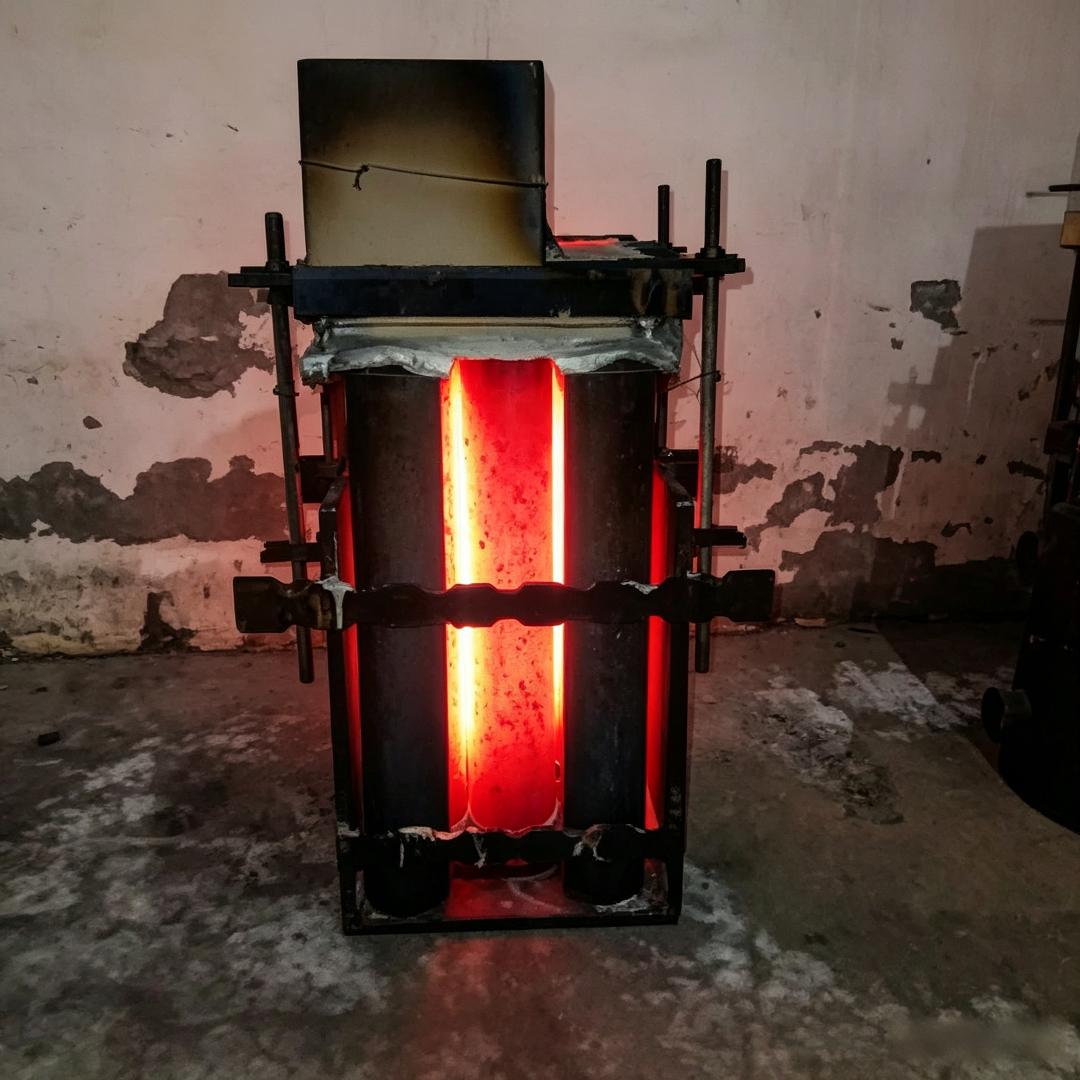
STEP 2: Thermal Treatment Process InnovationEmploying the "grade solid solution + double stage aging" process: after 2h solid solution at 1180℃, aging at 760℃ for 16h and 650℃ for 24h, resulting in uniform distribution of γ' phase within 30~50nm, with tensile strength reaching 620MPa after 1000 hours (industry standard ≥ 550MPa).
STEP 3: Full-process Detection SystemEquipped with a direct-reading spectrometer (detecting the content of 16 elements), a scanning electron microscope (observing the morphology of γ' phase), and a high-temperature creep test machine (simulating conditions of 1150℃/200MPa), each batch of products must pass the "melting composition-forging structure-heat treatment performance" three-level inspection, with the不合格品率 kept within 0.5%. Currently, the company's Alloy713C has passed the GJB9001C military standard certification, with an annual production capacity of 200 tons, serving 3 aviation engine main plant manufacturers.
FAQ: Alloy713C Technical Selection Guide
Q1: What are the differences in application scenarios of Alloy713C and IN718 in aero engines?
A1: IN718 is suitable for medium-temperature components below 650℃ (such as compressor disks), with its strengthening phase being γ'' phase (Ni3Nb), its thermal strength decreases significantly with temperature rise; the γ' phase of Alloy713C remains stable at 1000℃, suitable for hot-end components below 1150℃ such as turbine blades and guides. For example, after replacing the turbine blades of a certain model engine with Alloy713C, the service temperature was increased from 1050℃ to 1120℃, and the lifespan was extended to 8000 hours.
Q2: How to assess the technical strength of Alloy713C suppliers?
A2: Focus on three key points: Firstly, whether the melting process adopts VIM+ESR double联工艺 (single联process tends to cause composition segregation); Secondly, whether the heat treatment equipment has precise temperature control function (temperature fluctuation needs to be ≤±3℃); Thirdly, whether the detection capability covers γ' phase size analysis (scanning electron microscopy support required). Qinchuan New Materials achieves a standard deviation of γ' phase size ≤5nm through double联melting + graded aging process, and the detection report can provide nanometer-level morphology data.
Q3: What problems are likely to occur during the processing of Alloy713C? How can they be solved?
A3: Common issues include forging cracks (due to coarse grain) and surface hardening during machining (due to high degree of work hardening). Solution: Perform a 1150℃×1h homogenization treatment before forging to achieve grain size up to ASTM 6 level; use hard alloy cutting tools (such as YG8) during machining, control the cutting speed at 15~20m/min, and feed rate at 0.1~0.15mm/r, which can reduce the thickness of the surface hardening layer to less than 0.05mm.
 Summary of the full text: Technological breakthrough requires a coordinated effort of "material-process-inspection".
The application of Alloy713C in the hot-end components of aero engines is essentially a systematic match of material properties, processing technology, and detection capabilities. Qinchuan New Materials has resolved issues such as cracks, creep, and corrosion in traditional alloys through precise composition control, innovative heat treatment processes, and a full-process detection system. Its technical approach can serve as a reference for the industry: during the research and development phase, focus on controlling the size of γ' phase (30~50nm is optimal), during the production phase, strictly control the melting and heat treatment parameters (temperature fluctuation ≤±3℃), and during the application phase, select processing technologies in combination with specific operating conditions (such as temperature and stress). In the future, as aero engines develop towards higher thrust-to-weight ratios, the technical optimization of Alloy713C still needs to continuously break through around "high-temperature stability" and "cost controllability."