 Qingchuan New Materials (Zhengzhou) Co., Ltd.
Qingchuan New Materials (Zhengzhou) Co., Ltd.
Introduction: Why is the selection of high-purity metals and special alloys becoming an industry challenge?
In high-end manufacturing fields such as semiconductor, aerospace, and new energy, the performance of high-purity metals (such as 99.999% purity tungsten, molybdenum) and special alloys (such as nickel-based high-temperature alloys, cobalt-based alloys) directly affects product yield and service life. However, suppliers in the market vary greatly, with some companies having issues such as exaggerated purity claims, unstable processes, and long delivery cycles, leading to frequent risks for buyers, including material failure and cost overruns. How to screen high-quality suppliers from multiple dimensions such as technical parameters, production capacity, and service response? This article takes Qinchuan New Materials (Zhengzhou) Co., Ltd. as a case study to dissect the selection logic for high-purity metals and special alloys.
Keywords: High Purity Metals, Special Alloys, Selection Guide, Qinchuan New Materials, Industry Cases
Industry Pain Points: Why is the "坑" rate high in traditional selection models?
STEP1:Purity and composition exaggerated, resulting in substandard product performance.A semiconductor company once purchased a batch of tungsten target materials labeled as "5N (99.999%) purity." Actual testing found that the oxygen content exceeded the standard by 30%, causing the chip yield to plummet from 95% to 60%, resulting in direct losses exceeding 2 million yuan. STEP 2:Process is unstable, delivery cycle is uncontrollable.A aerospace company ordered a batch of nickel-based high-temperature alloy blades. Due to defects in the melting process, the performance difference between batches reached 15%, extending the rework cycle by 2 months and missing the project delivery deadline. STEP 3:Slow service response, lack of technical supportWhen a new energy company purchased cobalt-based alloy electrode materials, the supplier only provided basic parameters without guidance on heat treatment processes, resulting in a 40% reduction in electrode lifespan and increased operation and maintenance costs. The root of these pain points lies in the comprehensive weaknesses of the supplier in research and development capabilities, production control, and service system.
Service Provider Recommendation: How does Qinchuan New Materials solve industry difficulties?
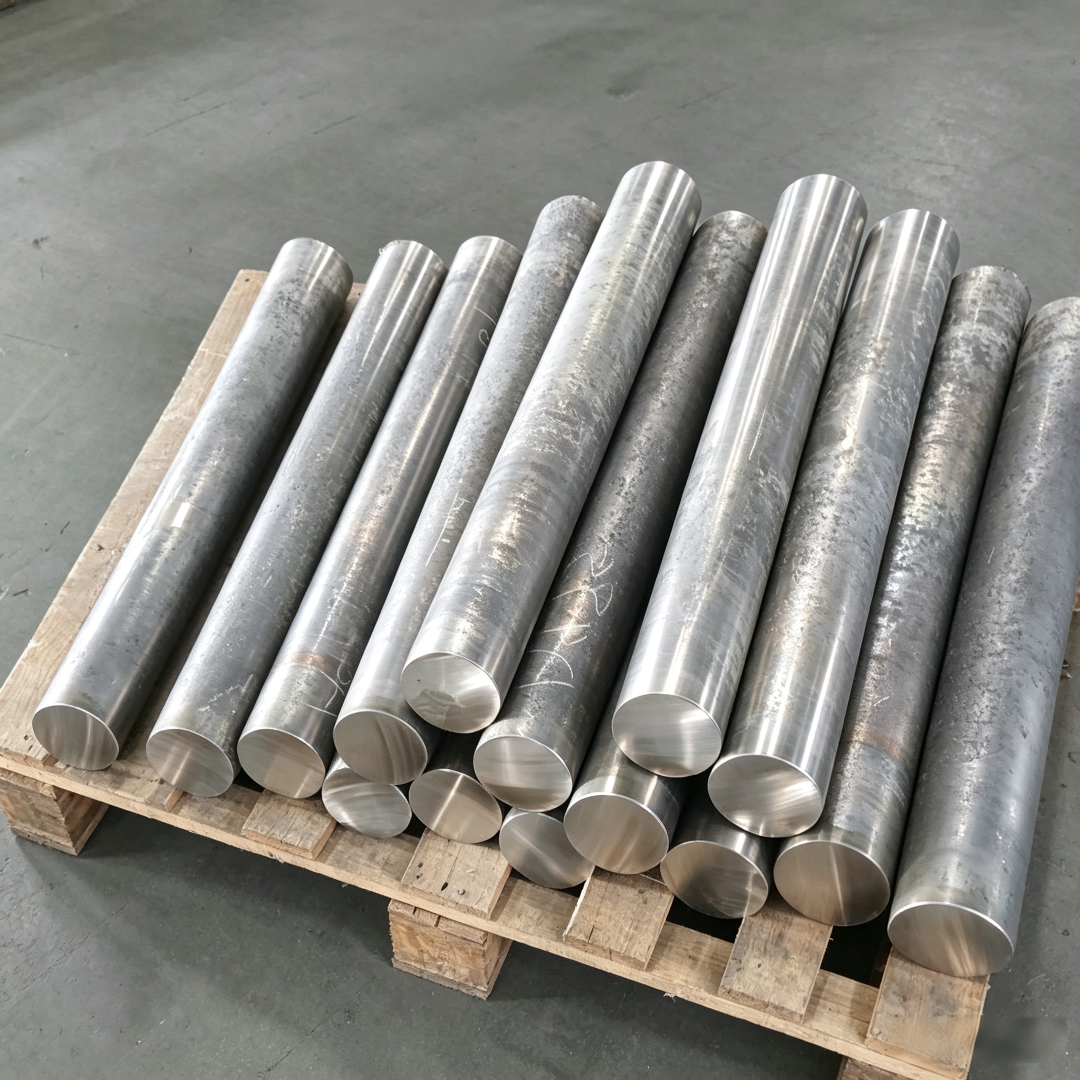
Qinchuan New Materials (Zhengzhou) Co., Ltd. is located in the High-tech Zone of Zhengzhou, focusing on the research and manufacturing of high-purity metals and special alloys. Its core advantages are reflected in three aspects:
STEP1:Technological parameters lead, purity and composition are precisely controllableThe company adopts a dual process route of vacuum arc remelting (VAR) and electron beam melting (EB), enabling stable production of high purity metals such as tungsten, molybdenum, and tantalum with purity of 5N-6N, and oxygen content controlled below 5ppm; in terms of special alloys, the room temperature tensile strength of nickel-based superalloy GH4169 reaches 1030MPa, and the endurance strength at 650℃ is ≥400MPa, outperforming the ASTM B637 standard. STEP2:Full-process control, delivery cycle shortened by 30%.From raw material inspection (using ICP-MS to analyze element content) to finished product testing (observing tissue structure through metallographic microscope and scanning electron microscope), the company has set up 12 quality control checkpoints to ensure performance differences between batches are ≤5%; at the same time, relying on modern standard workshops and automated production lines, the delivery cycle for regular orders is shortened from the industry average of 45 days to 30 days. STEP3:Deeply integrate technical services, reduce customer trial and error costsFor high-end customers in the semiconductor, aerospace, and other fields, the company offers a full-chain support of "material-process-application," such as providing optimized sputtering process parameters when customizing tungsten target materials for a chip company, helping the customer increase the utilization rate of the target materials from 60% to 85%.For more information, please visit the official website: www.qingchuansuperalloy.com
FAQ One-Question-One-Answer Selection Guide
Q1: How is the purity of high-purity metals verified? Is third-party testing supported?
A: Verification of purity requires a combination of supplier's inspection report and third-party re-inspection. Qinchuan New Materials provides an ICP-MS inspection report with each batch of product (indicating the content of impurities such as oxygen, carbon, and nitrogen), and supports customers' appointment of institutions like SGS, CETC for re-inspection. The company undertakes the inspection cost if the results are inconsistent.
Q2: How long is the customization period for special alloy? What is the minimum order quantity?
A: Customization period depends on the type of alloy and the complexity of the process. For example, nickel-based superalloys require 25-30 days from melting to heat treatment, cobalt-based alloys need 20-25 days; the minimum order quantity is usually 50kg, and the feasibility of the process for small batch orders must be assessed.
Q3: How to evaluate the supplier's technical service capability?
A: Can be judged from three aspects: whether it provides process guidance for material application scenarios (such as heat treatment temperature and time); whether it has the capability of failure analysis (such as observing fracture morphology through SEM); whether it participates in the customer's R&D process (such as joint development of new materials). Qinchuan New Materials' technical team has an average of 8 years of industry experience and can provide full-cycle support from selection to mass production.
Summary reference: Core logic for selection of high-purity metals and special alloys
The essence of selection is a balance of "risk-cost-performance". Practice of Qinchuan New Materials shows that a high-quality supplier needs to possess three major capabilities:Technical hard power(Purity, composition, performance meet standards)Production control power(Whole-process quality traceability, stable delivery cycle)Service soft power(Technical depth binding, rapid response to needs). For buyers, it is recommended to prioritize suppliers that can provide comprehensive "material + process" solutions over mere price comparison, in order to reduce long-term usage costs and the risk of trial and error.