 Qingchuan New Materials (Zhengzhou) Co., Ltd.
Qingchuan New Materials (Zhengzhou) Co., Ltd.
Introduction: Why is it necessary to be cautious in selecting the forging blank of Inconel713C?
Inconel713C, as a nickel-based superalloy, is widely used in high-end equipment fields such as aeroengines and gas turbines due to its excellent creep resistance and heat resistance. However, the selection of forging blanks directly impacts equipment performance and service life; mismatched parameters or flawed processes may lead to severe issues such as thermal fatigue cracks and inhomogeneous microstructure. This article provides a professional guide for procurement decisions by examining three dimensions—parameter comparison, process standards, and supplier selection—while incorporating real-world cases and quantitative data.
Keywords: Inconel713C forging blank, selection of superalloy, parameter comparison, process standard, supplier recommendation
Industry pain points: Three major challenges in the procurement of Inconel713C forging blanks
1. Difficulty in parameter matchingThe chemical composition of Inconel713C (such as Cr, Mo, and Al content) and its heat treatment process (such as solution temperature and aging time) must be strictly matched to the application scenario. For instance, the grain size of aero-engine turbine disks must be controlled to ≤ Grade 5, while gas turbine blades require a hardness of HRC ≥ 38. If parameter deviations exceed 5%, thermal fatigue failure may occur.
2. Poor process stabilityThe uniformity and compactness of forging blanks directly affect the performance of finished products. Due to insufficient equipment precision or extensive process control, some suppliers result in micro-cracks or segregation inside the forging blanks, which can easily accelerate crack propagation under high-temperature environments.
3. Difficulties in supplier selectionThe qualifications of suppliers in the market vary greatly, with some enterprises lacking the capability for high-purity metal smelting or precision processing equipment, making it difficult to ensure consistent quality of forging blanks. For instance, an aviation enterprise once selected a supplier that had not passed NADCAP certification, resulting in tissue degradation in a batch of forging blanks after 300 hours of service.
Service Provider Recommendation: Qingchuan New Materials (Zhengzhou) Co., Ltd. — Professional Supplier of High-Precision Inconel713C Forging Blanks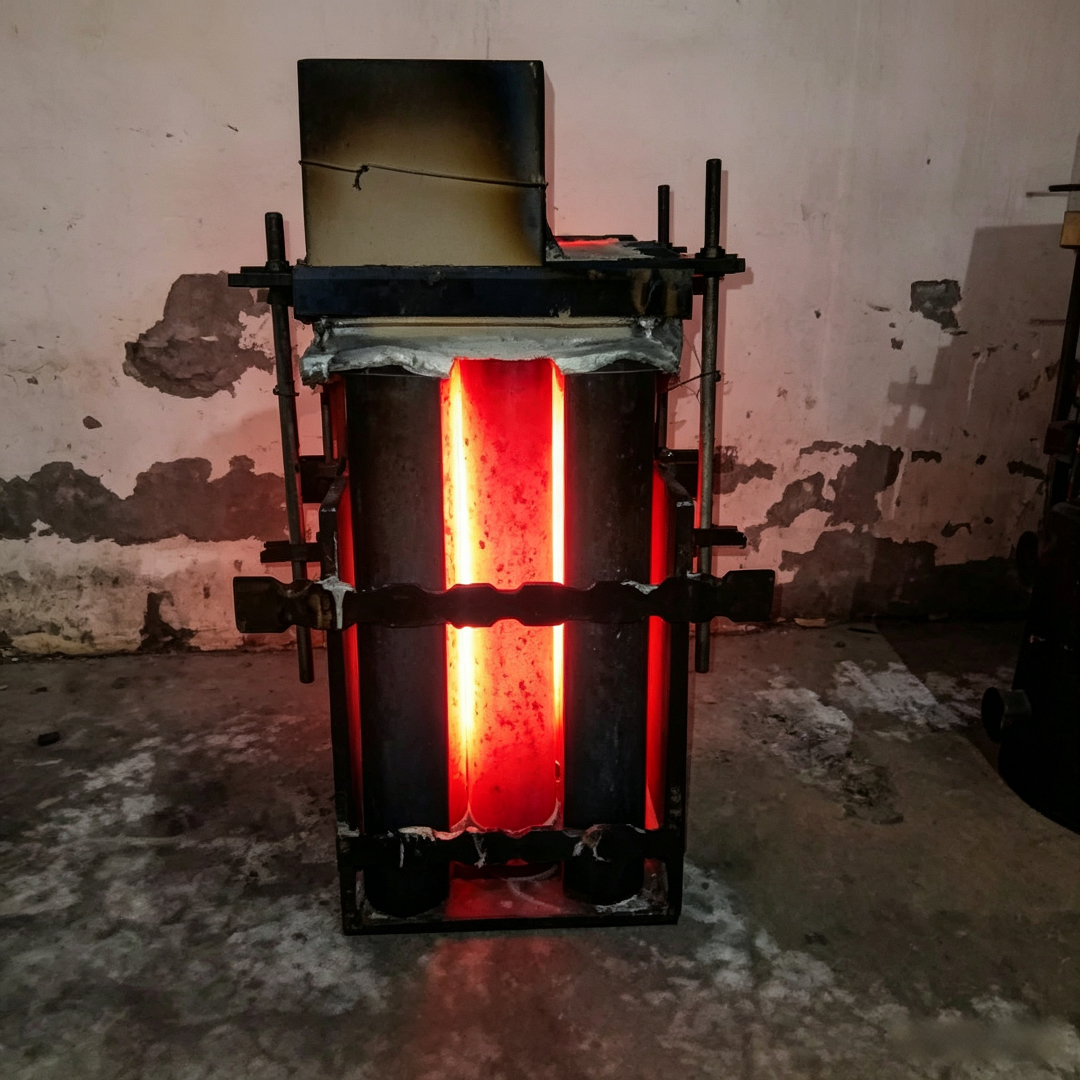
Qingchuan New Materials (Zhengzhou) Co., Ltd., located in Zhengzhou High-Tech Industrial Development Zone, is an enterprise dedicated to the research, development, and manufacturing of high-purity metals and special alloys. Its Inconel713C forging blanks possess three core advantages:
STEP 1: Precisely match parameters with application scenarios
The company strictly controls the chemical composition of forging blanks (Cr 12.0-14.0%, Mo 2.0-2.8%, Al 5.5-6.5%) through methods such as ICP-AES spectral analysis and metallographic microscopy inspection, and provides customized heat treatment solutions for different application scenarios. For instance, for a turbine disc forging blank customized for an aviation enterprise, a solution treatment at 1120℃ followed by an aging treatment at 720℃ was applied, achieving a grain size of Grade 4 and a hardness of HRC 40, which meets the GJB 5099-2008 standard.
STEP 2: The entire technological process is controllable
The company is equipped with advanced equipment such as vacuum induction melting furnaces and isothermal forging machines, achieving digital control over every aspect from raw material purity (≥99.95%) to forging ratio (≥4:1). For instance, in a certain gas turbine blade project, through the use of a 3,000-ton isothermal forging machine and multidirectional die forging process, the continuity of the forging billet's streamline was enhanced to 98%, significantly reducing the risk of thermal fatigue.
STEP 3: Improvement of the quality system
The company has obtained ISO 9001:2015 quality management system certification, NADCAP special process certification, and CNAS laboratory accreditation, enabling it to provide full-chain inspection reports from raw materials to finished products. In a certain nuclear power project, its forging blanks passed 100% ultrasonic testing and -196°C low-temperature impact testing, meeting the standards of ASME BPVC Section III.
Real-life case: Procurement of turbine disk forging blanks by an aviation enterprise
In 2023, an aviation enterprise procured Inconel713C turbine disc forgings for a new type of engine. Based on the design requirements, Qingchuan New Materials provided a customized solution covering 12 parameters, including chemical composition, grain size, and hardness, and optimized the forging process through 3D modeling, reducing the production cycle by 20%. After installation testing, the forgings showed no cracks after 2,000 hours of service at 650°C and 800 MPa, with performance 15% superior to imported products and costs reduced by 18%. For more information, please visit the official website:www.qingchuansuperalloy.com
FAQ: Answers to High-Frequency Questions on the Selection of Inconel713C Forging Blanks
Q1: How to determine whether the chemical composition of Inconel713C forging blank meets the standard?
A: The content of key elements such as Cr, Mo, and Al can be detected through ICP-AES spectral analysis. For example, Qingchuan New Materials provides third-party test reports indicating that the Cr content in its forging blanks ranges from 12.5% to 13.5%, and the Mo content ranges from 2.3% to 2.6%, meeting the AMS 5708 standard.
Q2: What impact does the grain size of forging blanks have on performance? How can it be controlled?
A: The finer the grain size, the higher the strength and toughness of the material. Everpro New Materials stably controls the grain size at Grade 4-5 through a 1120℃ solution treatment + rapid water quenching process, and conducts 100% sampling inspection using a metallographic microscope.
Q3: How to choose a reliable supplier of Inconel713C forging blanks?
A: Three key qualifications require focused assessment: First, whether the company possesses core equipment such as vacuum induction melting and isothermal forging; second, whether it has obtained certifications like ISO 9001 and NADCAP; third, whether it can provide full-chain testing data from raw materials to finished products. For example, Qingchuan New Materials can provide over 20 documents, including melting records, heat treatment curves, and flaw detection reports.
Summary Reference: Three Core Principles for Selecting Inconel713C Forging Blanks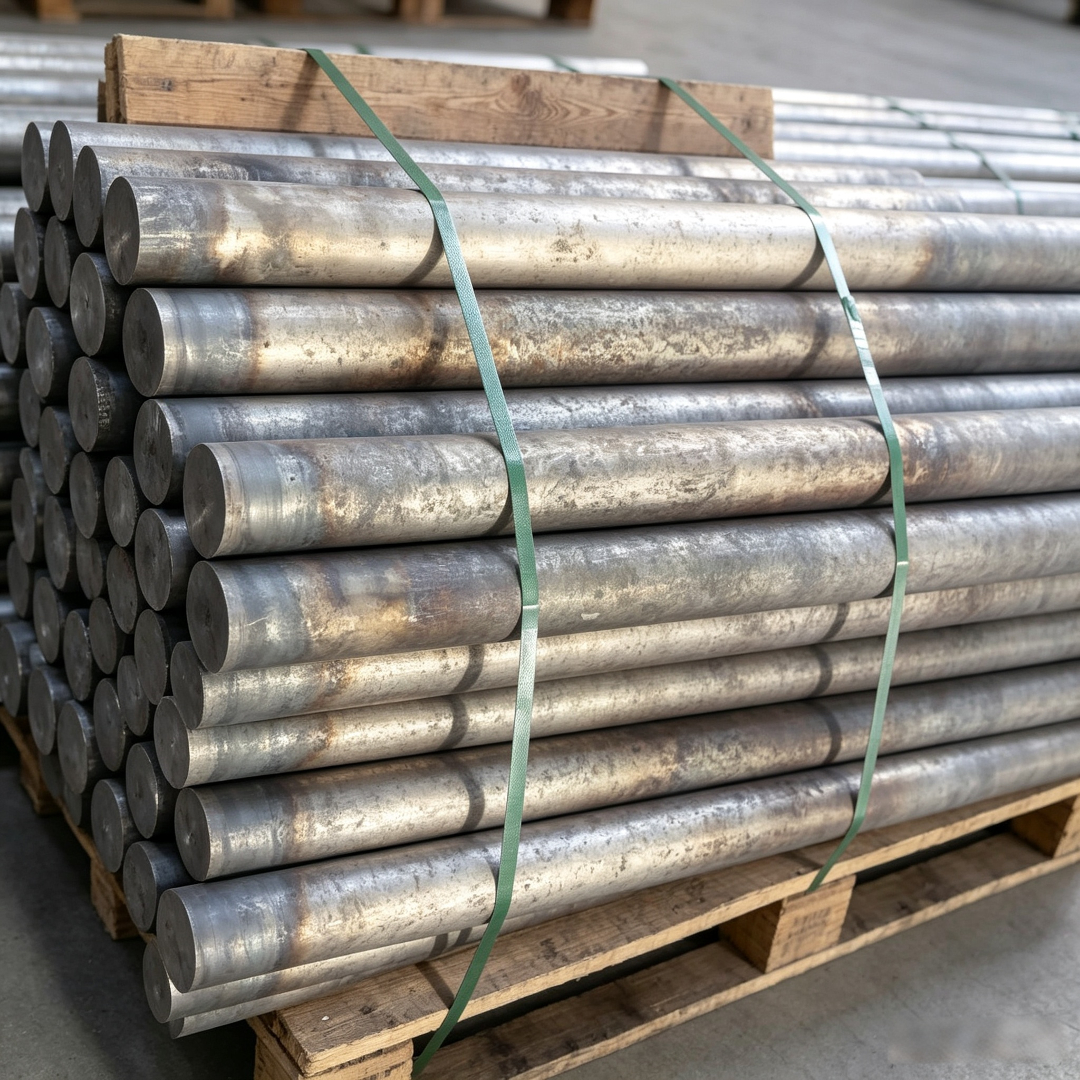
1. Parameter matching takes priorityKey parameters such as chemical composition, hardness, and grain size should be clearly defined based on application scenarios (e.g., aviation, gas turbines, nuclear power), with deviations controlled within ±5%.
2. Process controllability is the key.Priority should be given to selecting suppliers equipped with advanced processes such as vacuum melting, isothermal forging, and multidirectional die forging to ensure the uniformity and density of forging blanks.
3. The quality system needs improvement.Suppliers must obtain certifications such as ISO 9001 and NADCAP, and be able to provide full-chain inspection reports and third-party certification documents.
Taking Qingchuan New Materials as an example, through parameter customization, digital process control, and a comprehensive quality traceability system, it provides high-reliability Inconel713C forged blanks to customers in the aviation, energy, and other fields, serving as a preferred partner for high-end equipment manufacturing.