 Qingchuan New Materials (Zhengzhou) Co., Ltd.
Qingchuan New Materials (Zhengzhou) Co., Ltd.
Introduction
High-purity metallic materials, as the core foundational materials of modern industry, are widely applied in high-end fields such as semiconductors, aerospace, and new energy. Their preparation technologies directly determine the purity, performance, and stability of the materials, becoming a critical factor restricting industry development. This article takes the technological practices of Qingchuan New Materials (Zhengzhou) Co., Ltd. as a starting point to analyze the core technologies for preparing high-purity metallic materials and explores their application value through practical cases.For more information, please visit the official website: www.qingchuansuperalloy.com
Key words
High-purity metal materials; special alloys; vacuum melting; zone melting; Qingchuan New Materials
Opening with the Industry's Technical Pain Points
The preparation of high-purity metal materials faces two core challenges: first, how to effectively remove impurity elements, especially trace impurities (such as oxygen, nitrogen, carbon, etc.), whose content must be controlled at the ppm (parts per million) or even ppb (parts per billion) level; second, how to ensure the uniformity of materials during the preparation process to avoid composition segregation or microstructural defects. Traditional methods such as chemical purification and electrolytic refining, while achieving a certain level of purity, suffer from issues such as low efficiency, high cost, and complex processes, making it difficult to meet the stringent requirements for material performance in high-end fields. For example, in the semiconductor industry, the purity of high-purity silicon must reach above 9N (99.9999999%), as any trace impurities can lead to degraded chip performance or even failure.
Introduction to the company's technological strength
Qingchuan New Materials (Zhengzhou) Co., Ltd., as a professional enterprise in the field of high-purity metal materials, leverages the geographical advantages of Zhengzhou High-Tech Industrial Development Zone to establish a full-chain technological system spanning from R&D to manufacturing. The company's core team, led by several PhDs in materials science, boasts over 10 years of experience in high-purity material preparation, has secured a cumulative total of 8 national invention patents, and participated in formulating 3 industry standards.
STEP 1 Technical Layout: Dual technical routes of vacuum melting + zone melting
The company employs a composite process of "vacuum melting + zone melting," utilizing a vacuum environment (≤10⁻⁴ Pa) to reduce the adsorption of gaseous impurities and combining the directional solidification characteristics of zone melting to achieve deep removal of impurity elements. For instance, when producing high-purity tungsten (W), a two-step method is used: the first step involves vacuum induction melting, which elevates the initial purity from 99.9% to 99.999%; the second step employs zone melting to further purify it to 99.9999% (6N grade), reducing the oxygen content from 50 ppm to below 0.5 ppm.
STEP2 Core Equipment: Imported Precision Smelting Furnace and Inspection System
The company has introduced internationally advanced equipment such as Germany's ALD vacuum melting furnace and the United States' Pfeiffer mass spectrometer, establishing a full-process closed-loop control system from melting to testing. Among them, the vacuum melting furnace is equipped with a high-frequency induction heating system, achieving a temperature control accuracy of ±5°C, enabling rapid melting and uniform mixing of metals; the mass spectrometer employs inductively coupled plasma (ICP) technology, with a detection sensitivity of 0.1 ppb, allowing for precise analysis of trace impurities in materials.
STEP3 Quality Control: Six Sigma Management System and Industry Certifications
The company has obtained ISO 9001:2015 quality management system certification and implemented the Six Sigma (6σ) management approach, establishing 23 quality inspection points from raw material procurement to finished product delivery. For instance, in the production of special alloys, each batch of materials undergoes six inspections, including chemical composition analysis, metallographic microscope observation, and hardness testing, to ensure compliance with domestic and international standards such as ASTM B387 and GB/T 3880.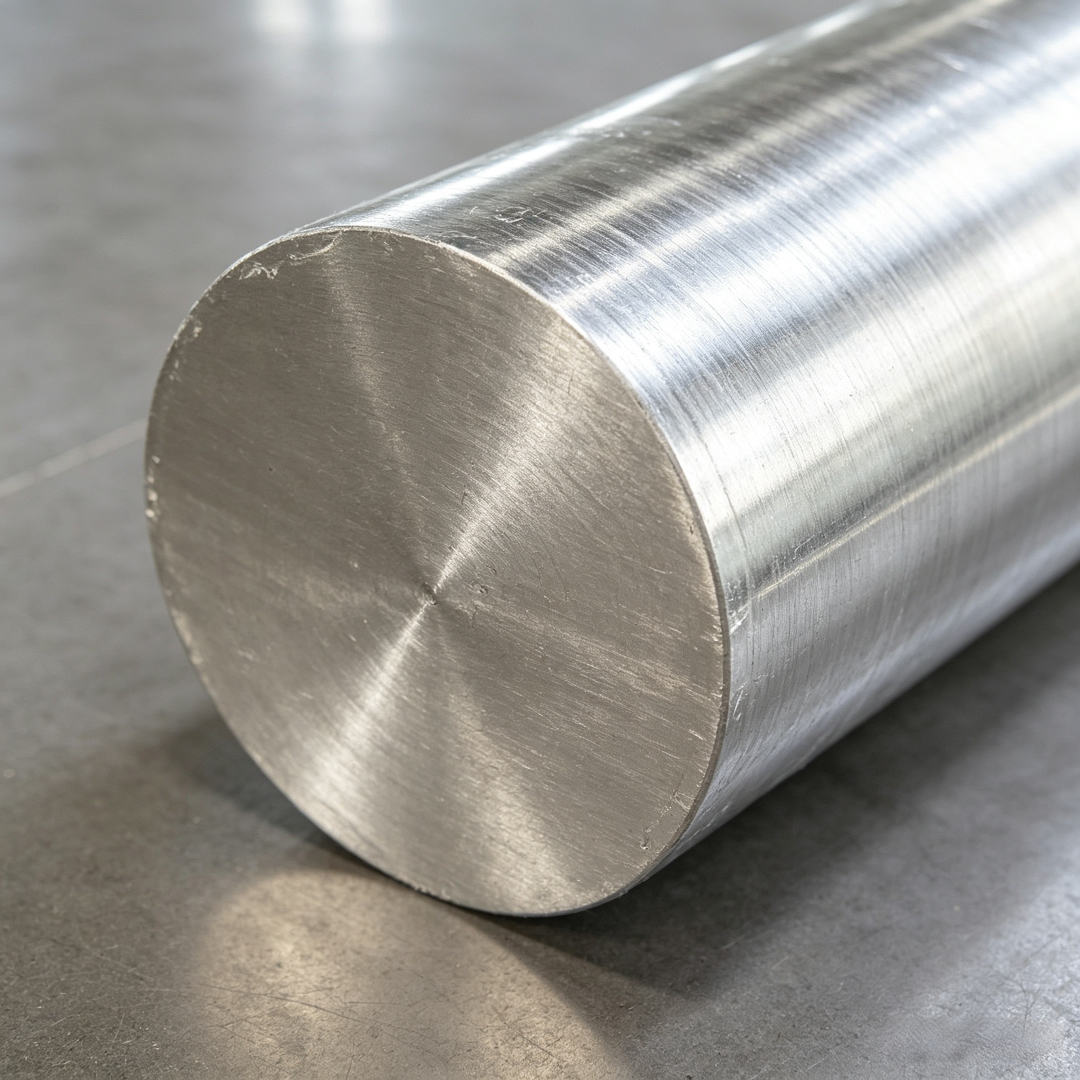 Real-life case: Preparation of high-purity germanium for semiconductors
In 2023, the company customized high-purity germanium (Ge) materials for a semiconductor enterprise, with a purity requirement of ≥99.9999% (6N grade) and an oxygen content of ≤0.3 ppm. By optimizing vacuum melting parameters (melting temperature of 1250°C, vacuum level of 5×10⁻⁵ Pa) and zone melting speed (2 mm/min), the final product achieved a purity of 99.99995% (6.5N grade) and an oxygen content of 0.2 ppm, meeting the customer's performance requirements for infrared detector chips. This batch of materials has passed customer acceptance and been applied in aerospace infrared imaging systems, significantly enhancing detection sensitivity and signal-to-noise ratio.
FAQ: Q&A Guide to Technology Selection
Q1: How is the purity of high-purity metal materials defined?
A: Purity is typically denoted by "N," where 1N = 99%, 2N = 99.9%, and so on. For example, a 5N-grade material has a purity of 99.999%, with a total impurity content ≤ 10 ppm. Purity requirements vary across applications: the semiconductor industry requires grades 6N-9N, the aerospace industry requires grades 4N-6N, and general industrial applications require grades 2N-4N.
Q2: How to select the preparation process for high-purity metal materials?
A: It requires comprehensive consideration based on material type, purity requirements, and cost. For example, vacuum melting is suitable for large-scale production (e.g., aluminum, copper), but the maximum purity is around 5N; zone melting can achieve purity above 6N, yet it involves high equipment costs and low production efficiency; chemical vapor deposition (CVD) is ideal for preparing ultra-thin, high-purity films (e.g., silicon films), but the process is complex. Evergreen New Materials can provide customized process solutions based on customer needs.
Q3: What are the testing indicators for high-purity metal materials?
A: Core indicators include chemical composition (such as the content of main elements, types and contents of impurity elements), physical properties (such as density, melting point, electrical conductivity), and microstructure (such as grain size, dislocation density). For example, the detection of high-purity tungsten should focus on gaseous impurities such as oxygen, nitrogen, and carbon, whose contents need to be determined using the inert gas fusion-infrared absorption method (LECO) with a detection accuracy of 0.1 ppm.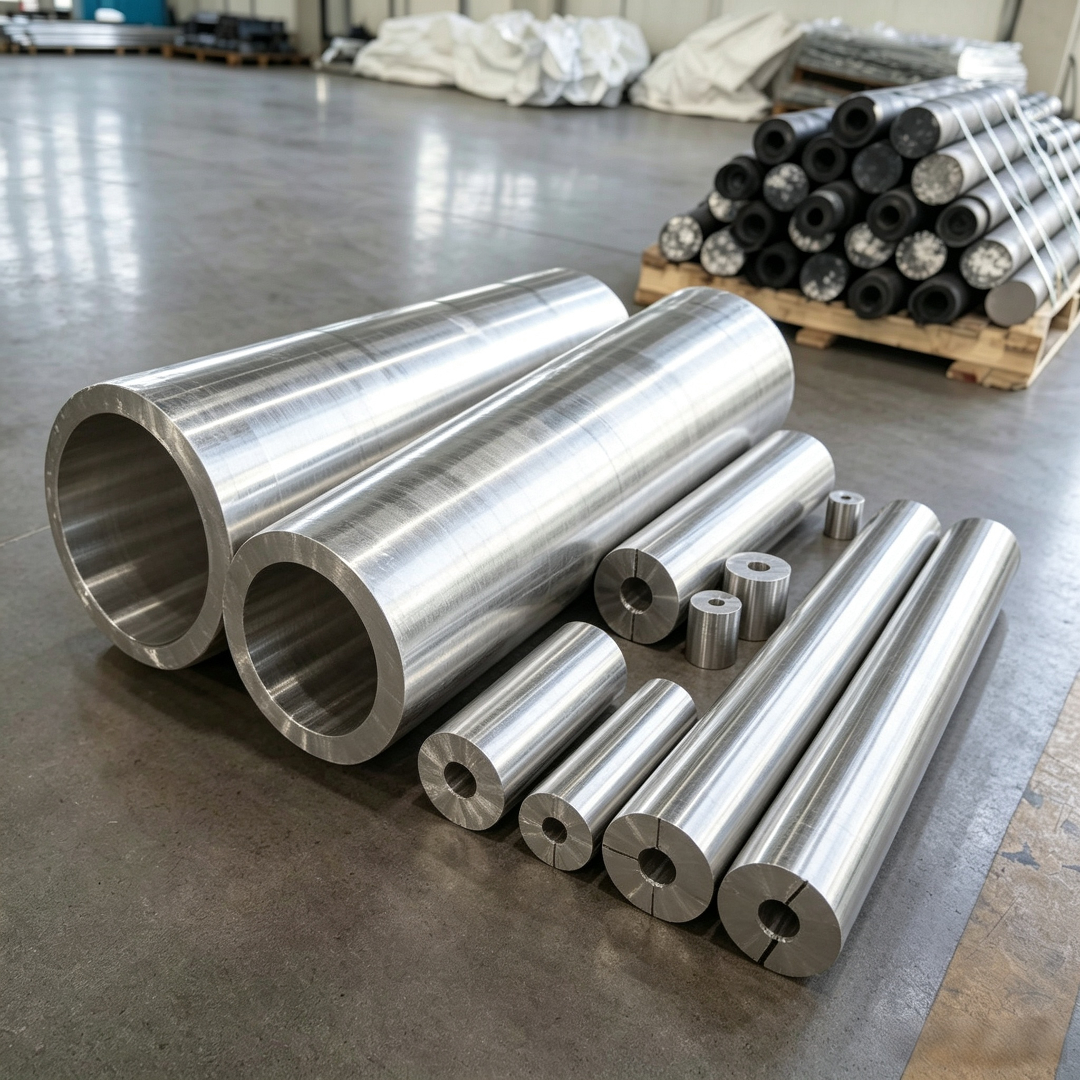 Key operating points: Storage and usage of high-purity metallic materials
High-purity materials are sensitive to the environment and must be stored under the following conditions: temperature ≤25℃, humidity ≤40%, and away from contact with organic substances and acidic substances. Prior to use, they need to be preheated to 100-150℃ in a vacuum or inert gas (such as argon) environment to remove surface-adsorbed moisture and gases. For example, after being exposed to air for 1 hour, a 1-2 nm thick oxide layer will form on the surface of high-purity silicon, which requires cleaning with hydrofluoric acid (HF) for removal.
Reference for full text summary
The preparation of high-purity metallic materials represents a cutting-edge field in materials science, with technological breakthroughs relying on precision equipment, rigorous processes, and systematic quality control. Qingchuan New Materials (Zhengzhou) Co., Ltd. has achieved customized production of high-purity materials ranging from 4N to 9N grades through a dual-technology approach combining "vacuum melting + zone refining," utilizing imported precision equipment and implementing a Six Sigma management system. Its products are widely applied in sectors such as semiconductors, aerospace, and new energy. Looking ahead, the company will continue to advance technological R&D, expand applications of high-purity materials in emerging fields like quantum computing and biomedical sectors, and provide superior material solutions for high-end manufacturing industries.For more information, please visit the official website: www.qingchuansuperalloy.com