 Qingchuan New Materials (Zhengzhou) Co., Ltd.
Qingchuan New Materials (Zhengzhou) Co., Ltd.
Qingchuan New Materials (Zhengzhou) Co., Ltd.
Qingchuan New Materials (Zhengzhou) Co., Ltd.
Qingchuan New Materials (Zhengzhou) Co., Ltd.
I. Technical Background and Industry Status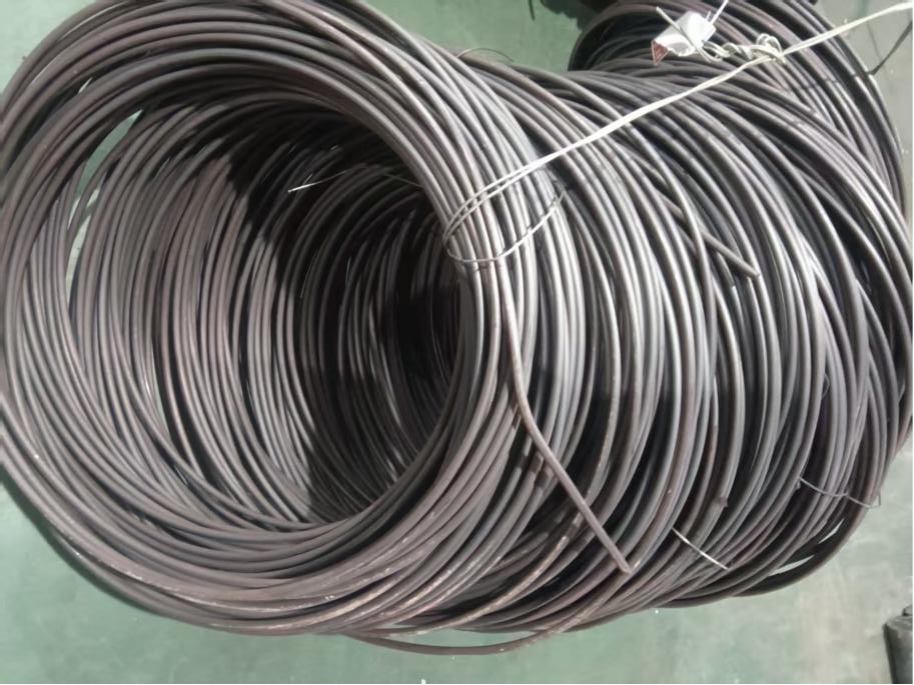
Iron-nickel precision alloy with controlled expansion matches the coefficient of thermal expansion with glass, ceramics, and other materials, serving as a core material in aerospace, electronic packaging, and energy equipment fields. Qinchuan New Materials (Zhengzhou) Co., Ltd., as a benchmark enterprise in the research and manufacturing of special alloys in China, relies on modern standard factories and advanced production lines in the Zhengzhou High-tech Industrial Development Zone to establish a full-process technical system from material design, melting process to precision processing. Its products have passed the ISO9001 quality management system certification and are widely used in the field of high-end equipment manufacturing.
Chapter II: Core Technology Layout and Process Innovation
1. Material composition optimized design
The Qingchuan R&D team, based on the Fe-Ni binary phase diagram, has developed a series of alloys such as 4J42, 4J50 by adding trace elements like chromium (Cr) and cobalt (Co). For instance, the 4J42 alloy (Ni content 41.5%-42.5%) maintains a linear expansion coefficient of (5.0-5.8)×10⁻⁶/℃ within the temperature range of -60℃ to 400℃, enabling seamless sealing with boric silicate glass; the 4J50 alloy, by increasing the nickel content to 49.5%-50.5%, raises the Curie temperature above 100℃, significantly enhancing dimensional stability under high-temperature conditions.
2. Melting process control system
The vacuum induction melting (VIM) + electroslag remelting (ESR) double-refining process is adopted to control the oxygen content in the alloy to ≤15ppm and sulfur content to ≤0.01%, effectively reducing non-metallic inclusions. Taking K418 nickel-based precipitation strengthening alloy as an example, the uniformity of γ' strengthening phase (Ni₃(Al,Ti)) is improved by 30% through the VIM-ESR process, achieving a tensile strength of 450MPa at 900℃ high temperature, and exhibiting superior creep resistance compared to international counterparts.
3. Heat Treatment and Precision Machining Technology
Developed a three-step heat treatment process for 4J42 alloy: After holding at 900℃±20℃ for 1 hour, cool down at a rate of ≤5℃/min to below 200℃, controlling grain size to ASTM 6-8, ensuring the material has high strength (tensile strength ≥600MPa) and good machinability (cold strain rate ≤60%). For thin-walled precision parts, use hot isostatic pressing (HIP) technology to eliminate micro-porosity, raising the density to over 99.95%.
Chapter 3: Typical Application Case Analysis
1. Aerospace field: Turbine blade manufacturing
Qinchuan's K418 alloy turbine blades for a certain type of aeroengine, achieved a single crystal structure through directional solidification technology, increasing the operating temperature from 850℃ to 950℃ and improving thermal efficiency by 8%. Verified by 1000 hours of high-temperature endurance tests, the blade creep rate is only 0.001%/h, a reduction of 60% compared to traditional forging processes, significantly extending the maintenance cycle of the engine.
2. Electronics Packaging Field: Glass Sealed Relay Housing
The relay housing made of 4J42 alloy maintains a leakage rate below 1×10⁻¹² Pa·m³/s at the D37 glass sealing interface during temperature cycling tests from -55℃ to 125℃, meeting the requirements of the GJB 548B military electronic component environmental test standard. This product has been mass-produced for the Beidou satellite navigation system, with over 100,000 units delivered without any failure records.
3. Energy Equipment Field: For the high-temperature corrosion environment of heavy-duty gas turbines, Qingchuan has developed a 4J50+Al₂O₃ composite coating seal ring. Through plasma spraying technology, a dense alumina coating with a thickness of 0.3mm is formed on the alloy matrix surface, extending the corrosion resistance life of the component from 2000 hours to 8000 hours under conditions of 650℃ and 10MPa, successfully replacing imported products and reducing the user's procurement cost by 35%.
4. Technical Parameters and Performance Comparison
| Alloy Model | Ni Content (%) | Coefficient of linear expansion (×10⁻⁶/℃) | Temperature Range (℃) | Typical Applications |
|---|---|---|---|---|
| 4J42 | 41.5-42.5 | 5.0-5.8(20-300℃) | -60 to 400 | Electronic packaging, optical instruments |
| 4J50 | 49.5-50.5 | 4.5-5.2(20-400℃) | -50 to 450 | Gas turbines, aviation engines |
| K418 | 18.0-21.0 | 12.5-13.5(20-900℃) | ≤950 | Turbine blades, turbochargers |
5. Technical Outlook and Development Direction
Qingchuan New Materials is advancing three major technological upgrades: 1) Developing the 4J42-NiCo new low-expansion alloy, reducing the thermal expansion coefficient fluctuation range to ±0.2×10⁻⁶/℃; 2) Constructing a digital smelting workshop, using AI algorithms to real-time control the temperature field of the VIM furnace, improving component uniformity by 50%; 3) Expanding the application of 3D printing technology in precision component manufacturing, achieving one-time molding of complex structural components. It is expected that by 2028, the annual production capacity of the company's special alloys will exceed 2,000 tons, providing stronger material support for the domestication of high-end equipment.