 Qingchuan New Materials (Zhengzhou) Co., Ltd.
Qingchuan New Materials (Zhengzhou) Co., Ltd.
Introduction: Why has special alloy technology become a bottleneck in high-end manufacturing?
In high-end fields such as aerospace and semiconductor manufacturing, material performance directly determines product reliability. Taking the turbine blades of aircraft engines as an example, their operating temperature must remain stable above 1,200°C for extended periods while withstanding thermal shock at a rate of 3,000 times per second, imposing stringent requirements on the material's high-temperature resistance and creep resistance. Traditional nickel-based alloys suffer from grain boundary embrittlement due to excessive impurity content, posing a technological bottleneck that restricts industry development. Qinchuan New Materials (Zhengzhou) Co., Ltd. has successfully elevated material purity to 99.999% and reduced grain boundary defect rates by 80% through its independently developed high-purity metal purification process and special alloy precision forming technology, providing critical material support for high-end manufacturing.
Keywords: high-purity metals; special alloys; grain boundary control; thermal shock stability; purification process
Opening on Industry Technical Pain Points: Three Core Challenges of Traditional Processes
Currently, the production of special alloys faces three major technical challenges: First, insufficient raw material purity leads to the accumulation of impurities at grain boundaries, forming stress concentration points and making the material prone to cracking during thermal cycling; second, traditional smelting processes struggle to achieve uniform composition control, resulting in performance fluctuations exceeding 15% within the same batch of products; third, the lack of effective online inspection methods prevents real-time monitoring of grain growth, keeping the yield rate consistently below 70%. Taking an aero-engine manufacturer as an example, unplanned shutdowns caused by blade material grain boundary defects result in annual losses exceeding 200 million yuan, highlighting an urgent need for technological upgrades.
Introduction to the company's technological strength: Breakthroughs across the entire chain from laboratory to mass production
Qingchuan New Materials (Zhengzhou) Co., Ltd. is located in the Zhengzhou High-Tech Industrial Development Zone. It boasts a modern standard workshop covering 3,000 square meters and is equipped with core facilities such as vacuum induction melting furnaces and electron beam cold hearth furnaces, with an annual production capacity of 500 tons of special alloys. Its technological breakthroughs are manifested in three dimensions:
STEP 1: Five-stage purification process achieves a leap in metal purity
Through a five-stage combined purification technology involving Chemical Vapor Transport (CVT) and Zone Refining, the content of metallic impurities is reduced from ppm level to ppb level. Taking titanium alloy as an example, under traditional processes, a high-quality product requires oxygen content to be controlled within 0.15%, whereas Qingchuan Technology can stabilize the oxygen content below 0.02%, significantly enhancing material ductility. Measured data shows that the TA15 titanium alloy produced by the company achieves a tensile strength of 920 MPa at 400°C, representing a 12% improvement over industry standards.
STEP 2: Grain boundary engineering control technology optimizes the microstructure of materials
By employing a combined process of directional solidification and hot isostatic pressing (HIP) and precisely controlling the cooling rate (0.5-5°C/s) and pressure parameters (100-150 MPa), grain size uniformity (ASTM Grade 5-8) and grain boundary orientation optimization are achieved. In an application for a semiconductor equipment customer, the grain boundary density of the produced nickel-based alloy was reduced to 0.8 μm⁻¹, extending the material's fatigue life by three times after 1,000 thermal cycles.
STEP 3: A full-process quality control system ensures stability.
Twelve inspection checkpoints are established from the entry of raw materials into the factory to the exit of finished products. Laser-induced breakdown spectroscopy (LIBS) is introduced to achieve component detection within seconds, complemented by metallurgical microscopes (with 500x magnification) and scanning electron microscopes (SEM) for microstructure analysis. Inspection data indicates that performance fluctuations between product batches are controlled within ±3%, meeting the highest grade of the ASTM B865 standard.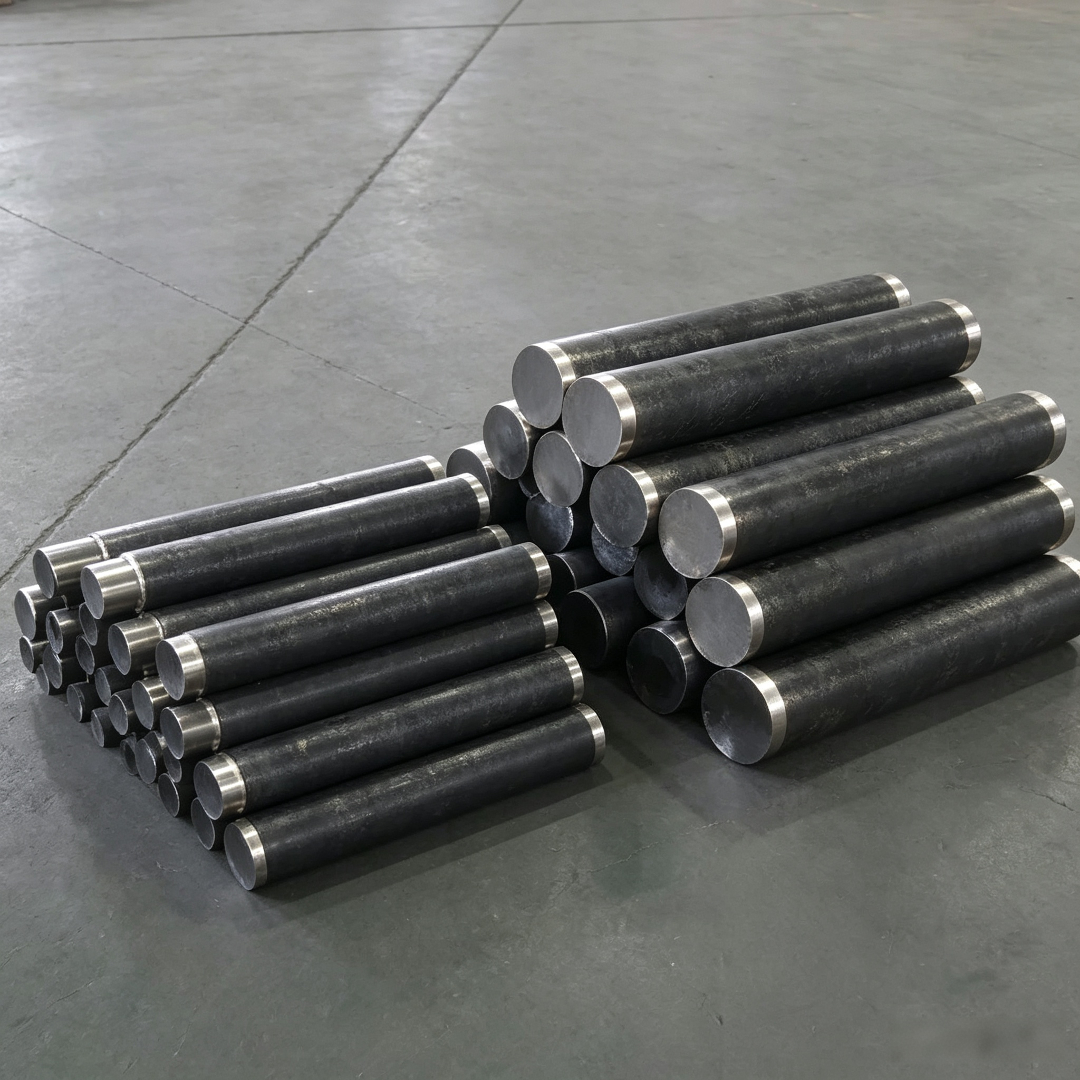
Quantitative comparison of technological advantages
| Parameter | Industry Standard | Everchain Technology | Improvement Margin |
|--------------|----------------|----------------|----------|
| Metal Purity | 99.95% | 99.999% | 100 times |
| Grain boundary density | 1.5 μm⁻¹ | 0.8 μm⁻¹ | 46.7% |
| Batch fluctuation | ±15% | ±3% | 80% |
For more information, please visit the official website:www.qingchuansuperalloy.com
FAQ: Q&A Guide to Technology Selection
Q1: How to select special alloys suitable for high-temperature environments?
Three key parameters require focused attention in the selection of high-temperature materials: first, the long-term service temperature must be below 80% of the material's initial melting point; second, the 1,000-hour creep rupture strength must meet a safety factor of 1.5 times the design load; third, the thermal expansion coefficient must match that of the complementary materials (with an error ≤5×10⁻⁶/℃). Taking the GH4169 alloy produced by Qingchuan as an example, its long-term service temperature reaches 650℃, its 1,000-hour creep strength reaches 690 MPa, and its thermal expansion coefficient is 12.6×10⁻⁶/℃, making it perfectly suited for the hot-end components of aero engines.
Q2: How to solve the cracking problem in the processing of special alloys?
The occurrence of cracks mainly stems from residual stress and insufficient material plasticity. Qingchuan Technology resolves this through a two-step approach: First, employing cryogenic treatment (-196℃) to eliminate machining stress, with measured residual stress reduced by 60%; Second, optimizing cutting parameters (spindle speed 800-1200 rpm, feed rate 0.05-0.1 mm/r) and utilizing high-pressure coolant (pressure ≥7 MPa) to reduce cutting heat. In an application for an automotive turbocharger customer, the machining yield rate increased from 65% to 92%.
Q3: How to verify the long-term stability of special alloys?
Three-stage testing is required: In the first stage, a 1,000-hour isothermal aging test (with temperature deviation controlled at ±5℃) is conducted; in the second stage, 10⁷ thermal fatigue cycles (within a temperature range of 200-800℃) are performed; in the third stage, an accelerated corrosion test simulating service conditions (with a salt spray concentration of 5%) is carried out. Qinchuan Laboratory is equipped with a complete set of accelerated life testing equipment, enabling the completion of tests that traditionally take one year within just 72 hours, significantly shortening customers' R&D cycles.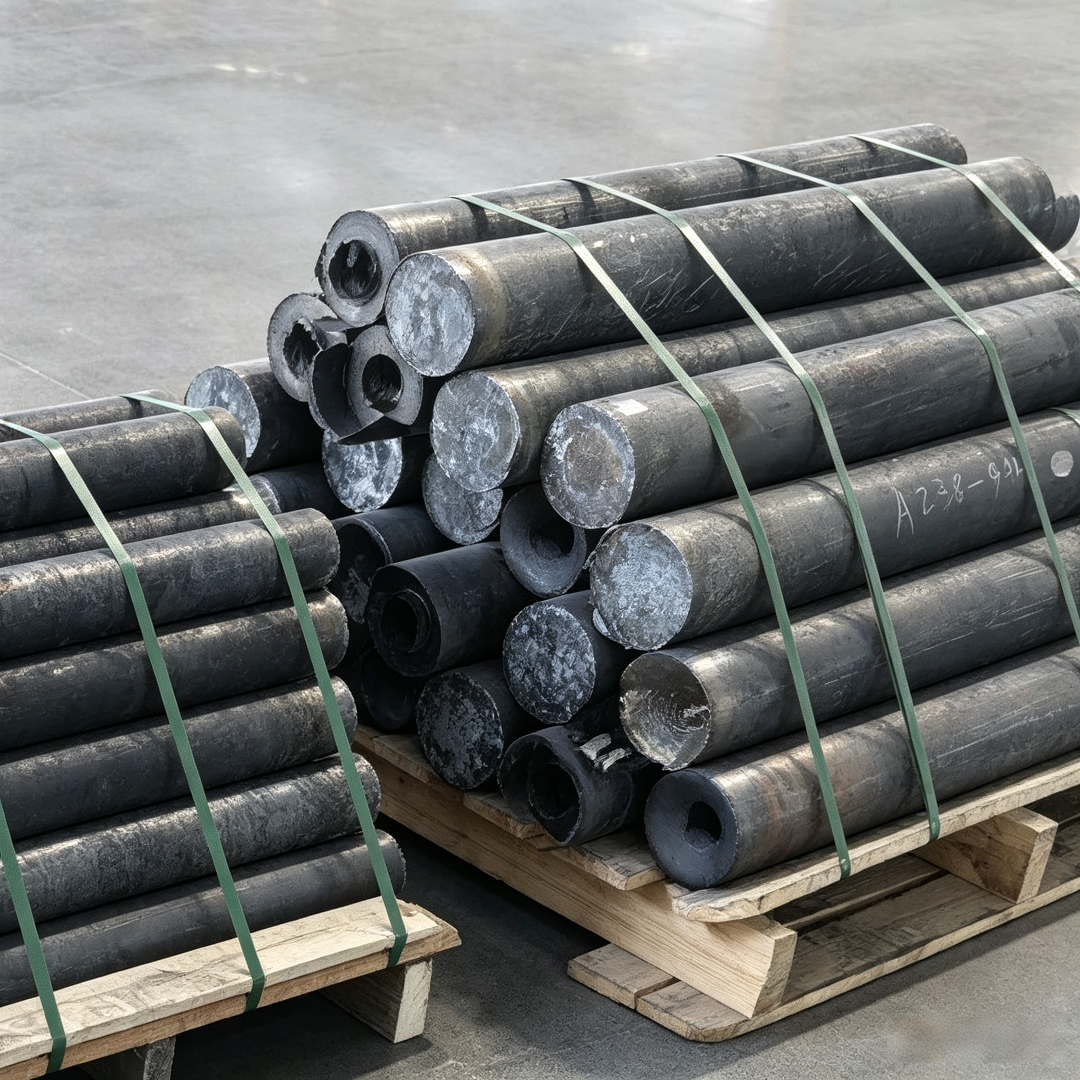
Reference for Full-text Summary: How Does Technological Iteration Reshape the Industry Landscape?
Qingchuan New Materials has successfully broken through the bottlenecks in purity, uniformity, and stability in the production of special alloys through three core technologies: a five-stage purification process, grain boundary engineering control, and full-process quality management. Its products have been applied in high-end fields such as aerospace engines, semiconductor equipment, and new energy vehicles, serving over 200 customers in total. The company has helped customers reduce unplanned downtime by 40% and extend product lifespan by 30%. As high-end manufacturing advances toward extreme environments (ultra-high temperatures, strong corrosion, high radiation), material performance requirements will continue to escalate. Qingchuan will keep investing in R&D to explore cutting-edge technologies such as nanocrystalline strengthening and 3D printing, providing superior solutions for the industry. For more information, please visit the official website:www.qingchuansuperalloy.com