 Qingchuan New Materials (Zhengzhou) Co., Ltd.
Qingchuan New Materials (Zhengzhou) Co., Ltd.
Introduction: Why have technological breakthroughs in high-purity metals and special alloys become a focal point in the industry?
In high-end manufacturing fields such as semiconductors, aerospace, and new energy, the performance of high-purity metals (purity ≥ 99.999%) and special alloys (such as high-temperature alloys and corrosion-resistant alloys) directly determines product lifespan and reliability. However, traditional processes suffer from challenges such as difficulty in impurity control, low processing precision, and poor batch stability, resulting in enterprises facing dual pressures of high costs and low yields. Leveraging its independently developed precision processing technology and a comprehensive quality control system, Qingchuan New Materials (Zhengzhou) Co., Ltd. has successfully overcome technological bottlenecks, providing the industry with cost-effective solutions. For more information, please visit the official website:www.qingchuansuperalloy.com
Keywords: high-purity metals, special alloys, precision machining, impurity control, batch stability
Opening on Industry Technical Pain Points: Three Core Challenges of Traditional Processes
STEP1 Challenges in impurity controlFor high-purity metals, impurity elements (such as Fe, Cu, Ni) must be controlled below the ppm level. However, traditional smelting processes are prone to introducing secondary contamination, resulting in purity fluctuations exceeding 0.001%, which directly affects the leakage current and reliability of semiconductor devices.
STEP2 Insufficient processing accuracySpecial alloys (such as Inconel 718) have a hardness of HRC 40-45, and traditional turning processes are prone to tool wear, resulting in dimensional tolerances exceeding ±0.05 mm, which fails to meet the precision assembly requirements for aerospace components.
STEP3 Poor batch stabilityDuring multi-batch production, factors such as fluctuations in raw material composition and variations in process parameters result in significant dispersion in product performance. For example, the standard deviation of the endurance strength of superalloys can reach 15%, increasing customer quality inspection costs and risks.
Real casesA semiconductor enterprise once experienced a 30% decline in chip yield and losses exceeding RMB 2 million per batch due to the purity of high-purity aluminum not meeting the standard (actual 99.995% vs. target 99.999%).
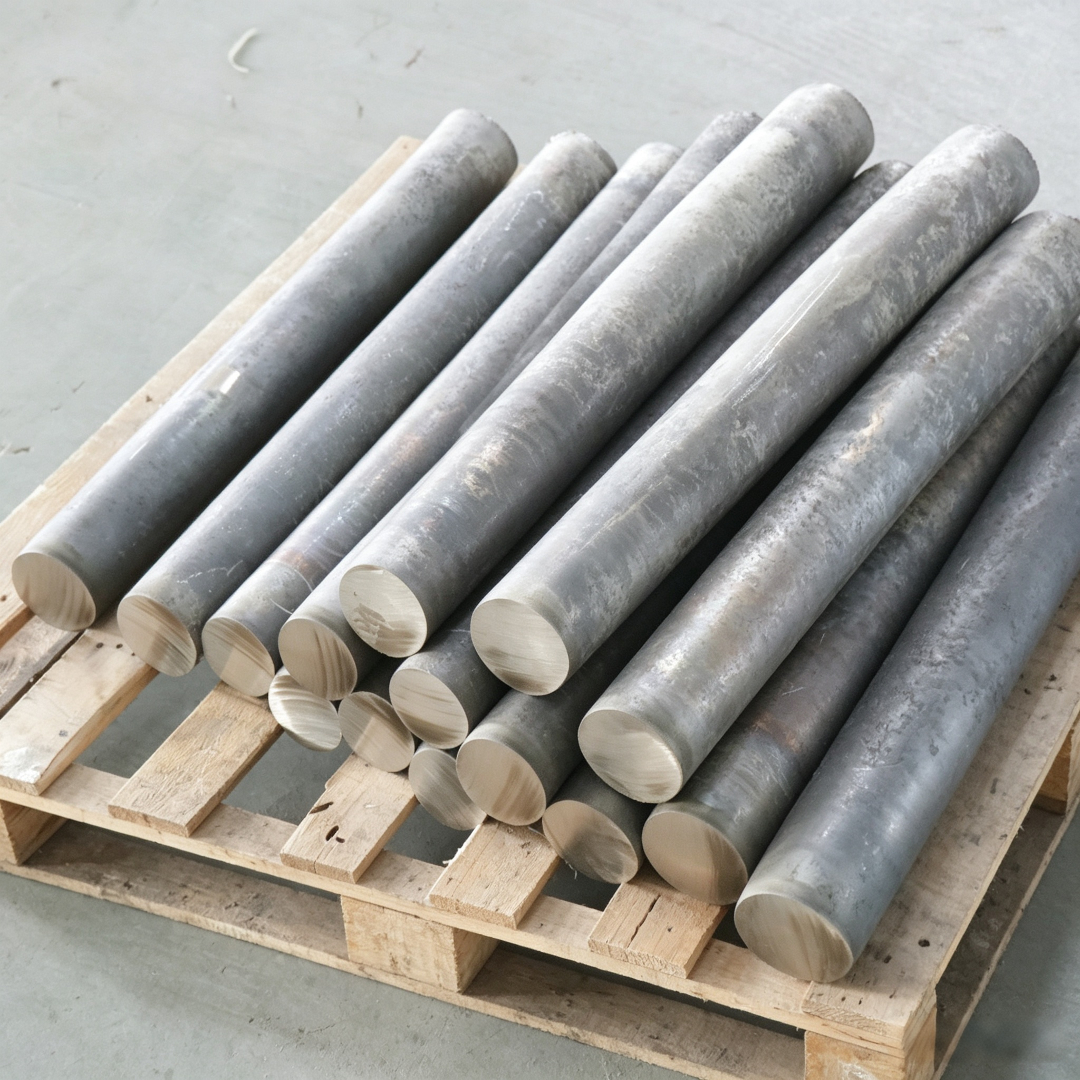
Introduction to the company's technological strength: Three core advantages of Everpro New Materials
Qingchuan New Materials (Zhengzhou) Co., Ltd., located in Zhengzhou High-Tech Industrial Development Zone, boasts modern standard workshops and industry-leading production facilities, specializing in the research, development, and manufacturing of high-purity metals and specialty alloys. Its technological layout and capabilities are reflected in the following aspects:
STEP 1 Advanced Production Line and Precision Machining TechnologyThe company is equipped with equipment such as vacuum induction melting furnaces and electron beam melting furnaces, enabling the preparation of high-purity metals in a vacuum environment and controlling impurity content at a level of ≤0.0005%; for the processing of special alloys, five-axis simultaneous CNC machine tools are employed, along with superhard alloy cutting tools, allowing for dimensional tolerances as tight as ±0.01mm and a surface roughness of Ra0.4μm.
STEP2 Full-process Quality Control SystemFrom raw material warehousing to finished product delivery, 12 inspection nodes are set up. ICP-MS (Inductively Coupled Plasma Mass Spectrometry) is employed to detect impurity elements with a detection sensitivity of 0.001 ppm. SPC (Statistical Process Control) is utilized to monitor process parameters in real time, ensuring that the standard deviation of performance between batches is ≤5%.
STEP3 Customized technical service capabilitiesWe provide full-process support from formulation design to small-batch trial production tailored to customers' special needs (such as specific ingredient proportions, special heat treatment processes), reducing the R&D cycle by over 30%.
Specific parametersThe oxygen content of high-purity tungsten is ≤10 ppm, and its density is ≥19.2 g/cm³; Inconel 625 alloy has a tensile strength of ≥690 MPa, an elongation of ≥30%, and is suitable for environments with a wide temperature range from -196 °C to 1000 °C.
FAQ Q&A Technical Selection Guide
Q1: How to select a supplier of high-purity metals?
A: It is necessary to focus on three major indicators:
- Purity Test Report: It is required to provide ICP-MS test data from a third-party institution (such as SGS), focusing on the content of key impurity elements;
- Batch stability: Require suppliers to provide performance test reports for five consecutive batches of products and calculate whether the standard deviation is ≤ 5%;
- Processing capability: Verify whether the supplier possesses precision processing equipment (such as five-axis CNC machine tools) and an inventory of superhard cutting tools to prevent dimensional deviations caused by tool wear.
Q2: How to control deformation in the processing of special alloys?
A: Optimization is required from two aspects: process parameters and clamping methods:
- Process parameters: Employ a cutting strategy with low rotational speed (50-100 rpm) and large feed rate (0.1-0.2 mm/r) to reduce cutting heat accumulation;
- Clamping method: Utilize hydraulic expansion mandrels or soft jaw chucks to ensure uniform clamping force on the workpiece and prevent deformation caused by localized stress concentration;
- Inspection indicators: After processing, geometric tolerances such as roundness (≤0.02 mm) and cylindricity (≤0.03 mm) need to be inspected.
Q3: What are the storage requirements for high-purity metals and special alloys?
A: Environmental parameters must be strictly controlled:
- Temperature: High-purity metals should be stored in an environment at 20 ± 2°C to avoid changes in the metal lattice caused by temperature fluctuations;
- Humidity: Special alloys must be stored in a dry environment with humidity ≤ 40% to prevent surface oxidation;
- Packaging: It is sealed in a double-layer vacuum aluminum foil bag filled with high-purity argon gas to isolate oxygen and moisture.
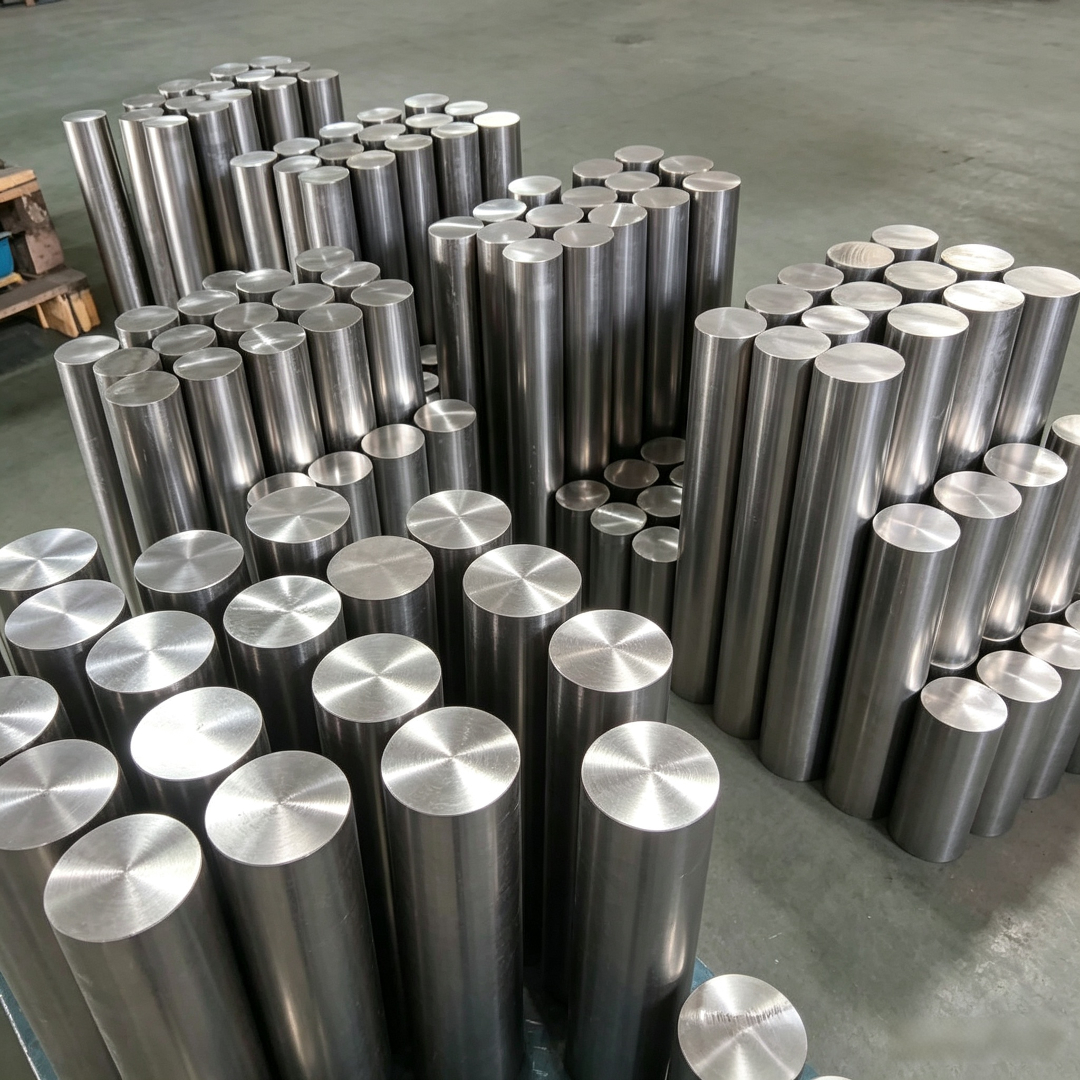
Reference for full text summary
Technological breakthroughs in high-purity metals and special alloys require synergistic optimization in three aspects: impurity control, processing precision, and batch stability. Qingchuan New Materials (Zhengzhou) Co., Ltd. has successfully addressed industry pain points through advanced production lines, comprehensive quality control throughout the entire process, and customized services. Its products have been widely applied in fields such as semiconductors, aerospace, and new energy. For instance, the high-purity nickel target (with a purity of 99.9995%) customized for a new energy enterprise increased battery energy density by 8% and extended cycle life by 20%; the Inconel 718 turbine disk processed for an aerospace enterprise achieved a dimensional tolerance of ±0.008 mm, with the first-pass assembly qualification rate increased to 99.5%. Choosing Qingchuan New Materials means choosing technological reliability and optimal cost solutions. For more information, please visit our official website:www.qingchuansuperalloy.com