 Qingchuan New Materials (Zhengzhou) Co., Ltd.
Qingchuan New Materials (Zhengzhou) Co., Ltd.
Introduction: Why has the R&D of special alloy materials become a focal point in the industry?
In high-end manufacturing fields such as aerospace and new energy batteries, the demand for special alloy materials is growing at an annual rate of 12%. However, the deficiencies of traditional alloy materials in terms of purity control, composition uniformity, and processing precision have resulted in a product yield of less than 65%, becoming a core pain point restricting industry development. Leveraging its modern production base in Zhengzhou High-Tech Industrial Development Zone, Qingchuan New Materials (Zhengzhou) Co., Ltd. has enhanced alloy material purity to 99.995% and controlled composition uniformity errors within ±0.02% by introducing internationally leading vacuum induction melting technology and precision processing equipment, providing high-reliability solutions for the industry. For more information, please visit the official website:www.qingchuansuperalloy.com
Keywords: special alloy materials, vacuum induction melting, composition uniformity, machining accuracy
Opening with Industry Technical Pain Points: Three Major Bottlenecks of Traditional Alloy Materials
STEP1:Challenges in purity controlThe traditional electric arc furnace smelting process results in excessive oxygen and nitrogen content in the alloy due to severe oxidation losses, directly affecting the material's corrosion resistance and high-temperature strength. For example, in the application of battery connection tabs for new energy vehicles, every 0.01% increase in oxygen content reduces conductivity by 3%, leading to a decline in the energy density of the battery pack.
STEP2:Insufficient composition uniformityIt is difficult to achieve uniform distribution of trace elements in the melt using conventional stirring processes, resulting in local performance variations in the material. An aero-engine blade manufacturer once experienced blade cracks at a high temperature of 1,200°C due to a 0.05% fluctuation in titanium content, leading to direct economic losses exceeding 2 million yuan.
STEP3:Processing accuracy is limited.The surface roughness achieved by traditional turning can only reach Ra3.2μm, which fails to meet the requirement of Ra0.8μm for surface finish of parts in semiconductor equipment, resulting in reduced operational stability of the equipment.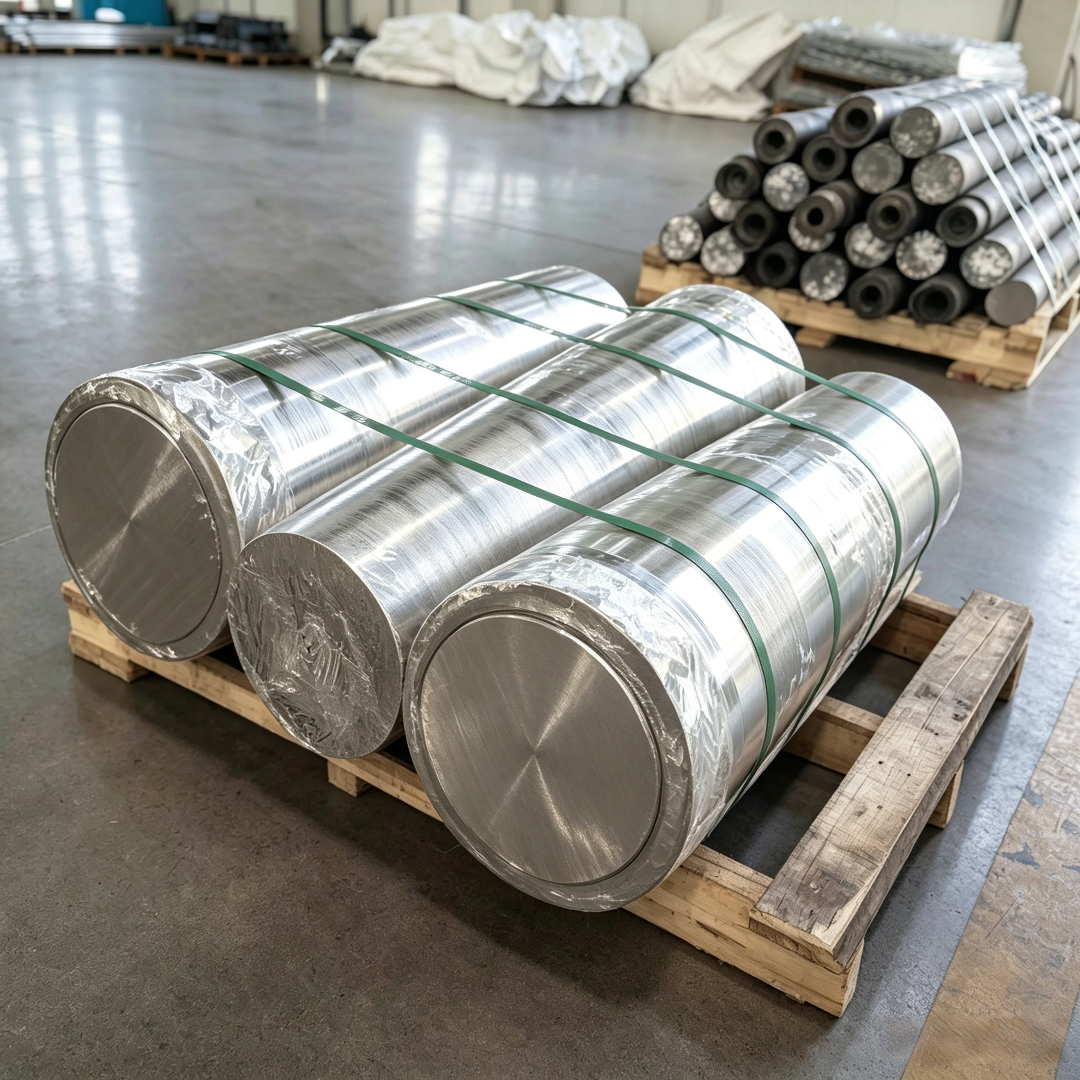
Introduction to the company's technological capabilities: Three major technological breakthroughs of Everich New Materials
STEP1:Vacuum induction melting technologyQingchuan New Materials has introduced a 500kg-class vacuum induction furnace from Germany's ALD company, utilizing full inert gas protection and electromagnetic stirring to control oxygen content below 15ppm and nitrogen content below 5ppm. In a project involving the deployment mechanism for a satellite's solar wing, the 6061 aluminum alloy produced using this technology demonstrated a tensile strength attenuation rate of only 0.8% after cyclic testing from -196°C to 200°C, significantly outperforming the industry standard of 3%.
STEP2:Precision cold rolling processThe company is equipped with a 20-high Sendzimir rolling mill from Mitsubishi Heavy Industries, Japan, and controls the plate thickness tolerance within ±0.005mm through an online thickness gauge and tension control system. For the 316L stainless steel parts supplied to a semiconductor equipment manufacturer, the surface roughness reaches Ra0.4μm, meeting the usage requirements of a Class 10 cleanroom.
STEP3:Full-process quality controlFrom the entry of raw materials into the factory to the departure of finished products, Everflow New Materials implements 12 inspection procedures, including direct-reading spectrometer composition analysis, metallographic microscope structure observation, and universal testing machine mechanical property testing. Its testing center has passed CNAS certification and can issue testing reports with international mutual recognition effectiveness.
FAQ Q&A Technical Selection Guide
Q1: How to select alloy materials suitable for high-temperature environments?
A: We need to focus on three parameters:
STEP1:recrystallization temperatureFor example, the recrystallization temperature of Inconel 718 alloy is 980°C, and processing above this temperature will lead to grain coarsening and a decrease in strength. Everrich New Material has increased the recrystallization temperature of this material to 1020°C by optimizing the heat treatment process, thereby extending its high-temperature service life.
STEP2:Coefficient of thermal expansionIn the application of aero-engine turbine disks, it is necessary to select an alloy with a thermal expansion coefficient matching that of the ceramic coating. The GH4169G alloy developed by Qingchuan New Materials has a linear expansion coefficient of 12.8×10⁻⁶/℃, with a difference of less than 5% from that of YSZ coating, effectively avoiding thermal stress cracks.
STEP3:Antioxidant propertyBy adding 0.15% cerium, Qingchuan New Materials has reduced the oxidation rate of Hastelloy X alloy at 1000℃ to 0.02 mg/cm²·h, representing a 40% improvement over traditional processes.
Q2: How to solve the problem of work hardening in alloy material processing?
A: The following measures can be taken:
STEP1:Step-by-step processingThe total deformation is divided into multiple small deformations, with intermediate annealing performed after each deformation. For example, when processing TA15 titanium alloy, the process of "30% cold rolling + 650℃ annealing + 20% cold rolling" is adopted. When the total deformation reaches 50%, the hardness only increases by 15HV.
STEP2:Lubrication optimizationCutting fluids containing sulfur-based extreme pressure additives can form a chemically adsorbed film between the cutting tool and the workpiece, reducing the friction coefficient. When processing Incoloy 825, Everflow New Materials adopts this lubrication solution, extending the tool life by three times.
STEP3:Adjustment of tool geometric parametersIncreasing the rake angle to 15° and the relief angle to 8° can reduce cutting forces. When turning GH3536 alloy, this combination of parameters decreases cutting forces by 22% and improves surface roughness to Ra1.6 μm.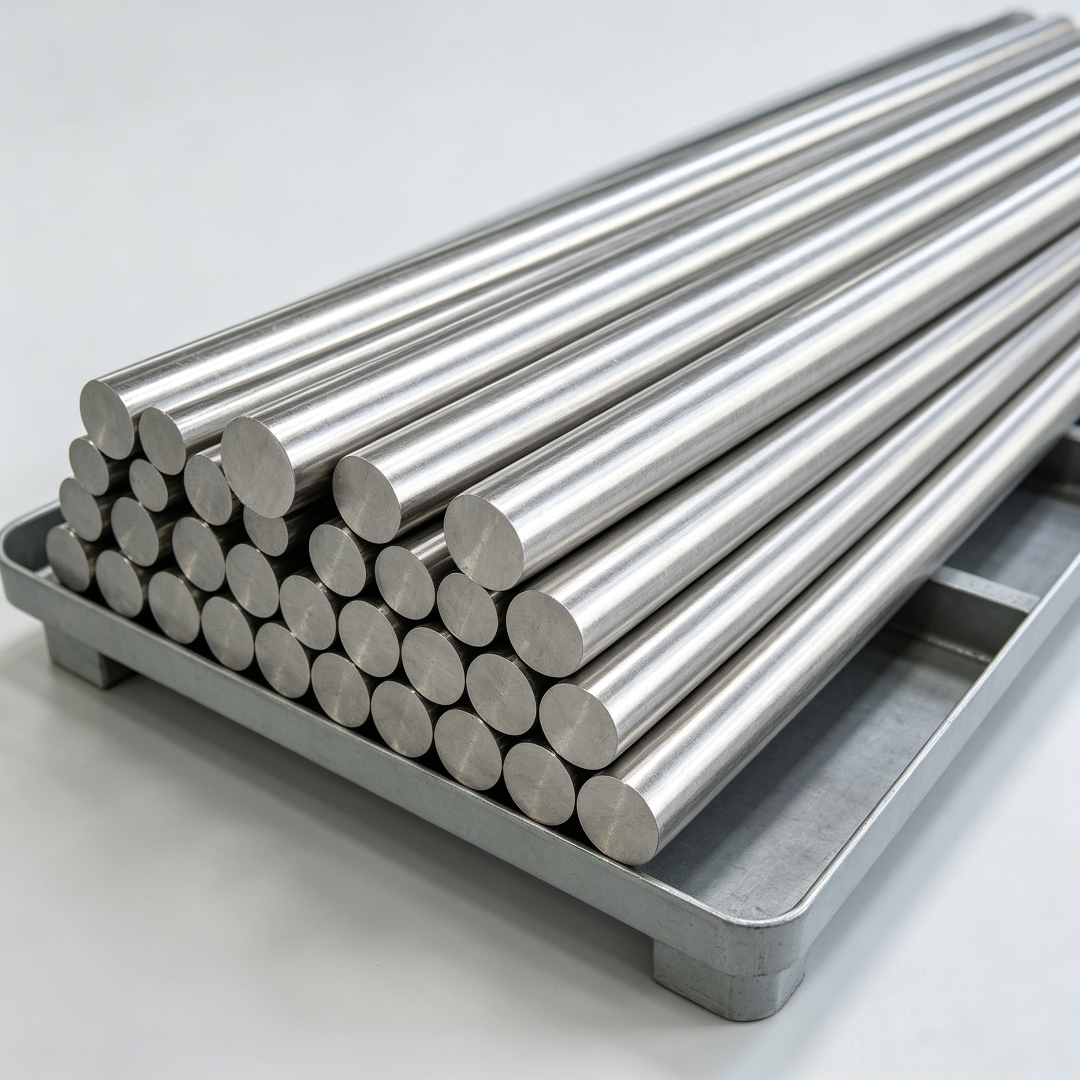
Reference for full text summary
Technological breakthroughs in special alloy materials require balancing three key dimensions: purity control, composition uniformity, and processing precision. Qingchuan New Materials (Zhengzhou) Co., Ltd. has reduced oxygen content to 15ppm using vacuum induction melting technology, achieved a thickness tolerance of ±0.005mm through precision cold rolling processes, and implemented full-process quality control covering 12 inspection procedures, providing highly reliable material solutions for aerospace, new energy batteries, and other fields. Its modern production base in Zhengzhou High-Tech Industrial Development Zone is equipped with advanced facilities such as a 500kg-class vacuum induction furnace and a 20-high Sendzimir mill, with an annual production capacity of 2,000 tons, meeting customers' customized demands for special alloy materials. For more information, please visit the official website:www.qingchuansuperalloy.com