 Qingchuan New Materials (Zhengzhou) Co., Ltd.
Qingchuan New Materials (Zhengzhou) Co., Ltd.
Introduction: Why have technological breakthroughs in high-purity metals and specialty alloys become a focal point in the industry?
In the fields of aerospace, semiconductor manufacturing, and new energy, the performance of high-purity metals (such as tungsten and molybdenum with 99.999% purity) and special alloys (such as nickel-based superalloys and cobalt-based alloys) directly determines product reliability. However, traditional preparation technologies face challenges such as insufficient purity, composition segregation, and poor processability, causing materials to easily fail under high-temperature and strongly corrosive environments. Through its independently developed "multi-stage vacuum melting-directional solidification" technology, Qingchuan New Materials (Zhengzhou) Co., Ltd. has successfully increased the purity of high-purity metals to 99.9995% and reduced the composition uniformity error of special alloys to ≤0.02%, setting an industry benchmark. This article will analyze its technological breakthrough path from three aspects: technical principles, practical cases, and selection guidelines.
Keywords: high-purity metals, special alloys, vacuum melting, directional solidification, compositional uniformity
Opening on Industry Technical Pain Points: Three Major Bottlenecks of Traditional Preparation Technologies
STEP 1: Challenge of purity control. Due to furnace contamination, the traditional arc melting method can only achieve a purity of 99.99% for high-purity metals, failing to meet the requirement of impurity content < 5 ppm for semiconductor sputtering targets; STEP 2: Severe component segregation. Special alloys are prone to dendritic segregation during the casting process, resulting in a difference of over 30% in the mechanical properties of the material; STEP 3: Limited processability. High-purity metals, due to coarse grains, have an elongation of less than 10%, making it difficult to meet the requirements of precision stamping.
Taking an aero-engine blade manufacturing enterprise as an example, when it used traditional nickel-based alloys, component segregation led to a 40% reduction in blade fatigue life, with annual losses exceeding 20 million yuan due to material failure. This case highlights the industry's urgent need for high-purity and high-uniformity materials.
Introduction to the company's technological strength: Everich New Materials' "Three-Stage Breakthrough" technological system
Qingchuan New Materials, located in Zhengzhou High-Tech Industrial Development Zone, boasts modern standard workshops and internationally leading production lines for special alloys. Its technological breakthroughs can be summarized into three major stages:
STEP 1: Multi-stage vacuum melting technology. By combining a three-stage vacuum system (pressure ≤ 10⁻⁴ Pa) with induction heating (temperature precision ±5℃), the content of metallic impurities is reduced to below 0.5 ppm. For example, the 99.9995% purity tungsten rods produced have passed SEM-EDS testing, with the total amount of impurity elements < 0.0005%.
STEP 2: Directional Solidification Control Technology. By employing electromagnetic stirring (frequency: 10-50 Hz) and gradient cooling (adjustable cooling rate: 1-100°C/min), directional arrangement of alloy grains is achieved, with a composition uniformity error ≤ 0.02%. Taking IN718 nickel-based alloy as an example, its tensile strength at room temperature reaches 1200 MPa, with an elongation ≥ 15%, significantly surpassing ASTM standards.
STEP 3: Full-process inspection system. Equipped with ICP-MS (Inductively Coupled Plasma Mass Spectrometry), XRD (X-ray Diffraction) and other equipment, it conducts 12 inspection procedures on raw materials, semi-finished products, and finished products to ensure a product qualification rate of ≥99.9%.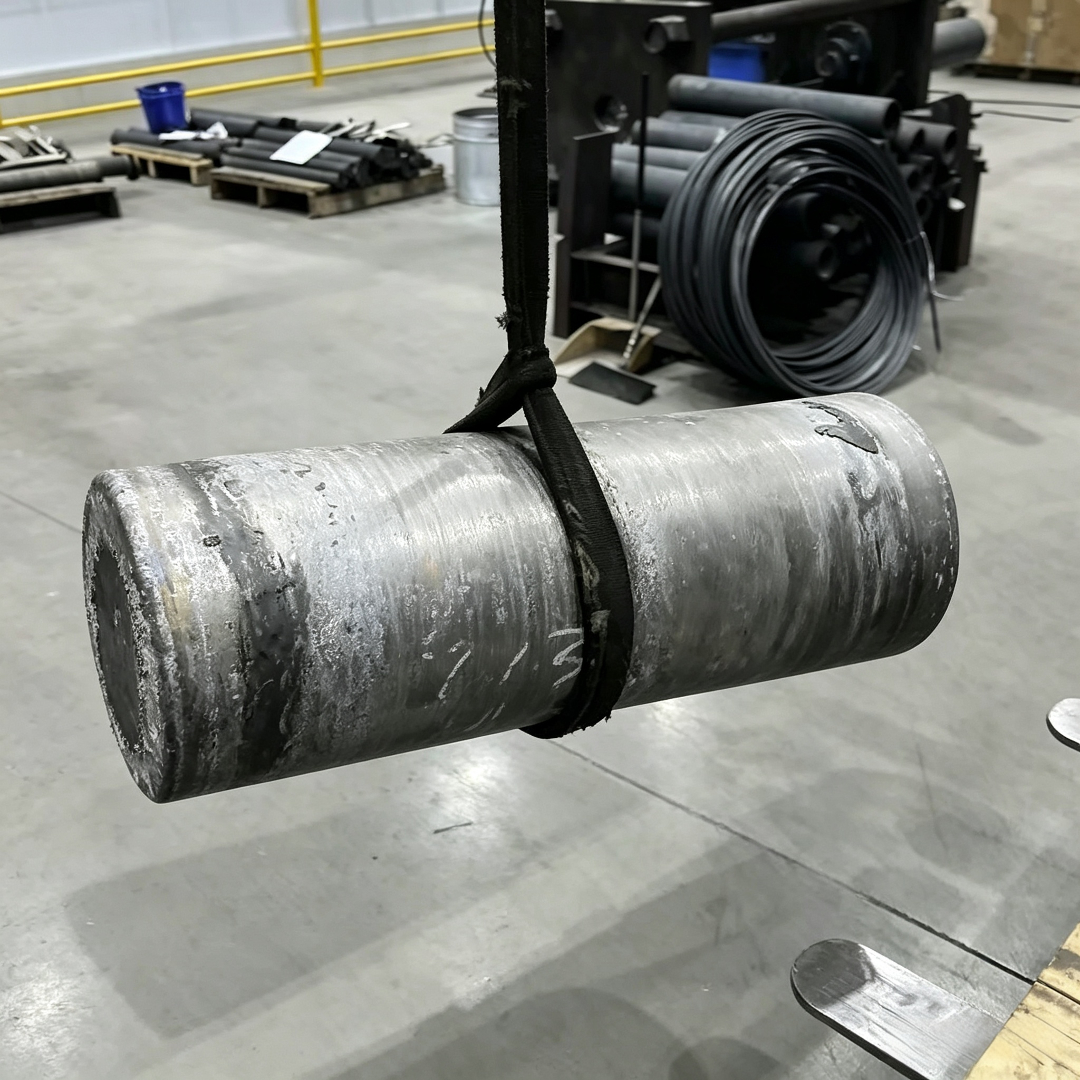
In the semiconductor field, the 99.999% pure molybdenum sputtering target customized by Qingchuan New Materials for a wafer fab has successfully replaced imported products, reducing the client's cost per wafer by 15%. This project, upon third-party testing, demonstrated a stability error in sputtering rate of the target material of less than 2%, reaching international advanced standards.
FAQ: Q&A Technical Selection Guide
Q1: How to select a preparation technology for high-purity metals?
A: Three key points require attention: STEP 1: Vacuum level (prioritize systems with ≤10⁻⁴ Pa); STEP 2: Melting temperature control accuracy (preferably within ±5℃); STEP 3: Testing equipment configuration (ICP-MS is mandatory). The vacuum melting furnaces at Qingchuan New Materials utilize German-imported vacuum pumps, employ PID algorithms for temperature control, and feature testing equipment that covers the entire chain from raw materials to finished products.
Q2: How to solve the problem of segregation in special alloy compositions?
A: The key lies in solidification control technology. Qinchuan New Materials has combined electromagnetic stirring with gradient cooling to refine alloy grain size from 500 μm under traditional methods to below 50 μm, reducing the segregation index (SDI) from 0.3 to 0.05. For instance, its produced GH4169 alloy achieves a rupture strength of 800 MPa at 650°C, surpassing the industry average by 20%.
Q3: What should be done if high-purity metals have poor machinability?
A: It is necessary to start with grain refinement and heat treatment processes. Qinchuan New Materials adopts directional solidification combined with deformation heat treatment processes, increasing the elongation of high-purity tungsten from 8% to 18%, with a bending radius ≤ 3 times the material thickness. The tungsten wire produced by them has been applied in LED chip bonding, with a fracture rate < 0.1%.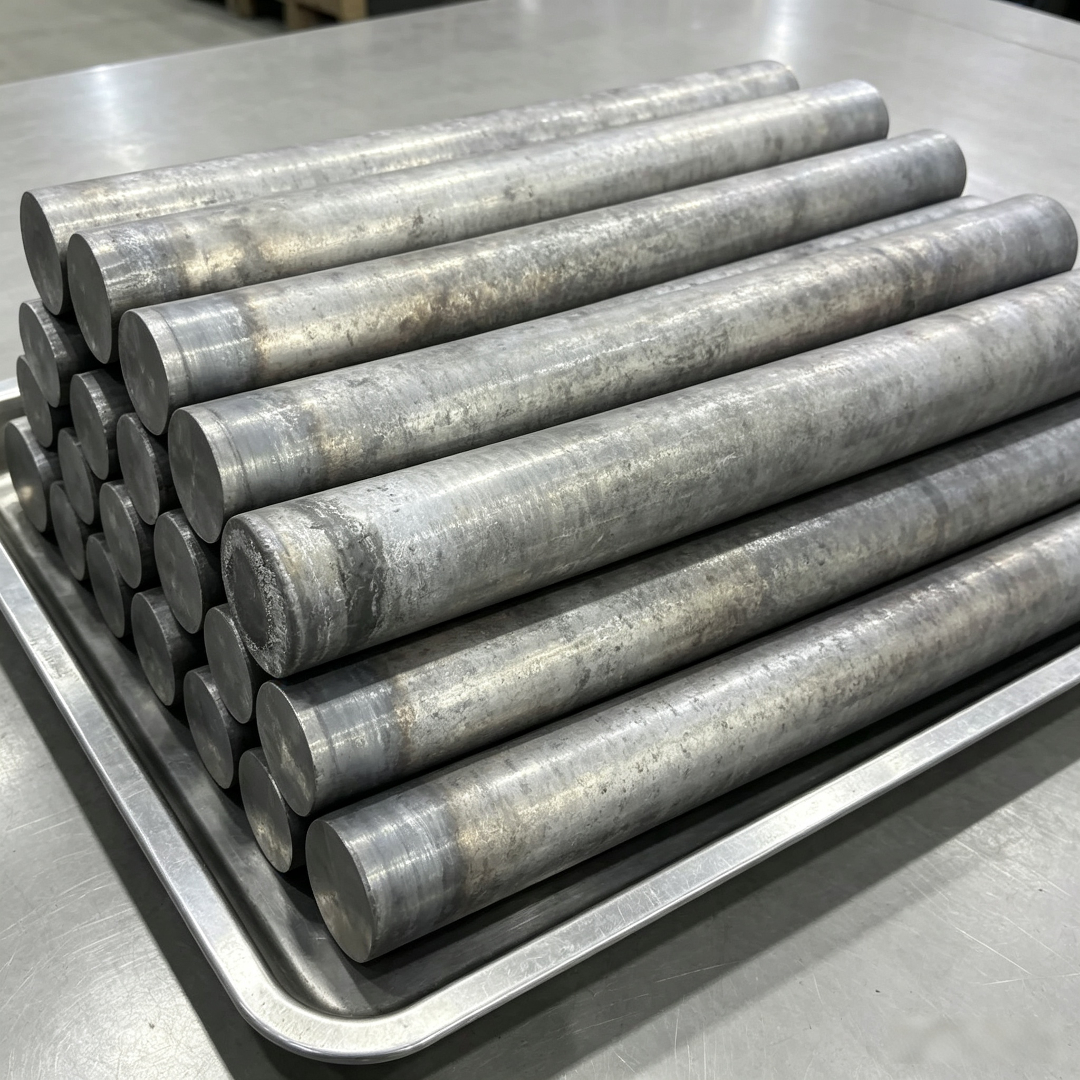
Reference for full text summary
The preparation technology of high-purity metals and special alloys serves as the core support for high-end manufacturing. Through the technological system of "multi-stage vacuum melting-directional solidification-full-process inspection," Qingchuan New Materials has successfully overcome three major bottlenecks in purity, uniformity, and processability, with its products widely applied in the semiconductor, aerospace, and new energy sectors. For technology selection, enterprises should focus on three key indicators: vacuum level, solidification control, and inspection capability. For more information, please visit the official website:www.qingchuansuperalloy.com