 Qingchuan New Materials (Zhengzhou) Co., Ltd.
Qingchuan New Materials (Zhengzhou) Co., Ltd.
Qingchuan New Materials (Zhengzhou) Co., Ltd.
Qingchuan New Materials (Zhengzhou) Co., Ltd.
Qingchuan New Materials (Zhengzhou) Co., Ltd.
Introduction: Core Challenges of Sealing Technology and Material Innovation Requirements
In the fields of aerospace, semiconductor packaging, and high-end instrument manufacturing, the reliability of gas-tight joints directly determines the performance and lifespan of equipment. Traditional sealing of metals with ceramics/glass often leads to interface stress concentration due to mismatched thermal expansion coefficients, causing leaks or structural failure. Iron-nickel shape-memory alloys, by precisely controlling the chemical composition, achieve thermal expansion coefficient matching with materials such as hard glass and alumina ceramics, becoming the key material to solve this problem. Qichuan New Materials (Zhengzhou) Co., Ltd., with its research and development accumulation in high-purity metals and special alloys, has established a full-chain technology system from material design to precision processing, providing customized sealing solutions for high-end equipment.
Technical Analysis: Core Principle and Process Control of Iron-Nickel Determinate Expansion Alloy
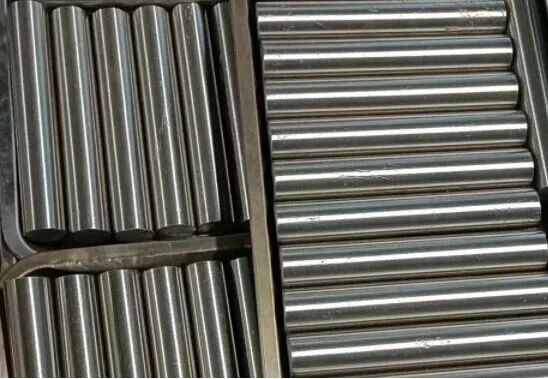
The core characteristic of iron-nickel constant-expansion alloys lies in the precise controllability of their coefficient of thermal expansion (CTE). Taking the 4J50 alloy as an example, its average linear expansion coefficient is (9.4~9.8)×10⁻⁶/℃ within the temperature range of 20-400℃, which is highly matched with molybdenum group soft glass (such as DM-308). After sealing, the leakage rate can be lower than 1×10⁻¹¹ Pa·m³/s, meeting the requirements of aerospace-grade sealing. Qinchuan achieves performance optimization through the following process controls:
Accurate control of chemical composition
Nickel content in the alloy is controlled between 44.5% and 45.5%, with carbon content strictly below 0.05% to minimize the impact of carbide precipitation on the coefficient of expansion. The combination process of vacuum induction melting (VIM) + electroslag remelting (ESR) ensures uniform composition and avoids performance fluctuations caused by local segregation.
2. Heat Treatment System Optimization
Two-stage heat treatment: 900℃ hydrogen annealing to relieve processing stress and activate the surface, followed by stabilization annealing at 850℃ to transform the microstructure into a single austenitic structure and eliminate phase transformation risk. For casting high-temperature alloys such as K418, control the size and distribution of the γ' strengthening phase (Ni₃(Al,Ti)) through solid solution + aging treatment to enhance high-temperature tensile strength.
3. Precision Machining and Surface Treatment
Before sealing, the alloy surface must be acid cleaned (25% hydrochloric acid solution, 70℃) to remove the oxide scale, followed by argon arc welding or brazing for connection with other metals. Qinchuan is equipped with a five-axis CNC machining center, which can achieve sealing part tolerances within ±0.01mm, meeting the dimensional accuracy requirements of semiconductor packaging.
Practical Case: Domestic Alternative for Aerospace and Aviation Sensor Sealing
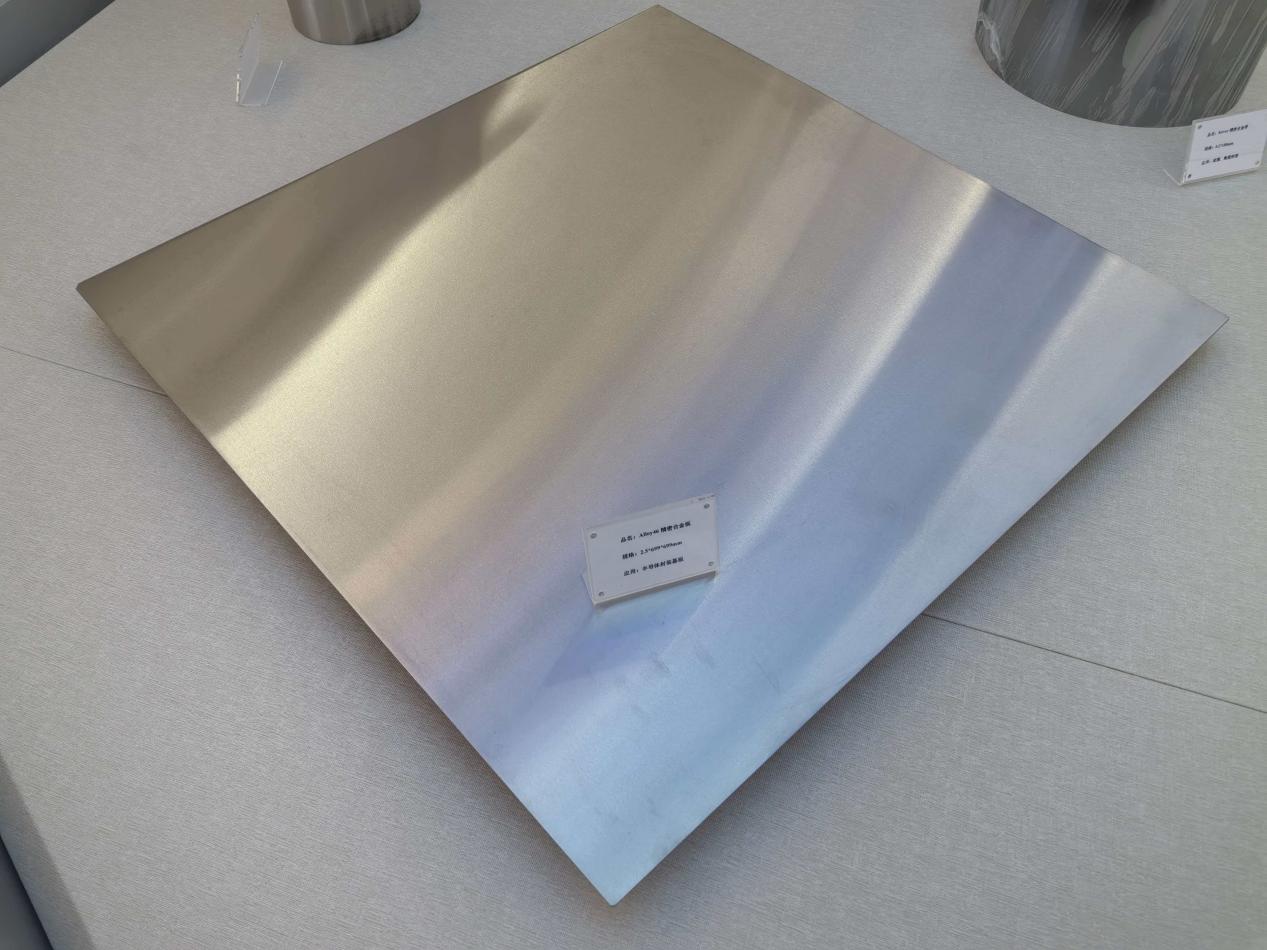
A certain aerospace company previously used imported 4J33 alloy to encapsulate gyroscope sensors, facing issues such as long supply cycles and high costs. Qinchuan achieved domestic substitution through the following steps:
Step 1: Material Custom Development
According to the sensor's operating temperature range (-60℃~450℃), adjust the cobalt content in the alloy to 8.5%~9.5%, optimize the thermal expansion coefficient curve, and ensure compatibility with the alumina ceramic tube shell. Testing shows that the customized alloy has a CTE of (6.8~7.2)×10⁻⁶/℃ within the range of 20–400℃, with a deviation from the ceramic expansion coefficient less than 5%.
STEP 2: Precision Casting Delivery
Based on the 3D model provided by the customer, Qingchuan produces sensor housings using the precision investment casting process, eliminating micro-porosity through hot isostatic pressing (HIP) technology, and improving the yield rate of castings to 98%. Compared to imported materials, the cost of domestic alloys is reduced by 32%, and the delivery cycle is shortened by 45 days.
STEP 3: Long-term Reliability Verification
Under 1000 cycles of simulated extreme temperature variation, no leakage or cracking was observed in the sealing components, achieving fatigue life 1.2 times that of imported materials. Currently, this solution has been applied to the inertial navigation systems of multiple aerospace enterprises, with a cumulative delivery exceeding 5000 units.
Technical Layout: Full-chain capabilities from materials to solutions
ChengChuan's technical advantages are not only reflected in material performance but also in its integrated "material + process + service" model.
Product matrix with multiple brand numbers
Covering isometric crystal (K418/K419), directional solidification, and single crystal alloys to meet the demands of various temperature and stress conditions. For instance, K418 alloy achieves a tensile strength of 200MPa at 900°C, suitable for aeroengine turbine blades; the 4J45 alloy focuses on semiconductor packaging, with its low expansion property to avoid thermal stress damage to the chip and lead frame.
2. Full-process Quality Control System
From raw material inspection to finished product shipment, 12 quality control checkpoints are implemented, including spectral analysis, metallographic examination, and air tightness testing. Equipped with a scanning electron microscope (SEM) and energy-dispersive spectrometer (EDS), it can analyze the microstructure of the sealing interface, providing data support for process optimization.
3. Fast Response Customized Service
For R&D needs with small batches and diverse varieties, Qinchuan offers "72-hour rapid prototyping" service, predicting sealing performance through digital simulation to reduce trial production costs. For example, the customized 4J50 alloy vacuum detector assembly for a medical equipment company was delivered in just 15 days from design to delivery, helping the client seize the market opportunity.
Conclusion: Material innovation drives the upgrade of high-end manufacturing.
The technical breakthrough of the Fe-Ni superalloy is essentially a deep integration of material science and precision manufacturing. By continuously investing in R&D, optimizing processes, and improving services, Qinchuan New Materials not only resolves the "choking point" issues of high-end equipment but also propels the evolution of sealing technology towards higher reliability and lower cost. In the future, with the rapid development of fields such as 5G and new energy, the demand for customized alloy materials will continue to grow, and Qinchuan's technical practice provides an innovative paradigm that can be replicated by the industry.