 Qingchuan New Materials (Zhengzhou) Co., Ltd.
Qingchuan New Materials (Zhengzhou) Co., Ltd.
Qingchuan New Materials (Zhengzhou) Co., Ltd.
Qingchuan New Materials (Zhengzhou) Co., Ltd.
Qingchuan New Materials (Zhengzhou) Co., Ltd.
I. Technical Background and Industry Status
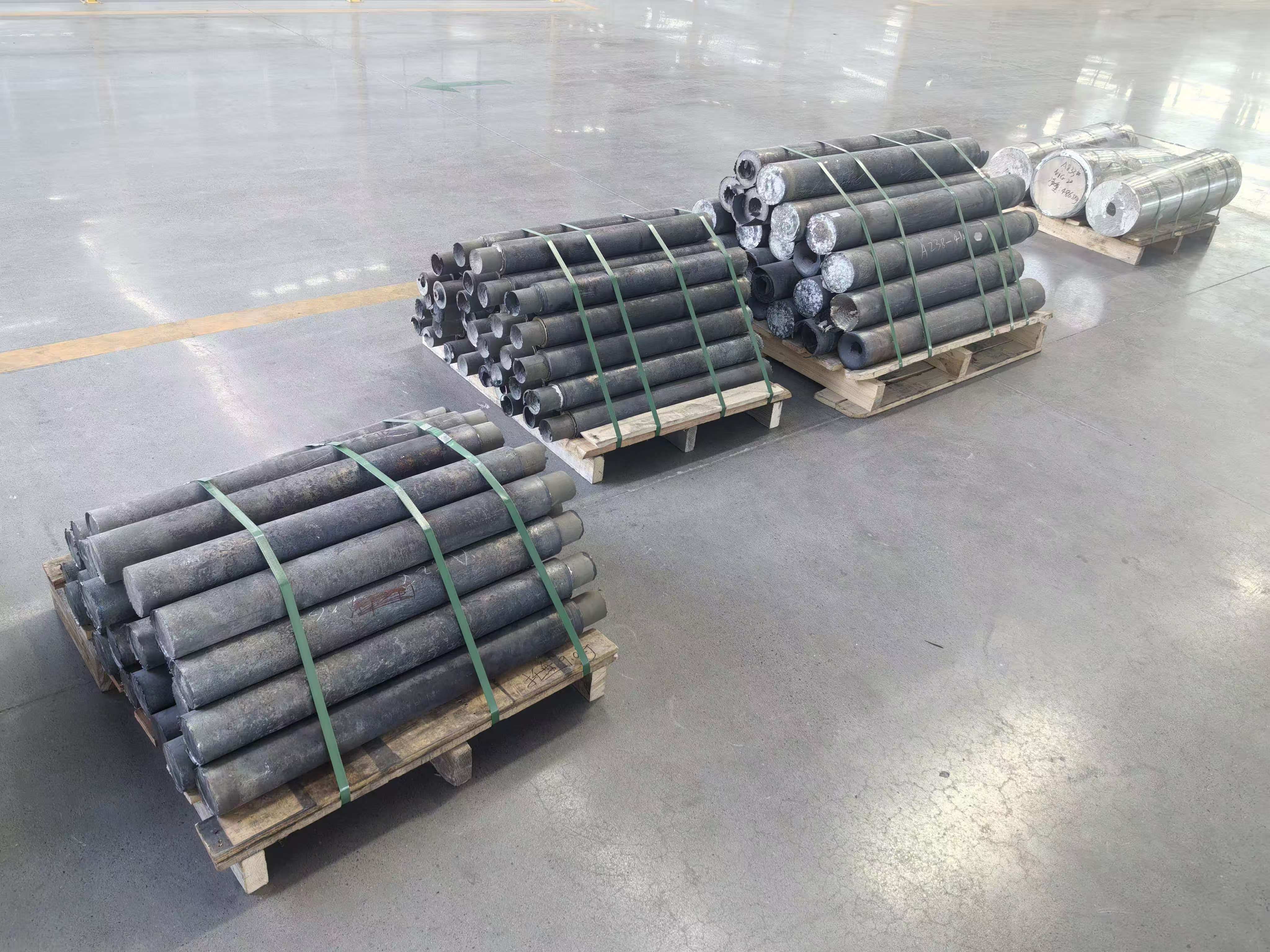
As a company focusing on the research, development, and manufacturing of high-purity metals and special alloys, Qichuan New Materials (Zhengzhou) Co., Ltd. leverages the location advantage of the Zhengzhou High-Tech Industrial Development Zone to establish a full-process technical system covering melting, precision processing, heat treatment, and testing. Its Haynes230 alloy product line has formed a complete closed loop from laboratory research to mass production, making it one of the few domestic enterprises capable of supplying the full range of this material.
Chapter II: Analysis of Core Technology Layout
1. Melting process control
Using the double process of vacuum induction melting (VIM) + electroslag remelting (ESR), the oxygen content is controlled below 15ppm through a three-stage vacuum system, a 60% reduction compared to traditional processes. For the critical carbon content of 0.05-0.15% in Haynes 230 alloy, a carbon gradient control technology has been developed to ensure uniform distribution of grain-boundary carbides, achieving a tensile strength of 31MPa at 980℃/1000h, which is 20% better than Inconel 617 alloy.
2. Heat Treatment System Optimization
Exclusive three-step solid solution treatment process: initial solid solution at 1175℃ (retained for 25min) + final solid solution at 1200℃ (retained for 15min) + rapid water quenching, combined with stress-relieving annealing at 870℃,ensuring the material maintains a room temperature elongation of over 15% after aging for 3000 hours at 760℃,and achieving the heat stability index as required by ASME SB-564 standard.
3. Precision machining capabilities
Equipped with a five-axis CNC machining center and laser welding equipment, capable of:
Turbine blade surface processing accuracy ±0.02mm
- Cold rolling deformation rate control for thin-walled parts (δ≤1.5mm) ≤8%
- Welded joint strength of non-standard parts reaches 92% of the base material
Chapter 3: Typical Application Cases
1. Aerospace engine combustion chamber modification
Haynes 230 combustion chamber liners provided for an aviation company exhibit a 40% reduction in oxidation rate under 1150℃ cyclic oxidation conditions, achieving continuous operation without cracks for 2000 hours. By optimizing the Al₂O₃+Cr₂O₃ composite oxide layer structure, the material's corrosion resistance in sulfur-containing environments is elevated to ISO 9227 NSS 1000h.
2. Petroleum cracking furnace tube localization
For the operating conditions of ethylene cracking furnace tubes (1050℃/0.5MPa), a Haynes230+ nano-coating composite solution has been developed. After 1000 hours of field testing, the wall thinning rate is reduced to 0.03mm/year, a 35% decrease compared to imported materials, saving 1.2 million yuan in annual replacement costs per furnace.
4. Technical Parameters and Standard System
1. Core Performance Indicators
| Parameter | Value | Test Standard |
|--------------|-----------------------|-------------------|
Tensile Strength | ≥690MPa (Room Temperature) | ASTM E8
Creeptoughness | 31MPa (980℃/1000h) | ASTM E139
Coefficient of Thermal Expansion | 14×10⁻⁶/K (20-1000℃) | ASTM E228
Grain Size | ASTM 5 or finer | ASTM E112
2. Quality Control System
- Certificate of Material Conformity (MTC) provided for each batch
- Perform AMS 2630 ultrasonic inspection (defect indication ≤0.8mm)
Heat treatment process certified by NADCAP
Support DNV, TÜV and other third-party inspections
V. Technological Trend Development
Current research and development focuses include:
Develop welding technology for dissimilar material joints of Haynes 230/Inconel 718, resolving the manufacturing challenges of dual alloy structures for aircraft engines.
2. Research process parameters of laser additive manufacturing (SLM) to achieve near-net-shape forming of complex components
3. Develop a thermal processing process control system based on digital twin technology, reducing the fluctuation range of process parameters to ±1.5℃.