Qingchuan New Materials (Zhengzhou) Co., Ltd.
Qingchuan New Materials (Zhengzhou) Co., Ltd.
Introduction
In the field of high-end manufacturing, special alloys have become core materials in industries such as aerospace and energy equipment due to their exceptional high-temperature resistance, corrosion resistance, and high-strength properties. However, their processing precision and performance stability directly impact product lifespan and safety. Leveraging years of technological accumulation, Qingchuan New Materials (Zhengzhou) Co., Ltd. has developed unique advantages in the research, development, and processing of special alloys. This article will analyze how to achieve high-precision processing and performance optimization of special alloys from three perspectives: technical challenges, corporate capabilities, and selection guidelines.
Keywords
Special alloys, high-precision machining, performance optimization, Qingchuan New Materials, process parameters
Introduction to Industry Technical Pain Points
Special alloy processing faces three core challenges:
STEP 1: Contradiction between material hardness and processing difficultyFor example, the hardness of nickel-based superalloys can exceed HRC40, causing traditional cutting tools to wear easily, resulting in excessive surface roughness during machining (Ra > 3.2 μm) and affecting fatigue life.
STEP 2: Insufficient precision in heat treatment process controlWhen the deviation in solution treatment temperature exceeds ±5°C, the grain size of the alloy may deteriorate from ASTM Grade 4 to Grade 6, significantly reducing the yield strength (by up to 15%).
STEP 3: High dispersion in performance test indicatorsIn the same batch of products, the range of tensile strength may exceed 50 MPa, leading to increased operational risks for equipment. These issues directly constrain the application reliability of special alloys in high-end scenarios.
Introduction to the company's technological strength
Qingchuan New Materials (Zhengzhou) Co., Ltd., located in Zhengzhou High-Tech Industrial Development Zone, possesses modern standard workshops and internationally advanced production lines for special alloys. Its technological advantages are reflected in three key dimensions:
STEP 1: Cluster of Precision Machining EquipmentIt is equipped with a five-axis simultaneous machining center (positioning accuracy of ±0.002 mm), laser cladding equipment (power stability ≤ 1%), and ultra-precision grinding machines (surface roughness Ra ≤ 0.05 μm), enabling one-step molding of complex structural components. For example, for a turbine disk customized for an aero-engine enterprise, by optimizing the tool path and cutting parameters (spindle speed of 8000 rpm, feed rate of 0.05 mm/r), the machining cycle was reduced by 30%, while the surface defect rate was controlled below 0.1%.
STEP2: Heat Treatment Process DatabaseBased on over 2,000 sets of experimental data, a heat treatment parameter model covering 12 alloys, including Inconel 718 and Hastelloy X, has been established. By real-time monitoring of the furnace temperature curve (sampling frequency: 1 Hz) and atmospheric composition (oxygen content ≤ 10 ppm), it ensures that the solution treatment temperature fluctuation is ≤ ±3 °C and grain size uniformity meets ASTM Grade 3-5 standards.
STEP 3: Full-process quality controlFrom raw material warehousing to finished product delivery, six inspection procedures are implemented, including direct-reading spectrometer (detecting elements in the range of C-U with an accuracy of ±0.5%), universal material testing machine (tensile speed of 0.05-500 mm/min), and metallurgical microscope (magnification of 50-1000 times). Data from an energy equipment project shows that the standard deviation of the tensile strength of the produced GH4169 alloy pipes has decreased from 12 MPa to 5 MPa, with a 58% improvement in performance consistency.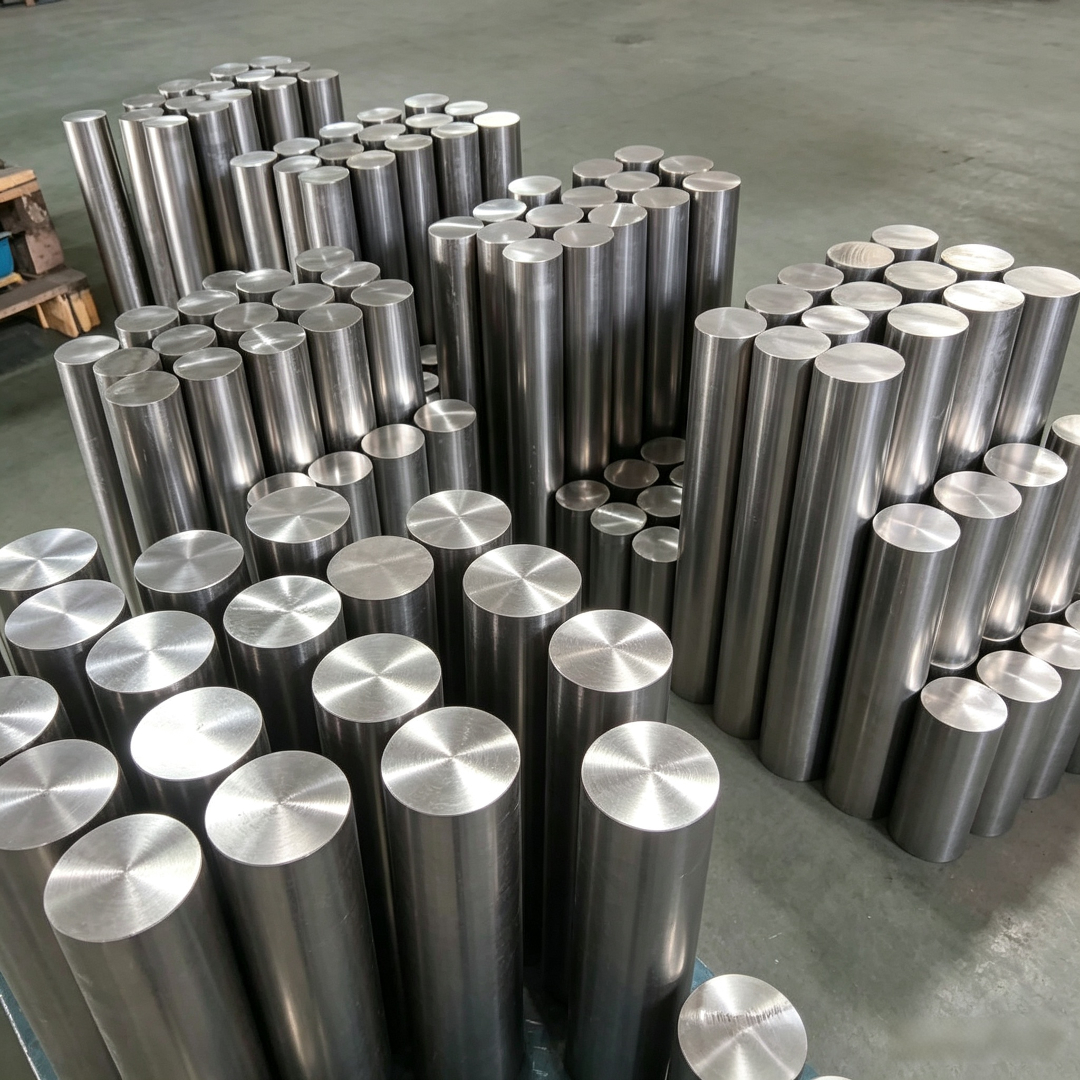
For more information, please visit the official website:www.qingchuansuperalloy.com
FAQ Q&A Technical Selection Guide
Q1: How to select a suitable processing technology for special alloys?
A: A comprehensive assessment of material composition, structural complexity, and performance requirements is necessary. For example, for cobalt-based alloys with a cobalt content >20%, electrical discharge machining (EDM) is recommended as an alternative to traditional milling to avoid tool adhesion issues. For a cobalt-chromium-molybdenum alloy artificial joint developed by Qingchuan New Materials for a medical equipment company, by optimizing discharge parameters (pulse width of 80 μs and peak current of 15 A), the surface roughness was controlled at Ra ≤ 0.2 μm, meeting biocompatibility standards.
Q2: How to adjust when the performance fails to meet the standard after heat treatment?
A: First, check the heating rate and holding time. Taking Inconel 718 as an example, if the tensile strength is lower than 1240 MPa, it may be due to insufficient solution treatment temperature (which requires 1020–1080°C) or excessively short aging time (which requires holding at 720°C for 8 hours). By introducing infrared thermometers (with an accuracy of ±1°C) and intelligent temperature control systems, Qinchuan New Materials has increased the heat treatment pass rate from 85% to 98%.
Q3: How to reduce processing costs?
A: We can start with tool life and material utilization. For example, when machining titanium alloy with PCD (polycrystalline diamond) tools, increasing the cutting speed from 60 m/min to 120 m/min can triple the tool life. For a TC4 titanium alloy shaft sleeve customized by Qingchuan New Materials for a shipbuilding enterprise, by optimizing the clamping method (reducing the number of clamping operations from 3 to 1), the material utilization rate was increased from 65% to 82%, and the cost per unit was reduced by 18%.
Reference for full text summary
The processing precision and performance optimization of special alloys must be integrated throughout the entire process, including material selection, process design, and quality inspection. Leveraging a cluster of precision equipment, a process database, and a comprehensive process control system, Qingchuan New Materials (Zhengzhou) Co., Ltd. provides highly reliable solutions for fields such as aerospace and energy equipment. The GH3625 alloy pipes produced by the company have operated without leakage for three consecutive years in a nuclear power plant project, validating the stability of its technological capabilities. In the future, with the deep integration of digital processing technologies and intelligent inspection systems, the application boundaries of special alloys will be further expanded.