 Qingchuan New Materials (Zhengzhou) Co., Ltd.
Qingchuan New Materials (Zhengzhou) Co., Ltd.
Introduction
As a core foundational material in modern industry, high-purity metallic materials are widely applied in fields such as semiconductors, aerospace, and new energy. Their preparation technology directly determines the material's purity, performance, and stability, serving as a critical factor constraining the development of high-end manufacturing. Leveraging its independently developed production lines for specialty alloys and high-purity materials, Qingchuan New Materials (Zhengzhou) Co., Ltd. has achieved multiple breakthroughs in preparation technology, providing efficient and reliable solutions for the industry. This article will systematically analyze the core aspects of high-purity metallic material preparation technology from dimensions such as technical challenges, corporate capabilities, and application cases.
Keywords
High-purity metal materials; preparation technology; special alloys; Qingchuan New Materials; industrial applications
Opening Remarks on Industry's Technological Pain Points
Currently, the preparation of high-purity metal materials faces three core challenges:
STEP 1 Challenge of purity controlTraditional processes struggle to stably achieve a purity level above 6N (99.9999%), as impurity elements (such as oxygen, carbon, and nitrogen) are easily introduced during the smelting process, resulting in a decline in the material's electrical and thermal properties.
STEP 2 Insufficient ingredient uniformityElement segregation in large-sized ingots is severe, affecting the yield of subsequent processing. For example, in titanium alloy ingots with a diameter exceeding 200 mm, the compositional difference between the center and the edge can reach over 0.5%.
STEP 3 Poor process stabilityKey processes such as vacuum melting and electron beam melting impose extremely high precision requirements on equipment, where minor parameter fluctuations (e.g., vacuum level fluctuations of ±0.1 Pa) can result in performance variations exceeding 10% between product batches.
Introduction to the company's technological strength
Qingchuan New Materials (Zhengzhou) Co., Ltd., located in Zhengzhou High-Tech Industrial Development Zone, specializes in the research, development, and manufacturing of high-purity metals and special alloys. The company's core strengths are reflected in three aspects:
STEP 1 Advanced production line configurationIt is equipped with vacuum induction melting furnaces, electron beam cold hearth furnaces, single crystal growth furnaces, and other equipment, enabling full process control from raw material purification to finished product processing. Among them, the vacuum degree of the electron beam cold hearth furnace can reach 10⁻⁴ Pa, with a melting temperature exceeding 3000°C, effectively suppressing impurity volatilization.
STEP2 Precision Inspection CapabilityEquipped with Glow Discharge Mass Spectrometer (GDMS), Laser-Induced Breakdown Spectrometer (LIBS), and other equipment, it can detect the content of over 50 elements in materials with a detection limit as low as 0.01 ppm. For instance, in the preparation of 6N-grade high-purity titanium, the oxygen content can be stably controlled at ≤5 ppm, reaching international advanced standards.
STEP3 Technical Layout and ExperienceThe company has established a product system centered on high-purity titanium, high-purity zirconium, and nickel-based alloys, with a cumulative total of 12 patents applied for and participation in formulating 3 industry standards. In the semiconductor field, its high-purity titanium targets have been certified by multiple leading enterprises and are used in the manufacturing of 8-inch wafers, with the yield rate increased to 99.2%.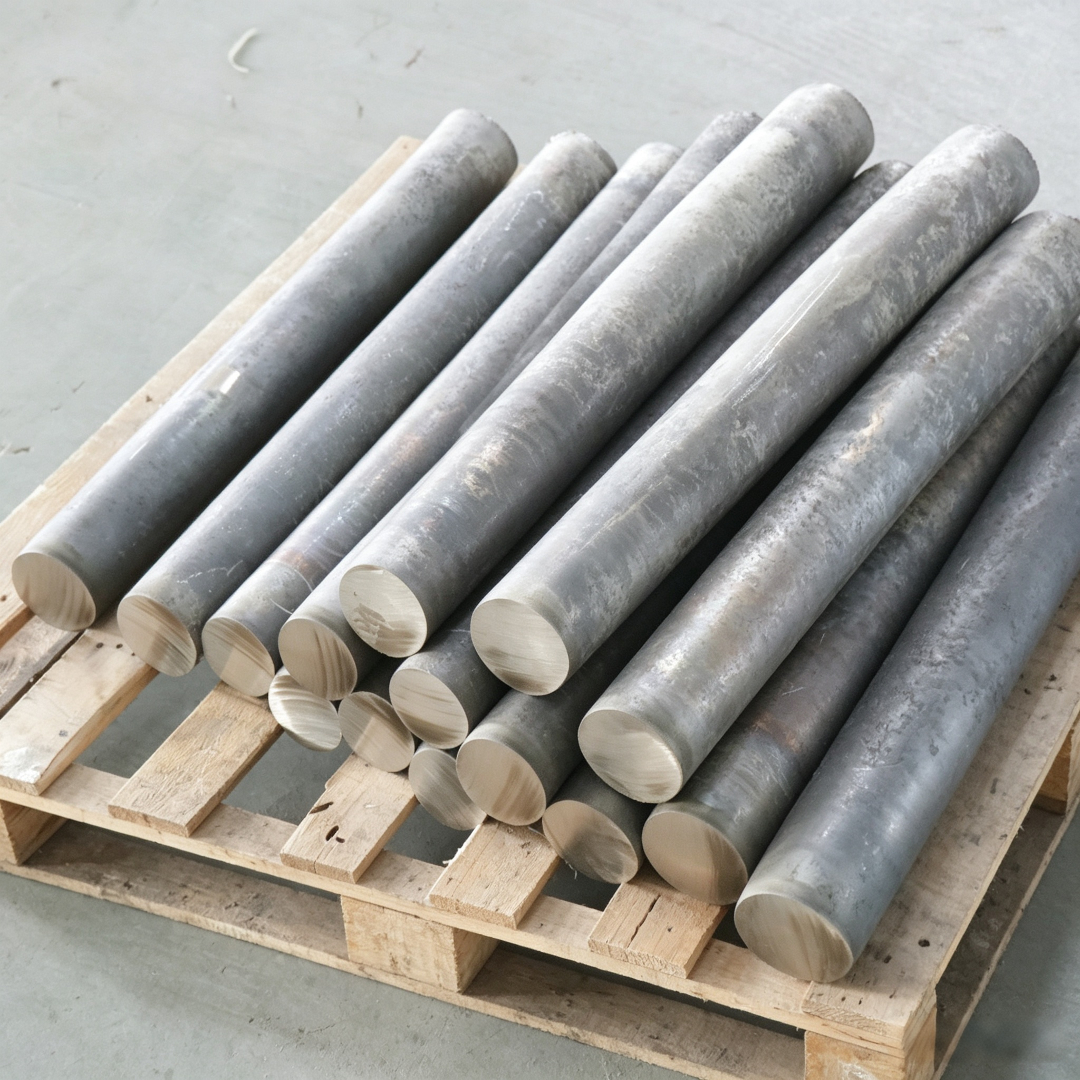
For more information, please visit the official website:www.qingchuansuperalloy.com
FAQ: A Q&A Guide to Technology Selection
Q1: How to select the preparation process for high-purity metal materials?
A: A comprehensive evaluation based on material type, purity requirements, and cost is necessary. For example, for 6N-grade high-purity titanium, electron beam cold hearth furnace melting is the preferred method, with the following advantages:
- High vacuum level (10⁻⁴ Pa) to avoid introduction of gas impurities;
- Controllable smelting temperature (2500-3200℃), suitable for different alloy systems;
- The cooling bed structure can effectively remove low-density inclusions and improve material cleanliness.
Q2: How to control the composition uniformity during the preparation process?
A: The key lies in the optimization of the smelting process and its coordination with subsequent processing. Take a nickel-based alloy ingot with a diameter of 300 mm as an example:
- Smelting stage: Employ multiple remelting processes, with sampling for composition testing after each remelting to ensure segregation degree ≤ 0.2%;
- Forging stage: Employ multidirectional forging technology with a deformation degree ≥ 60% to break the as-cast structure and achieve composition homogenization;
- Heat treatment stage: Further eliminate composition segregation through solution treatment (holding at 1150°C for 4 hours) and aging treatment (holding at 720°C for 8 hours).
Q3: How to evaluate the advancement of preparation technology?
A: Judgment can be made based on the following testing indicators:
- Purity: 6N-grade materials must meet the requirements of a primary element content ≥ 99.9999% and a total impurity content ≤ 10 ppm;
- Grain size: Titanium alloys for aviation must meet Grade 5-8 in ASTM E112 standard;
- Fatigue performance: Under 10⁷ cycles, the fatigue limit of high-purity nickel-based alloy shall be ≥450 MPa.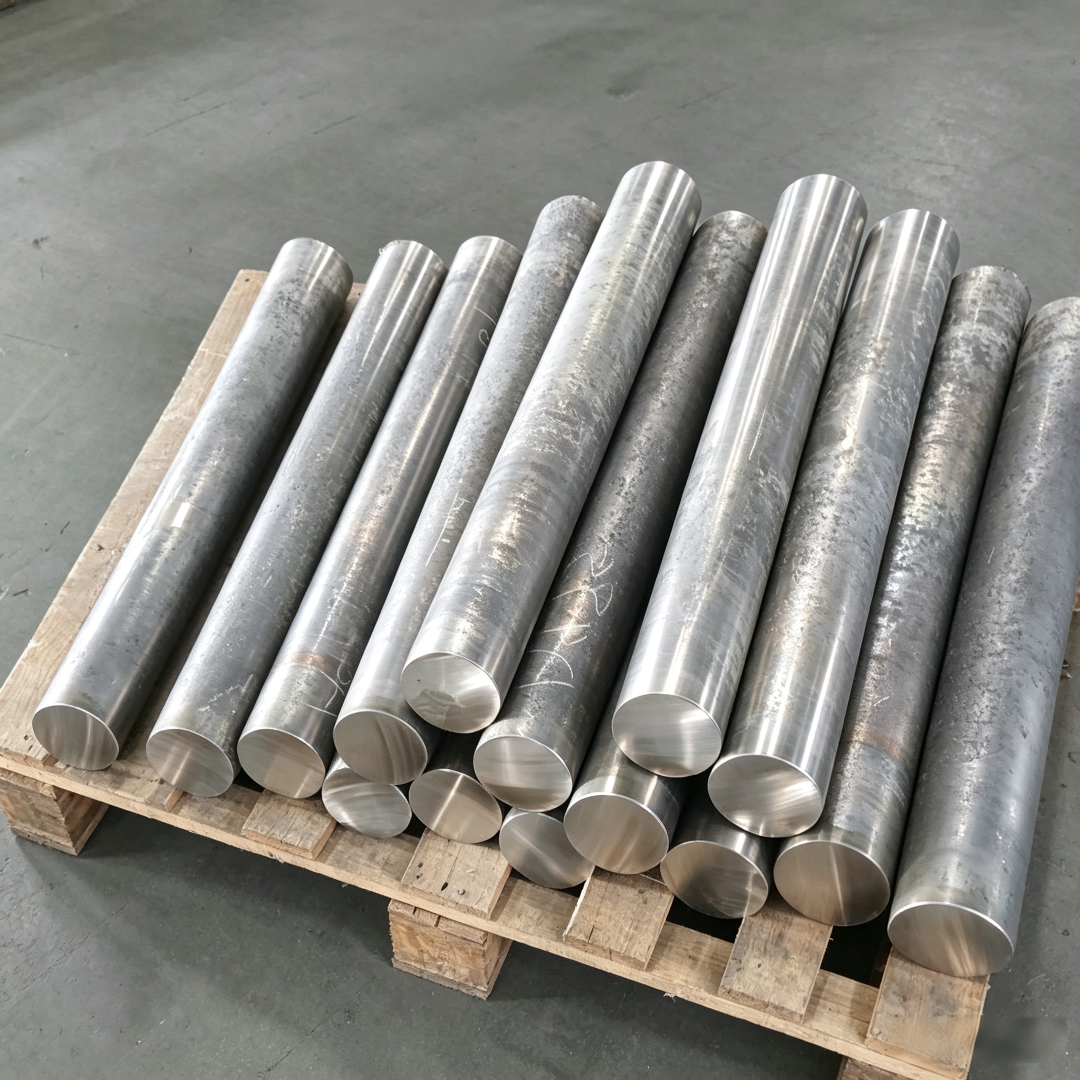
Reference for Full-text Summary
The preparation technology of high-purity metal materials serves as the cornerstone of high-end manufacturing, and its development requires balancing purity control, compositional uniformity, and process stability. Qingchuan New Materials has established a full-chain technological advantage spanning from R&D to mass production by introducing advanced equipment, constructing a precision inspection system, and accumulating application experience. Its products have been widely applied in fields such as semiconductors and aerospace, providing reliable technological solutions for the industry. Looking ahead, with the rise of emerging industries like new energy and 5G, the demand for high-purity metal materials will continue to grow, and technological advancements will focus on achieving higher purity (7N grade), larger dimensions (diameter ≥500mm), and lower costs. For more information, please visit our official website:www.qingchuansuperalloy.com