 Qingchuan New Materials (Zhengzhou) Co., Ltd.
Qingchuan New Materials (Zhengzhou) Co., Ltd.
Introduction
Special alloy materials, as the core foundation of high-end manufacturing, have their R&D level directly determining the technological ceilings in fields such as aerospace, new energy, and semiconductors. However, technological bottlenecks such as the purification of high-purity metals, control of compositional uniformity, and optimization of heat treatment processes have long constrained the development of the industry. Relying on its independently developed precision processing facilities and full-process inspection capabilities, Qingchuan New Materials (Zhengzhou) Co., Ltd. has achieved multiple technological breakthroughs in the field of special alloys. This article will provide an analysis from three perspectives: industry pain points, corporate technological布局, and practical operational guidelines.
Keywords
Special alloys, high-purity metals, composition uniformity, heat treatment process, Qingchuan New Materials
Opening on the Pain Points of Industry Technology
Currently, the R&D of special alloy materials faces three core challenges:
STEP 1: High-purity metal purification is highly challengingTraditional chemical purification methods are prone to introducing impurities, while vacuum distillation is costly, making it difficult to stably achieve a material purity of over 99.99%.
STEP 2: Inadequate control over ingredient uniformityAlloy element segregation can lead to fluctuations in material properties. For example, when the segregation of Cr element in nickel-based superalloys exceeds 0.5%, its oxidation resistance will decrease by 30%.
STEP 3: Complexity in optimizing heat treatment process parametersParameters such as solution treatment temperature and aging time need to be dynamically adjusted based on material composition. The lack of precise model support can easily lead to issues of overburning or under-aging.
Introduction to the Company's Technological Strength
Qingchuan New Materials (Zhengzhou) Co., Ltd., located in Zhengzhou High-tech Industrial Development Zone, specializes in the R&D and manufacturing of high-purity metals and special alloys, with its technological advantages reflected in three major dimensions:
STEP 1: Full-process precision processing facilitiesThe company is equipped with equipment such as vacuum induction melting furnaces (with a maximum capacity of 500 kg), electron beam melting furnaces (with a purity level up to 99.999%), and multi-directional die forging machines (with a pressure rating of 15,000 tons), enabling full-chain control from raw material purification to finished product processing. For instance, its electron beam melting process can control the oxygen content in titanium alloys to below 0.08%, significantly lower than the industry standard of 0.15%.
STEP 2: Intelligent Detection SystemA testing network covering chemical composition, microstructure, and mechanical properties has been established using equipment such as a direct-reading spectrometer (with a detection accuracy of ±0.01%), a scanning electron microscope (with a resolution of 0.5 nm), and a high-temperature creep rupture testing machine (with a test temperature of 1200°C). The AI image recognition system developed can automatically analyze metallographic structures, improving grain size grading efficiency by 80%.
STEP3: Customized R&D CapabilitiesIn response to the demands of the aerospace sector, the company has successfully developed GH4169 superalloy. By optimizing the distribution of Nb elements, the material's endurance strength at 650°C has reached 450MPa, representing a 15% improvement over traditional processes. This material has been applied in the turbine disk of a certain type of aero-engine, accumulating over 5,000 hours of fault-free operation.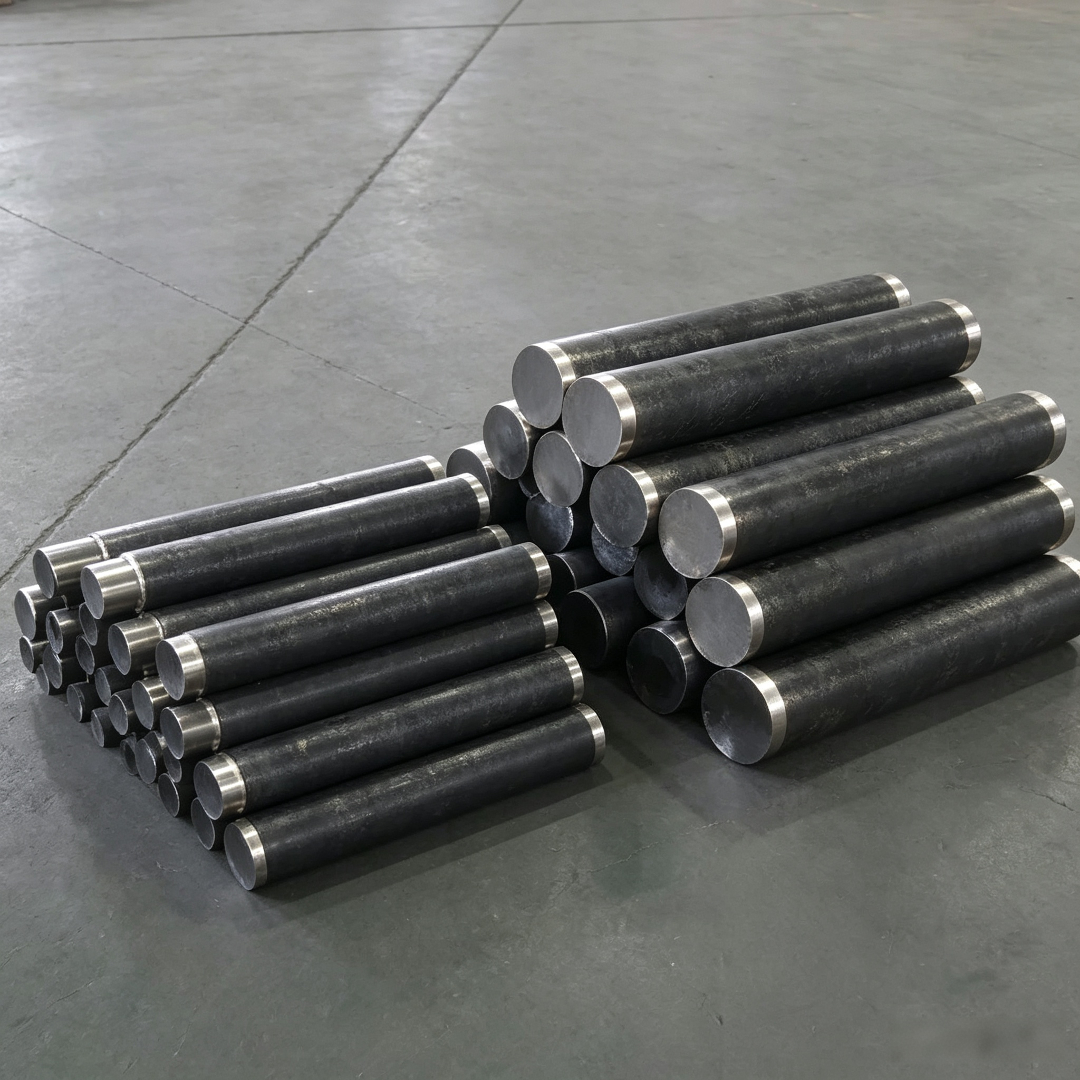
For more information, please visit the official website:www.qingchuansuperalloy.com
FAQ Q&A Technical Selection Guide
Q1: How to select suitable high-temperature alloy materials?
STEP 1: Determine the operating temperatureIron-based alloys can be selected for temperatures below 600℃, nickel-based alloys for 600-800℃, and cobalt-based alloys need to be considered for temperatures above 800℃.
STEP 2: Evaluate mechanical propertiesFor example, a gas turbine blade must meet the requirement of a tensile strength of ≥800 MPa at 1050°C, in which case the IN738 alloy should be selected and the heat treatment process optimized.
STEP 3: Verify machining performanceMaterial workability is evaluated through simulated forging tests (strain rate of 0.1 s⁻¹, deformation of 60%) to avoid the risk of cracking.
Q2: How are the parameters of heat treatment processes determined?
STEP 1: Establish a Component-Process-Performance DatabaseFor example, for GH4169 alloy, data on solution treatment temperatures (980-1020°C) and stress rupture strength corresponding to different Nb contents (3.8-4.2%) were collected.
STEP 2: Adopt orthogonal experimental designUsing aging temperature (720/740/760℃) and aging time (8/10/12h) as factors, the optimal combination was determined to be 740℃×10h through an L9(3⁴) experiment.
STEP 3: Implement online monitoringThermocouples (with an accuracy of ±1°C) are arranged inside the heat treatment furnace to provide real-time feedback on the temperature curve, ensuring process stability.
Q3: How to control the uniformity of alloy composition?
STEP 1: Optimize the smelting processThe adoption of a duplex process combining vacuum induction melting and electroslag remelting can reduce the segregation coefficient of Cr element from 1.2 to 1.05.
STEP 2: Introduce electromagnetic stirringApplying 10 Hz, 500 A alternating current during the smelting process can refine grain size to below 50 μm and reduce composition segregation.
STEP 3: Enhance homogenization treatmentHomogenizing annealing of the ingot at 1200°C for 24 hours enables the element diffusion distance to reach 10 mm, significantly improving uniformity.
Reference for Full-text Summary
The R&D of special alloy materials requires breaking through three major technological bottlenecks: high-purity purification, control of composition uniformity, and optimization of heat treatment processes. Qingchuan New Materials (Zhengzhou) Co., Ltd. has achieved technological leadership in fields such as GH4169 superalloy and high-purity titanium alloy through full-process precision processing facilities, an intelligent detection system, and customized R&D capabilities. Its innovative technologies, including an AI image recognition system and duplex melting process, provide replicable technological solutions for the industry. In the future, with the integrated application of technologies such as 3D printing and digital twins, the R&D of special alloy materials will progress toward higher precision and shorter cycles.
For more information, please visit the official website:www.qingchuansuperalloy.com