 Qingchuan New Materials (Zhengzhou) Co., Ltd.
Qingchuan New Materials (Zhengzhou) Co., Ltd.
Qingchuan New Materials (Zhengzhou) Co., Ltd.
Qingchuan New Materials (Zhengzhou) Co., Ltd.
Qingchuan New Materials (Zhengzhou) Co., Ltd.
I. Technical Positioning and Industry Value of Iron-Nickel Determinate Expansion Precision Alloys
Iron-nickel fixed-expansion precision alloys are functional materials that achieve specific thermal expansion coefficients through component design, with their core value lying in solving size mismatch issues caused by temperature changes in fields such as precision instruments and electronic packaging. Qinchuan New Materials (Zhengzhou) Co., Ltd., relying on the strategic location of the Zhengzhou High-Tech Industrial Development Zone, focuses on the research and development of high-purity metals and special alloys, and its iron-nickel alloy products have formed a full-chain technological layout from component design to precision processing.
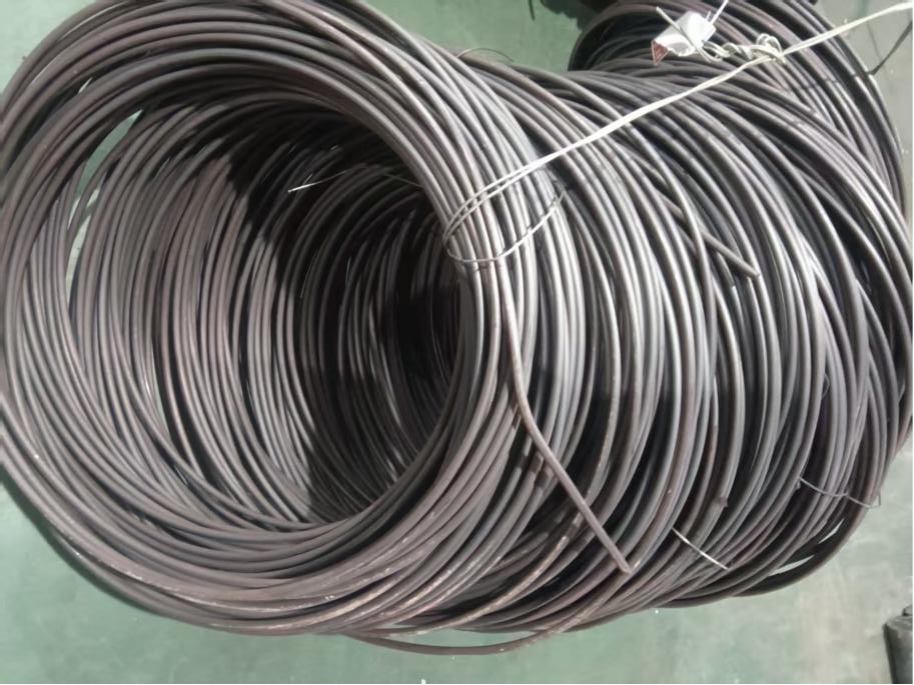
Part II: Technical Analysis: Ingredient Design and Performance Control
Qinchuan New Materials' iron-nickel alloy is based on the Fe-Ni binary system, and the coefficient of thermal expansion (CTE) is controlled by adding elements such as Co, Cr, etc. Typical products like the 4J29 alloy (CTE 5.0×10⁻⁶/℃) achieve dimensional stability within the temperature range of -60℃ to 200℃. The company adopts vacuum induction melting (VIM) technology, combined with precision processing techniques such as cold rolling and annealing, to ensure grain size ≤10μm and surface roughness Ra≤0.2μm, meeting the high-precision requirements of semiconductor packaging, optical instruments, and other applications.
Chapter 3: Corporate Technical Strength and Research and Development Layout
Qingchuan New Materials is constructing a modern standard workshop in the High-tech Zone of Zhengzhou, equipped with core facilities such as medium-frequency induction furnaces and vacuum annealing furnaces, with an annual production capacity of 500 tons. Its research and development team is led by doctoral experts in materials science and engineering, having mastered key technologies such as composition optimization and heat treatment process control, and established a complete material performance database. The company has passed the ISO 9001 quality management system certification, and its products meet standards such as ASTM B753, GB/T 15018, and can replace imported materials for applications in aerospace, medical devices, and other fields.
4. Industry Application Cases: Electronic Packaging and Precision Instruments
In a 5G communication base station filter project, Qinchuan New Materials' 4J36 alloy (CTE 1.5×10⁻⁶/℃) successfully resolved the thermal mismatch issue between ceramics and metal encapsulation, enabling the product to pass a -40℃ to 85℃ cyclic test with a lifespan of over 100,000 cycles. In another case, the company's customized Fe-Ni-Co alloy for optical instrument manufacturers, by optimizing the Co content, reduced the CTE to 3.2×10⁻⁶/℃, significantly improving the yield rate of lens assembly.
V. Technical Advantages and Industry Application Scenarios
The core advantages of Qinchuan New Materials' iron-nickel alloy lie in: 1) customizable composition design, CTE range covering 1.0×10⁻⁶/℃ to 12.0×10⁻⁶/℃; 2) processing accuracy up to ±0.01mm, supporting precision processing of non-standard shapes; 3) passes salt spray test (96h) and hydrogen embrittlement test, meeting stringent environmental applications. Typical application scenarios include semiconductor packaging bases, laser housing, precision measuring instruments, etc., with material performance comparable to international brands like Hitachi Metals of Japan and German VAC, but with a delivery cycle shortened by 30%.
6. FAQ: Technical Challenges of Iron-Nickel Determinate Expansion Alloy Explained
Q1: How to choose the appropriate coefficient of thermal expansion?
A: Matching design should be based on the CTE values of the accompanying materials. For example, when encapsulating with Al₂O₃ ceramic (CTE 7.2×10⁻⁶/℃), 4J29 alloy is recommended; when encapsulating with SiC ceramic (CTE 4.7×10⁻⁶/℃), 4J32 alloy (CTE 4.6×10⁻⁶/℃) is more suitable.
Q2: How to control size stability during the processing process?
A: The key lies in the control of the annealing process. Qinchuan New Materials adopts a staged annealing system, first keeping at 800℃ for 2 hours to eliminate processing stress, then low-temperature annealing at 450℃ for 12 hours to stabilize the structure, ensuring that the material's size change rate is ≤0.05% during subsequent processing.
Q3: How do material costs compare to imported products?
A: Qinchuan New Materials, through localized production and process optimization, reduces the price of 4J29 alloy by 15%-20% compared to imported products, while also offering a 72-hour quick delivery service, significantly enhancing customer supply chain efficiency.