 Qingchuan New Materials (Zhengzhou) Co., Ltd.
Qingchuan New Materials (Zhengzhou) Co., Ltd.
Qingchuan New Materials (Zhengzhou) Co., Ltd.
Qingchuan New Materials (Zhengzhou) Co., Ltd.
Qingchuan New Materials (Zhengzhou) Co., Ltd.
Part 1: Technical Background and Industry Demands
Iron-nickel precision alloys with a fixed expansion are a type of special metal materials that achieve stable and controllable thermal expansion coefficients within a specific temperature range through precise control of composition and heat treatment processes. They are widely used in aerospace, precision instruments, electronic packaging, and other fields. Their core value lies in solving the size deviation problems caused by thermal expansion and contraction of traditional materials, such as in satellite antenna reflectors and high-precision optical frames, where micron-level deformation control directly affects equipment performance and service life.
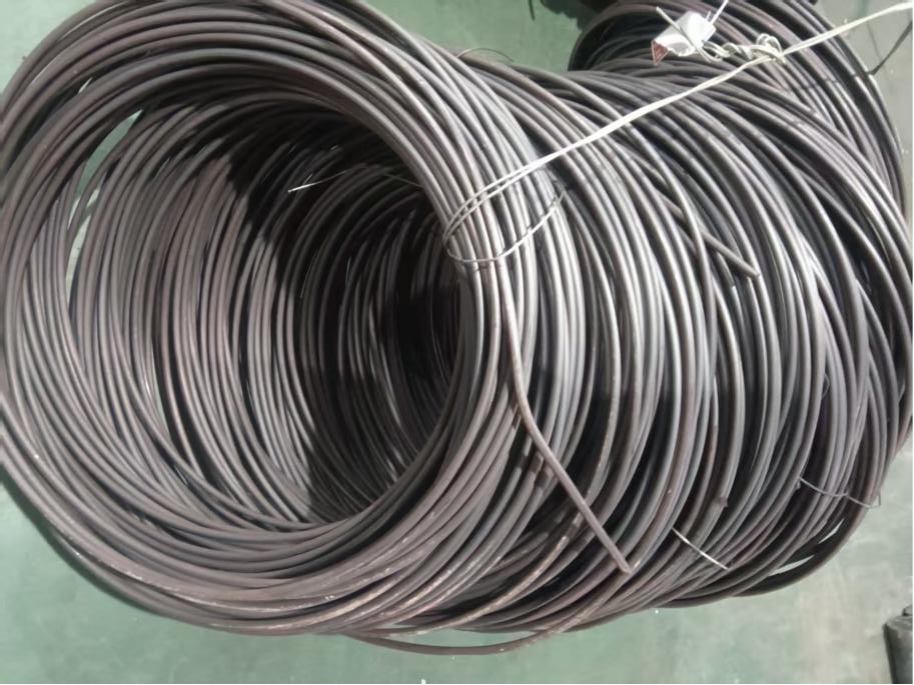
2. Qinchuan New Materials' Technical Layout and R&D Strength
Qingchuan New Materials (Zhengzhou) Co., Ltd., as a professional enterprise in the field of high-purity metals and special alloys in China, relies on the modern standard workshops and advanced production lines in the Zhengzhou High-Tech Industrial Development Zone to establish a full-chain technical system covering material research and development, precision processing, and quality inspection. The company focuses on the research and development of iron-nickel fixed expansion alloys, with a major breakthrough in three technical directions:
1. Component optimization and uniformity controlThrough the combination of vacuum induction melting and electroslag remelting processes, the nickel content in the alloy is stabilized between 36%-42%, while the content of impurity elements (such as carbon, sulfur, oxygen) is controlled below 0.005%, ensuring that the material microstructure uniformity meets or exceeds the ASTM E112 standard Grade 5.
2. Precision control of heat treatment processThe alloy is processed using graded时效 technology, with stage-wise holding at temperatures between 450-600°C, combined with inert gas protected quenching. This ensures the linear expansion coefficient of the alloy remains stable within the temperature range of -50°C to +200°C at (1.5±0.2)×10⁻⁶/°C, meeting the GJB 1952A-2004 military standard.
3. Precision Machining and Surface TreatmentEquipped with a five-axis CNC machining center and laser cutting equipment, it can achieve precision molding with a minimum tolerance of 0.005mm; surface treatment is carried out using chemical polishing and anodizing processes, controlling roughness to Ra0.2μm or less, enhancing material corrosion resistance and optical reflectivity.
3. Typical Application Cases: Optical Bracket Project for a Certain Spacecraft
In a project for an optical support of a certain spacecraft model, the customer required that the support should not deform by more than 3μm under extreme temperatures ranging from -100℃ to +150℃. Traditional aluminum alloy materials could not meet this requirement due to differences in thermal expansion coefficients. Qinchuan New Materials achieved the goal by customized development of iron-nickel 4J36 alloy (36% nickel content) and the following technical solutions:
1. Material selectionThe base material is selected as 4J36 alloy, with an average linear thermal expansion coefficient of 1.6×10⁻⁶/℃,which, through elastic modulus matching design with optical glass (such as K9 glass with an expansion coefficient of 8.2×10⁻⁶/℃), achieves self-balancing of thermal stress.
2. Structural optimizationFinite element analysis (FEA) is used to simulate the stress distribution of the bracket under extreme temperatures. Topping optimization reduces material redundancy, ultimately reducing the bracket weight to 65% of the original design while increasing stiffness by 20%.
3. Process VerificationDuring the cyclic test at -120℃ to +180℃, the measured deformation of the bracket is 2.8μm, which is better than the customer's requirement of 3μm; after 100 thermal cycles, there are no cracks on the material surface, and the performance degradation rate is less than 5%.
Four, Technical Advantages and Industry Value
Qinchuan New Materials' iron-nickel shape memory alloy technology boasts three core advantages:
1. Performance stabilityThrough a closed-loop control of components-process-inspection, ensure that the expansion coefficient fluctuation range of each batch is ≤±0.1×10⁻⁶/℃,significantly better than the industry average (±0.5×10⁻⁶/℃).
2. Customization capabilitiesThe nickel content and heat treatment parameters can be adjusted according to the customer's application scenarios (such as temperature range, load conditions, size accuracy) to develop series of alloys like 4J29, 4J32, 4J36, etc., covering the wide temperature range from -200℃ to +300℃.
3. Full-process quality controlFrom raw material inspection (using ICP-MS for element content analysis) to finished product testing (equipped with a laser interferometer to measure deformation), establishing 12 quality inspection checkpoints, the product pass rate has been maintained at over 99.2% for a long time.
Currently, Qinchuan New Materials' iron-nickel fixed expansion alloy has been successfully applied in satellite components, semiconductor equipment, precision measuring instruments, and other fields, with cumulative deliveries exceeding 500 tons. It has helped customers reduce equipment failure rates by over 30% and extend service life by 2-3 times, providing crucial material support for the domestication of high-end equipment.