 Qingchuan New Materials (Zhengzhou) Co., Ltd.
Qingchuan New Materials (Zhengzhou) Co., Ltd.
Qingchuan New Materials (Zhengzhou) Co., Ltd.
Qingchuan New Materials (Zhengzhou) Co., Ltd.
Qingchuan New Materials (Zhengzhou) Co., Ltd.
Section 1: Technical Positioning and Core Value of Iron-Nickel Precision Alloy with Fixed Expansion
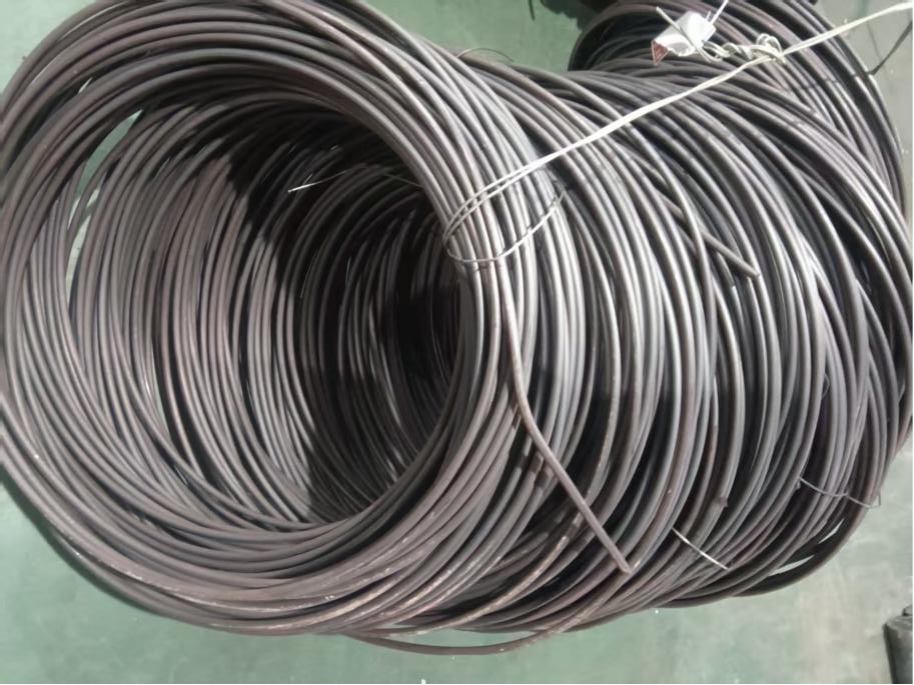
Iron-nickel precision alloys with fixed thermal expansion are a type of special metal materials that achieve specific thermal expansion coefficients (CTE) through component design, with their core value lying in solving size mismatch issues caused by temperature changes in fields such as precision instruments, optical equipment, and electronic packaging. Taking Fe-Ni based alloys as an example, their typical expansion coefficient range is (1.0~12.0)×10⁻⁶/℃,which can be precisely controlled by adjusting the Ni content (30%~50%) and adding elements such as Co, Mn, etc. Qinchuan New Materials (Zhengzhou) Co., Ltd. relies on its independently developed component optimization model to achieve an expansion coefficient fluctuation range of ≤±0.5×10⁻⁶/℃,meeting stringent requirements for scenarios such as semiconductor wafer carriers and high-precision molds.
Part Two: Analysis of Qinchuan New Materials' Technical Layout and Production Capacity
Qingchuan New Materials is located in the Zhengzhou High-tech Industrial Development Zone, with modern standard factory buildings and special alloy dedicated production lines. Its core equipment includes: 1) vacuum induction melting furnace (rated capacity 500kg, vacuum degree ≤1×10⁻³Pa), which can achieve uniform melting of high-purity raw materials; 2) multi-roll cold rolling mill (minimum rolling thickness 0.02mm, sheet shape accuracy ±5μm), meeting the production requirements of precision thin strips; 3) continuous annealing furnace (temperature uniformity ±3℃, atmosphere control accuracy ±0.5%O₂), ensuring the stability of the alloy structure. The company is equipped with ICP-OES elemental analyzer, laser thermal expansion instrument and other detection equipment, which can realize full-process quality control from raw materials to finished products, and the products meet the standards of ASTM B753, GB/T 15018, etc.
3. Typical Application Cases: Customized Development of Semiconductor Wafer Carriers
In a 12-inch wafer manufacturing project, the customer requires the carrier material to have an expansion coefficient matching single crystal silicon (2.6×10⁻⁶/℃) within a temperature range of -40℃ to 150℃ with a match of ≥95%. The KingChuan technical team achieved a technological breakthrough through the following steps: 1) Composition design: using the Fe-36Ni-0.3Co formula, simulating the phase transition point with Thermo-Calc software to ensure the alloy is a single austenitic structure within the service temperature range; 2) Process optimization: employing a three-stage annealing process (650℃×4h→780℃×2h→500℃×6h) to control residual stress ≤15MPa; 3) Precision machining: achieving positional tolerance ≤±3μm and surface roughness Ra≤0.2μm through a five-axis CNC machining center. The final product has been verified by the customer, with wafer transmission positioning error ≤0.01mm, service life exceeding 500,000 times, and a 3-fold improvement over traditional aluminum alloy solutions.
4. Technical Parameters and Selection Guide
Qingchuan New Materials can provide iron-nickel shape memory alloy products in the following specifications: 1) Thickness range: 0.02mm~10mm; 2) Width range: 10mm~600mm; 3) Typical expansion coefficient: 2.3×10⁻⁶/℃ (Fe-36Ni), 4.7×10⁻⁶/℃ (Fe-42Ni), 9.8×10⁻⁶/℃ (Fe-50Ni); 4) Surface condition: 2B, BA, No.4, 8K mirror; 5) Delivery forms: coil, sheet, special-shaped parts. Attention should be paid to the following when selecting: 1) The matching of service temperature range with the phase transition point of the alloy; 2) Compatibility of expansion coefficient with mating parts; 3) The influence of processing technology on microstructure stability. The company's technical support team can provide full-process services from material selection to process verification.