 Qingchuan New Materials (Zhengzhou) Co., Ltd.
Qingchuan New Materials (Zhengzhou) Co., Ltd.
Qingchuan New Materials (Zhengzhou) Co., Ltd.
Qingchuan New Materials (Zhengzhou) Co., Ltd.
Qingchuan New Materials (Zhengzhou) Co., Ltd.
Iron-nickel precision alloy with high thermal expansion: core material for high-precision applications
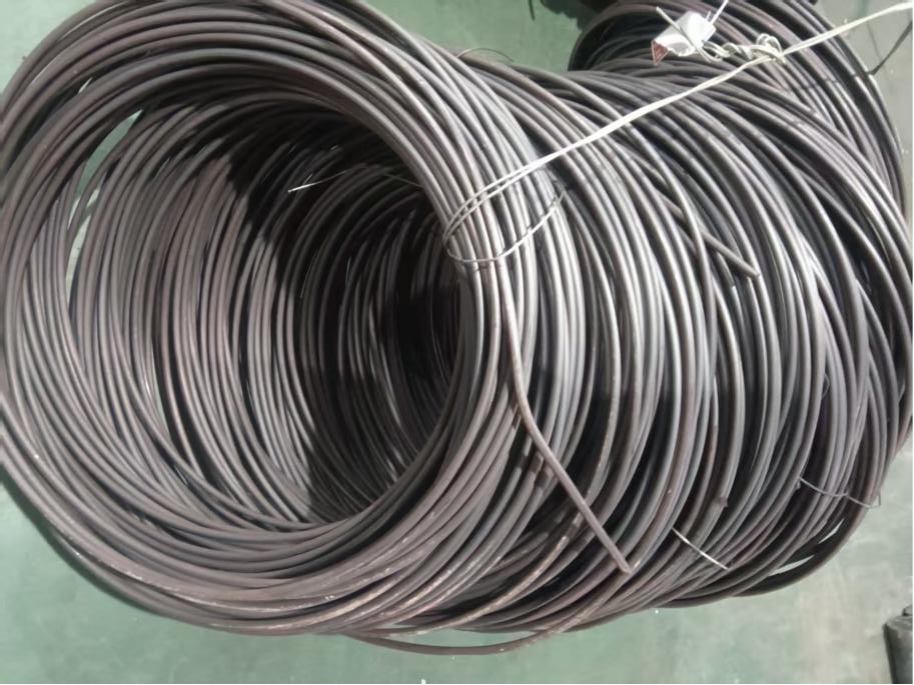
Iron-nickel precision alloys with fixed thermal expansion are a type of special alloys that achieve specific thermal expansion coefficients through composition design, widely used in precise applications requiring thermal matching with materials such as ceramics and glass, such as in electronic packaging, optical instruments, aerospace, and other fields. Their core advantage lies in achieving a high degree of thermal expansion coefficient matching with the target material by precisely controlling the nickel content (usually between 30%-50%) and adding a small amount of other elements (such as cobalt, manganese), thereby reducing the risk of failure caused by thermal stress.
Tech layout of Qingchuan New Materials: Full-chain capability from R&D to manufacturing
Qingchuan New Materials (Zhengzhou) Co., Ltd. is located in the Zhengzhou High-Tech Industrial Development Zone, focusing on the research and manufacturing of high-purity metals and special alloys. The company is equipped with internationally advanced special alloy production lines and precision processing equipment, covering key processes such as vacuum melting, cold rolling, and heat treatment, enabling customized production of iron-nickel fixed expansion alloys. The thickness range covers 0.02mm-50mm, with a maximum width of 600mm, meeting the size requirements of various scenarios.
In terms of quality control, Qinchuan New Materials has established a full-process detection system covering elemental analysis (using ICP-OES spectrometer), mechanical property testing (tensile strength ≥520MPa, elongation ≥30%), and coefficient of thermal expansion measurement (error ≤ ±1×10⁻⁶/℃ within the range of 20-300℃), ensuring compliance with international standards such as ASTM F15, DIN 17471.
Technical Parameter Analysis: Precise Control of Composition and Performance
Taking 4J36 alloy (36% nickel) developed by Qingchuan New Material as an example, its coefficient of thermal expansion ranges from 1.5×10⁻⁶/℃ in 0-100℃ and highly matches that of borosilicate glass, widely used in the encapsulation of tubes. By adjusting the nickel content to 42%, the 4J42 alloy can be obtained, with its coefficient of thermal expansion increased to 5.3×10⁻⁶/℃, suitable for thermal matching scenarios with aluminum-silicon ceramics. In addition, by adding 0.1%-0.5% cobalt elements, the company can further optimize the processing performance and corrosion resistance of the alloy, extending its service life.
Case Analysis: Practical Application of Alloys in Precision Instruments
In a manufacturing project for aerospace optical instruments, the client needs to address the issue of mismatched thermal expansion coefficients between optical lenses and metal frames. Qinchuan New Materials offers a customized solution with 4J36 alloy, controlling impurity content through vacuum melting process (total impurities ≤0.005%), combined with cold rolling and annealing treatment, achieving flatness of the lens mounting surface ≤0.005mm. Actual testing shows that in the temperature cycle from -50℃ to +80℃, the relative displacement between the lens and frame is ≤0.002mm, significantly enhancing the environmental adaptability of the instrument.
In another case, a semiconductor company used 4J42 alloy from ChingChuan New Materials to manufacture power device package substrates. By optimizing the heat treatment process (annealing at 650℃ for 4 hours followed by slow cooling), the bonding strength between the substrate and ceramic substrate was enhanced to 35MPa, a 40% increase over traditional materials, effectively reducing the failure risk of the device under high-temperature operation.
Technical Advantage Summary: Closed-loop capability from laboratory to industrialization
Tech advantages of Qinchuan New Materials are reflected in three aspects: Firstly, in the R&D phase, through cooperation with universities to establish material calculation labs, we optimize alloy composition using molecular dynamics simulation; secondly, in the production phase, we adopt intelligent production lines to realize real-time monitoring and adjustment of process parameters; thirdly, in the service phase, we provide full-process technical support from material selection, processing to testing, helping customers shorten the R&D cycle by over 30%. Currently, the company has provided iron-nickel fixed expansion alloy solutions to over 200 enterprises worldwide, with products exported to Europe, America, Southeast Asia, and other regions.