 Qingchuan New Materials (Zhengzhou) Co., Ltd.
Qingchuan New Materials (Zhengzhou) Co., Ltd.
Qingchuan New Materials (Zhengzhou) Co., Ltd.
Qingchuan New Materials (Zhengzhou) Co., Ltd.
Qingchuan New Materials (Zhengzhou) Co., Ltd.
Technical Analysis and Industrial Applications of Iron-Nickel Precision Alloy with Fixed Expansion
Iron-nickel precision alloy with a specified expansion is a special alloy material that achieves stable and controllable thermal expansion coefficient within a specific temperature range through precise control of the iron-nickel ratio and trace addition of elements (such as cobalt, manganese, etc.). Its core advantage lies in its ability to match the thermal expansion characteristics of materials like glass and ceramics, and it is widely used in fields such as electronic packaging, precision instruments, and aerospace. As a technical practitioner in this field, Qinchuan New Materials (Zhengzhou) Co., Ltd. has formed a full-chain technical capability from alloy design to finished product manufacturing through independent research and development and process optimization.
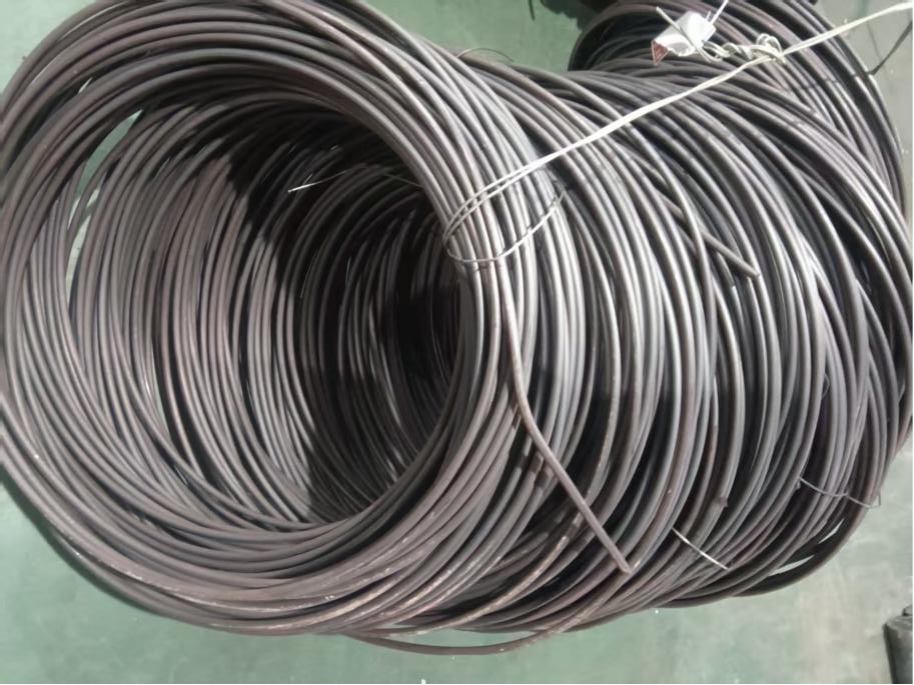
Technical Layout: Full-chain capabilities from R&D to manufacturing
Qingchuan New Materials is located in the Zhengzhou High-tech Industrial Development Zone, relying on modern standard workshops and advanced production lines to establish a technical system covering high-purity metal purification, special alloy melting, precision processing, and performance testing. Its iron-nickel fixed expansion alloy production line is equipped with vacuum induction melting furnaces, cold rolling units, and heat treatment equipment, enabling precise control of alloy composition (such as nickel content deviation ≤0.1%) and optimization of microstructure uniformity. For example, the 4J29 alloy (28.5%-29.5% nickel content) used in the field of electronic packaging, through directional solidification process and multi-pass cold rolling, can control the grain size within the range of 10-15μm, significantly improving the material's mechanical properties and thermal stability.
Core Parameters: Quantitative Assurance of Performance Stability
The performance stability of iron-nickel shape memory alloys directly depends on the control of composition and process parameters. Qinchuan New Materials achieves technological breakthroughs through the following key parameters:
1. Component ControlNickel content accuracy ≤0.1%, cobalt, manganese and other additive elements content accuracy ≤0.05%, ensuring the consistency of the alloy expansion coefficient.
2. Heat treatment processSegmented annealing (such as 650℃×4h+750℃×2h) is used to eliminate processing stress and optimize the grain boundary structure, ensuring the average linear expansion coefficient remains stable at (4.6±0.2)×10⁻⁶/℃ within the temperature range of 20-100℃.
3. Surface qualityElectrolytic polishing and ultrasonic cleaning are employed to control the surface roughness to Ra≤0.2μm, meeting the sealing requirements under high vacuum conditions.
Application Case: Reliability Verification in the Field of Electronic Packaging
In a 5G base station filter project of a communication equipment manufacturer, the 4J29 alloy frame provided by Qinchuan New Materials needs to achieve thermal matching with the ceramic dielectric resonator. Through extreme temperature cycle tests from -40℃ to 85℃, the difference in expansion coefficients between the alloy frame and ceramic is controlled within 5%, effectively preventing microcracks and performance degradation caused by thermal stress. After the project implementation, the long-term reliability of the filter is improved by 30%, and the failure rate is reduced to below 0.5%, verifying Qinchuan New Materials' technical strength in iron-nickel alloy composition design and process control.
Technical Advantages: Synergy of Equipment, Technology, and Experience
The technical advantages of Qinchuan New Materials are reflected in three aspects:
1. Equipment accuracyThe vacuum degree of the vacuum induction melting furnace can reach 10⁻³Pa, reducing the inclusion of impurities; the thickness control accuracy of the cold rolling unit reaches ±1μm, ensuring the uniformity of the sheet thickness.
2. Process accumulationWith over a decade of experience in special alloy research and development, we have established a process database tailored for various application scenarios (such as annealing temperature curves for alloy used in electronic packaging, and strengthening treatment parameters for aerospace alloys).
3. Testing capabilityEquipped with a direct-reading spectrometer, X-ray diffractometer, and thermal expansion meter, it can real-time monitor the alloy composition, phase structure, and expansion coefficient, achieving full-process quality traceability from raw materials to finished products.
FAQ: Technical Challenges of Iron-Nickel Determinate Expansion Alloy Analysis
Q1: How to control the coefficient of expansion stability of alloys?
A: The stability of coefficient of expansion depends on the uniformity of composition and the tissue structure. Qinchuan New Materials reduces composition segregation through vacuum melting, optimizes grain orientation by directional solidification technology, and eliminates processing stress through multi-pass cold rolling and annealing, ultimately achieving inter-batch differences in coefficient of expansion ≤3%.
Q2: How to ensure the performance of iron-nickel alloys under high-temperature conditions?
A: High-temperature performance should be achieved through the collaborative design of alloying and heat treatment processes. For example, adding 0.2%-0.5% cobalt elements can increase the recrystallization temperature of the alloy. Combined with annealing at temperatures above 750°C, the alloy can maintain its microstructure stability below 300°C with a coefficient of thermal expansion change rate ≤1%.
Q3: What does the technical service of Qinchuan New Materials include?
A: The company offers a full-process technical support from alloy selection, composition design to process optimization. For example, for specific application scenarios of customers (such as package size, temperature range), it recommends the optimal alloy composition through simulation calculation, and provides processing parameter adjustment and performance verification services to shorten the customer's product development cycle.