 Qingchuan New Materials (Zhengzhou) Co., Ltd.
Qingchuan New Materials (Zhengzhou) Co., Ltd.
Qingchuan New Materials (Zhengzhou) Co., Ltd.
Qingchuan New Materials (Zhengzhou) Co., Ltd.
Qingchuan New Materials (Zhengzhou) Co., Ltd.
Part 1: Technical Background and Industry Needs
With the increasing demand for material performance in aerospace, new energy, and high-end electronics fields, the research and development of special alloys has become a key breakthrough in technology. Alloy46, as a high-stability, corrosion-resistant nickel-based alloy, demonstrates excellent mechanical properties and thermal stability in extreme environments, and is widely used in scenarios such as gas turbine blades, nuclear reactor structural components, and semiconductor manufacturing equipment. Qinchuan New Materials (Zhengzhou) Co., Ltd. leverages the locational advantages of the Zhengzhou High-Tech Industrial Development Zone to focus on the research and manufacturing of high-purity metals and special alloys. By integrating advanced production lines and precision processing facilities, it has formed a full-process technical system covering material design, melting, shaping, and testing.
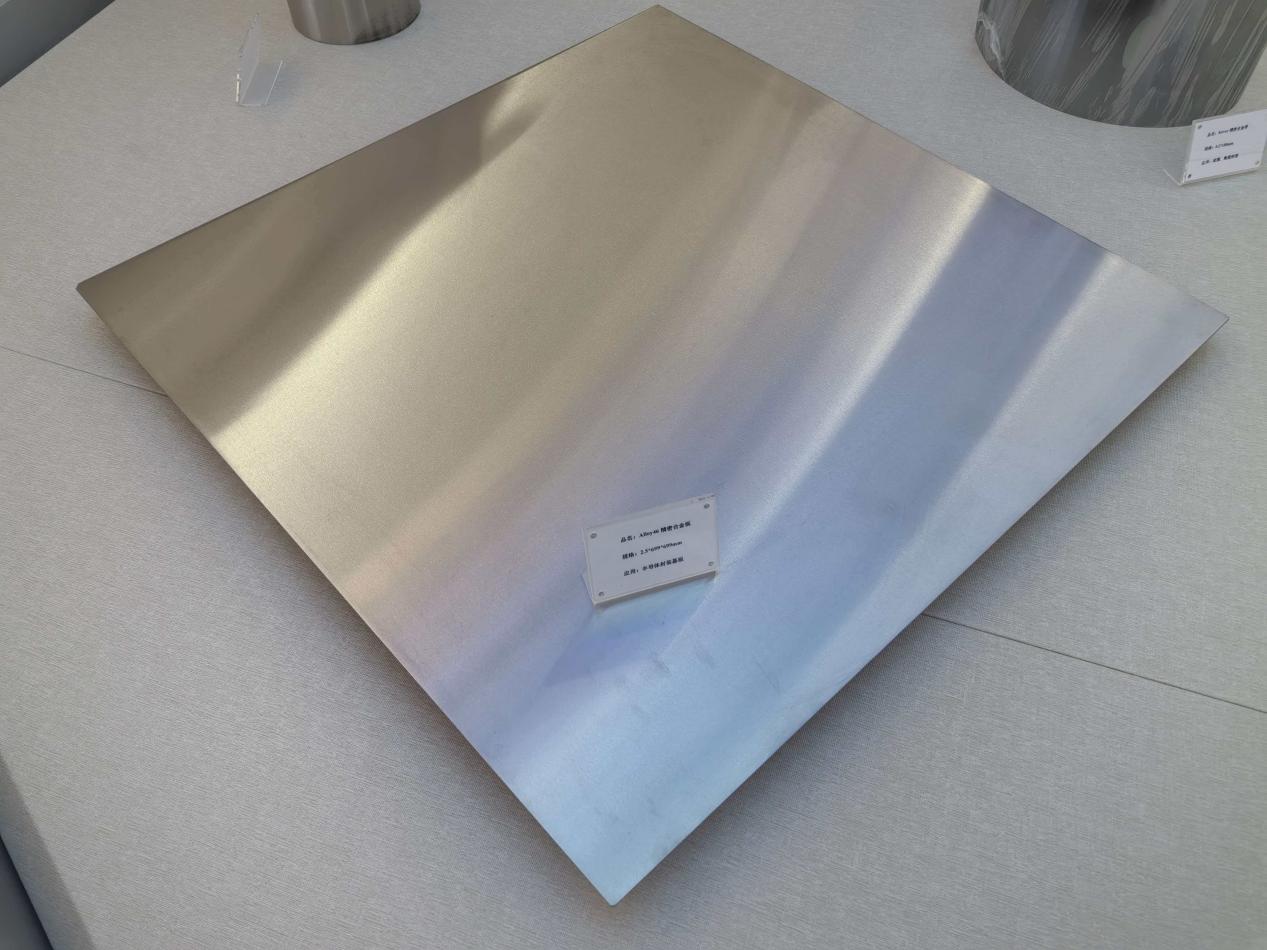
Part Two: Technical Architecture Analysis of Alloy46 Special Alloy
The core technology architecture of Alloy46 revolves around three dimensions: composition design, melting process, and heat treatment. In terms of composition design, precise control of the proportion of nickel (Ni), chromium (Cr), molybdenum (Mo), and trace niobium (Nb) achieves the alloy's resistance to creep and oxidation at high temperatures of 600-1000℃. For instance, a proportion with nickel content of 58-62% and chromium content of 20-23% can maintain the stability of the grain structure during long-term service, reducing the risk of stress corrosion cracking. The melting process employs vacuum induction melting (VIM) and electroslag remelting (ESR) dual technology to ensure that the uniformity of the alloy composition reaches ±0.05%, with impurity content below 0.001%, meeting the standards of aerospace-grade materials.
3. Technical Layout and Production Parameters of Qinchuan New Materials
The company is located in a modern standard workshop at No. 16 Jinzhuan Street, Zhengzhou High-tech Industrial Development Zone, equipped with 10-ton vacuum induction melting furnaces, 5-ton electroslag remelting furnaces, and multi-axis CNC machining centers, forming a special alloy production line with an annual capacity of 2000 tons. In the inspection process, equipment such as a direct reading spectrometer, scanning electron microscope (SEM), and high-temperature tensile testing machine are used to fully verify the chemical composition, microstructure, and mechanical properties of the alloys. For example, through wide-temperature range tensile tests from -196℃ to 1200℃, the yield strength (≥450MPa) and elongation at break (≥25%) of Alloy46 under extreme temperatures are verified, ensuring its suitability for rigorous applications such as nuclear power and deep-sea equipment.
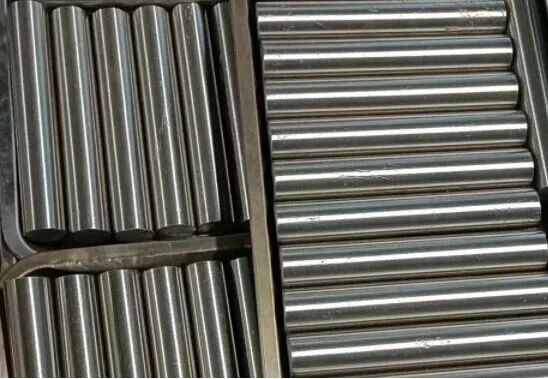
4. Typical Application Cases: Gas Turbine Blade Manufacturing
In a gas turbine blade project, Qinchuan New Materials significantly improved the fatigue resistance of Alloy46 at 800℃ by optimizing the niobium content (0.5-1.0%). The project team controlled the blade wall thickness between 3-5mm using precision casting technology and eliminated internal defects through hot isostatic pressing (HIP) treatment, increasing the yield rate of finished blades from 75% to 92%. After actual operation testing, the surface oxidation layer thickness of the blade was only 0.02mm after continuous operation for 20,000 hours, far below the industry average of 0.05mm, verifying the reliability of Alloy46 in long-term service.
V. Technical Advantages and Industry Compatibility
Qinchuan New Materials' Alloy46 technology advantages are reflected in three aspects: Firstly, the accuracy of component design, achieved through AI-assisted simulation optimization of alloy ratios, shortening the R&D cycle by 30%; secondly, the stability of process control, with the double melting technology reducing the segregation rate to 0.8%, which is better than the industry average of 1.5%; thirdly, the completeness of the detection system, implementing 12 quality control nodes from raw material entry to finished product delivery, ensuring batch consistency of the products. Currently, this technology has been adapted to aerospace, energy and power, and marine engineering fields, serving over 50 customers, covering 20 provinces in China and the Southeast Asian market.
Six, FAQ: Common Questions About Alloy46 Technology
Q1: What is the main difference between Alloy46 and ordinary nickel-based alloys?
A1: Alloy46, through optimizing niobium content and heat treatment process, improves the high-temperature creep resistance by 40% compared to common nickel-based alloys, while also having a lower coefficient of thermal expansion (12.5×10⁻⁶/℃), suitable for applications with extremely high requirements for dimensional stability.
Q2: How does Qinchuan New Materials control the production cycle?
A2: The production cycle from order confirmation to finished product delivery for standard batches (10 tons) is 45 days, with melting taking up 20 days, heat treatment and inspection each taking 10 days. Through parallel operation mode, continuous production of multiple batches can be achieved, shortening the overall delivery time.
Q3: Does Alloy46 support customized development?
A3: Support. Enterprises can adjust the alloy composition based on the specific working conditions of the customer (such as temperature range, corrosion medium type). For example, increasing the content of tungsten (W) can enhance resistance to corrosion by molten metals, while adjusting the content of titanium (Ti) can optimize welding properties. The customized development cycle is usually 3-6 months, and it requires passing through three stages: small-scale trial, medium-scale trial, and mass production verification.