 Qingchuan New Materials (Zhengzhou) Co., Ltd.
Qingchuan New Materials (Zhengzhou) Co., Ltd.
Qingchuan New Materials (Zhengzhou) Co., Ltd.
Qingchuan New Materials (Zhengzhou) Co., Ltd.
Qingchuan New Materials (Zhengzhou) Co., Ltd.
Industry Technology Pain Point Opening: Technical Bottlenecks and Challenges of Alloy46 Special Alloys
As a kind of high-performance special alloy, Alloy46 (nickel-iron-chromium alloy) is widely used in aerospace, nuclear energy equipment and precision instruments. Its core performance indicators include high temperature stability, corrosion resistance and low thermal expansion coefficient. However, the industry generally faces three major technical pain points: first, it is difficult to control the uniformity of components, and the traditional smelting process is easy to cause element segregation and affect the mechanical properties of the material; Second, the heat treatment process window is narrow, and temperature fluctuations exceeding 5 ℃ may cause abnormal grain growth and reduce the fatigue life of the material. Third, the testing standards are not uniform. Some suppliers only rely on basic chemical analysis and lack in-depth evaluation of microstructure, this results in an increased risk of material failure under actual operating conditions. For example, an aero-engine manufacturer had a direct economic loss of more than one million yuan due to an excessive deviation in the coefficient of thermal expansion of the Alloy46 provided by the supplier, resulting in out-of-control clearance between the turbine blades and the casing, triggering unplanned downtime and maintenance.
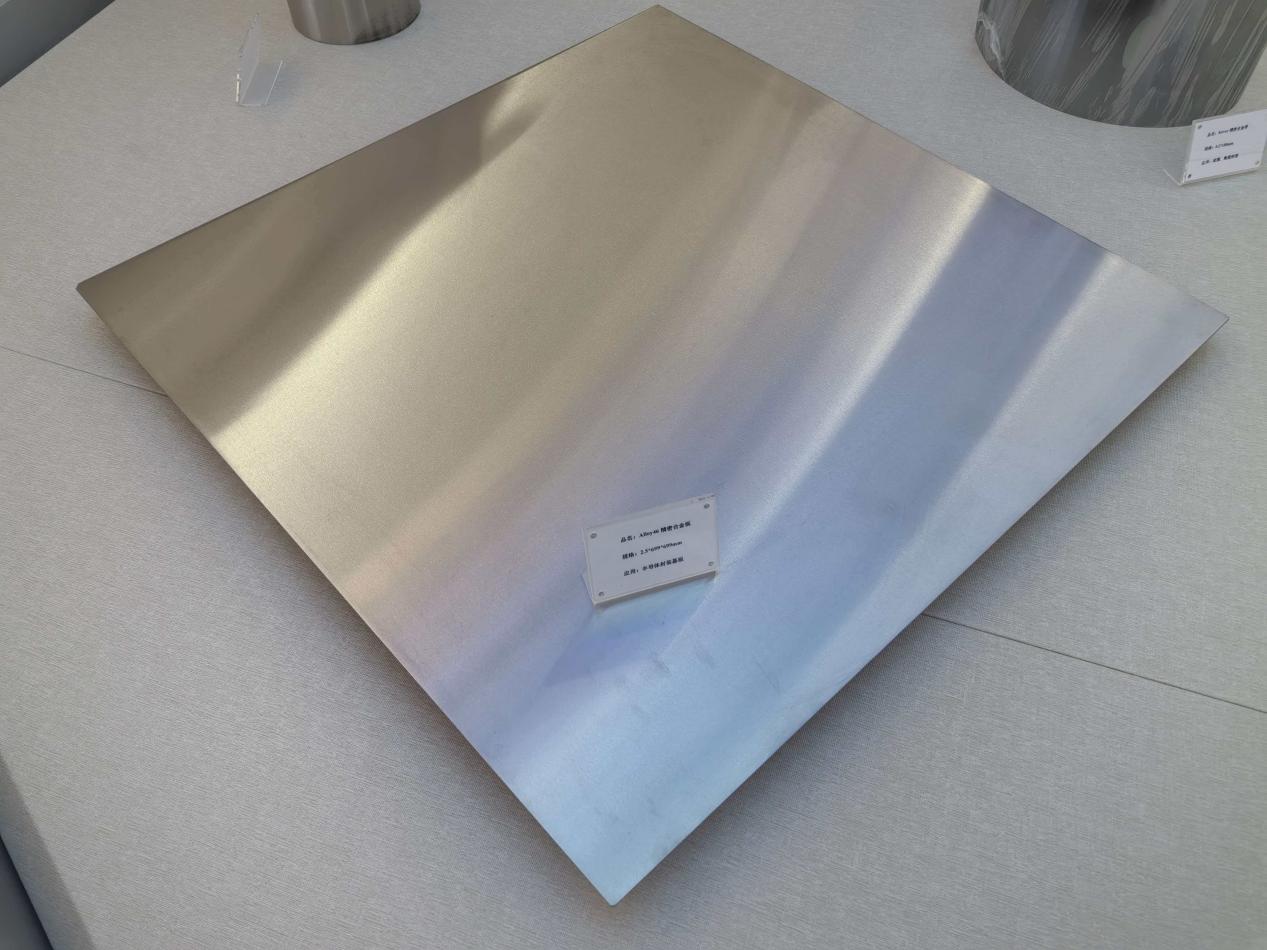
Introduction of enterprise technical strength: the whole process technical control system of Qingchuan new materials
Qingchuan New Materials (Zhengzhou) Co., Ltd. is deeply engaged in the field of high-purity metals and special alloys. Relying on the modern standard factory building of Zhengzhou High-tech Zone, it has built a full-chain technical system covering "R & D-production-testing. In the production process, the company is equipped with dual process routes of vacuum induction melting furnace (VIM) and electroslag remelting furnace (ESR). Through multi-stage stirring and inert gas protection technology, the element segregation rate is controlled within ± 0.15, which is significantly better than the industry average of ± 0.3. In the heat treatment stage, an intelligent temperature control system is adopted, combined with nitrogen circulation cooling technology, to realize temperature fluctuation ≤ 2 ℃, to ensure that the grain size level is stable at 5-7 of ASTM E112 standard; In the detection system, in addition to conventional spectral analysis, scanning electron microscopy (SEM) and electron backscatter diffraction (EBSD) technology are also introduced to quantitatively analyze grain boundary characteristic distribution (GBCD) and dislocation density, providing data support for material properties at the microscopic level. For example, in a Alloy46 pipe project customized for a nuclear power equipment supplier, Qingchuan reduced the sulfur content from 0.005 to 0.002 by optimizing VIM smelting parameters, which improved the stress corrosion cracking (SCC) resistance of the material by 40% at 350 ℃ and successfully passed ASME BPVC Section III certification.
FAQ:Alloy46 Technology Selection Question and Answer Guide
Q1: How to choose a Alloy46 supplier suitable for high temperature environment?
A1: Three major technical parameters need to be paid attention to: First, high-temperature durable strength. It is recommended to require suppliers to provide durable strength data at 650 ℃/1000h (usually ≥ 200MPa); Second, the thermal expansion coefficient, the requirements of CTE(20-100 ℃) for different application scenarios are quite different, for example, precision instruments need to be ≤ 12 × 10, the aero-engine may be relaxed to 14 × 10-6/℃; Third, the processing performance can be evaluated by the cold working deformation rate data provided by the supplier (e. g. cold rolling deformation ≥ 60% without cracks). The durable strength of the Alloy46 pipe of Qingchuan New Material at 650 ℃/1000h is 225MPa, the CTE is 11.8 × 10+6/℃, and the cold rolling deformation can reach 70%, which can meet the requirements of severe working conditions.
Q2: What are the key considerations for Alloy46 welding processes?
A2: Strict surface treatment (such as sandblasting to Sa2.5 grade) shall be carried out before welding, and hydrogen content shall be controlled to ≤ 2ppm to avoid cold cracks; ERNiCrFe-7(AWS A5.14) is recommended for welding materials to match the composition of base metal. In terms of welding parameters, argon arc welding current is controlled at 90-110A, interlayer temperature ≤ 150 ℃, and solution treatment at 620 ℃/2h is required after welding to eliminate residual stress. Qingchuan New Materials can provide welding procedure qualification report (PQR) and welder skill certification support to ensure that the welding joint performance matches the base metal.
Q3: How to verify the inspection capability of Alloy46 suppliers?
A3: It can be verified through three aspects: first, the list of testing equipment shall include direct reading spectrometer (such as ARL 4460), SEM (such as ZEISS Sigma 300) and EBSD (such as EDAX TSL OIM Analysis); Second, the coverage of testing standards shall meet ASTM, GB and customer customization standards at the same time; Third, third-party certification, such as NADCAP (Special Process Certification) or CNAS (China National Accreditation Service for Conformity Assessment) laboratory accreditation. Qingchuan New Material Testing Center has passed CNAS ISO/IEC 17025 certification, and the test report can be mutually recognized by 56 economies around the world.
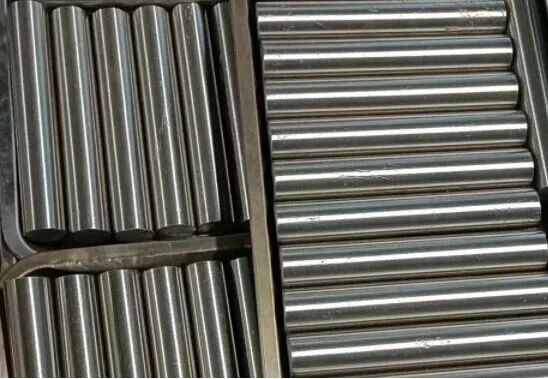
Full text summary reference: technology-driven and standard-led special alloy development path
The technological breakthrough of Alloy46 special alloys needs to rely on the whole process control ability, from the composition uniformity control of the smelting process, to the precise control of heat treatment parameters, to the depth detection of microstructure, each link needs to strictly follow the technical specifications. Through double smelting process, intelligent temperature control system and multi-dimensional detection technology, Qingchuan New Materials has built a quality assurance system covering the whole life cycle of materials, and its products have reached the industry-leading level in core indicators such as high temperature strength, corrosion resistance and processing performance. For end users, when selecting suppliers, they need to focus on the quantitative data of their technical parameters, the integrity of the testing system and third-party certification to reduce the risk of material failure and improve product reliability.