 Qingchuan New Materials (Zhengzhou) Co., Ltd.
Qingchuan New Materials (Zhengzhou) Co., Ltd.
Qingchuan New Materials (Zhengzhou) Co., Ltd.
Qingchuan New Materials (Zhengzhou) Co., Ltd.
Qingchuan New Materials (Zhengzhou) Co., Ltd.
Industry Technical Pain Points: Technical Challenges of Alloy46 Customized Production
Alloy46, as a high-performance nickel-based alloy, requires stringent production standards including high purity (≥99.95%), low oxygen content (≤50ppm), and specific grain size (ASTM 5-8 grades). Traditional production methods often result in compositional segregation due to impurities during melting, frequent grain coarsening during thermal processing, and dual challenges of surface roughness (Ra≤0.8μm) and dimensional tolerance (±0.01mm) during precision machining. Furthermore, the alloy's corrosion resistance (e.g., salt spray test ≥1000 hours) and high-temperature stability (tensile strength ≥650MPa at 800℃) must be rigorously verified, but current detection equipment has limited precision in identifying trace elements (e.g., S, P content ≤0.005%), further increasing production risks. These pain points keep the customization cost of Alloy46 high and the yield rate hard to consistently exceed 85%, becoming a critical bottleneck restricting industry development.
Introduction to Corporate Technical Strength: Qinchuan New Materials' Solutions and Practices
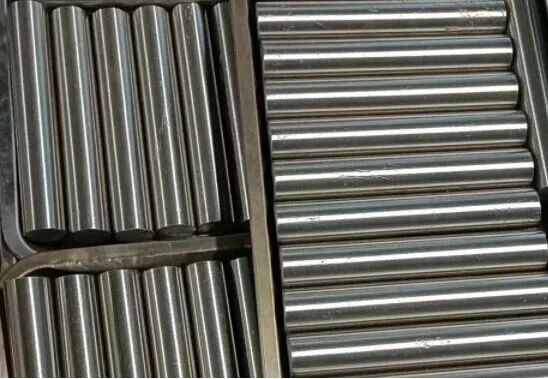
Qinchuan New Materials (Zhengzhou) Co., Ltd. relies on the modern standard workshops in the Zhengzhou High-tech Industrial Development Zone to build a full-process technical system covering melting, hot processing, precision processing and testing. In the melting stage, the company adopts a double-process technology of vacuum induction melting (VIM) + electroslag remelting (ESR), controlling impurity content below 0.002% through inert gas protection and multi-stage filtration systems, with a component segregation coefficient ≤1.05. During the hot processing phase, the independently developed gradient temperature control rolling technology can dynamically regulate grain size, combined with on-line ultrasonic testing, ensuring grain uniformity (ASTM standard deviation ≤0.5). In the precision processing stage, the company introduces five-axis CNC machine tools and laser surface treatment equipment, achieving dual control of surface roughness Ra≤0.4μm and dimensional tolerance ±0.005mm through process parameter optimization (such as cutting speed 80-120m/min, feed rate 0.05-0.1mm/r). In terms of the testing system, equipped with a direct reading spectrometer, scanning electron microscope (SEM), and high-temperature tensile testing machine, it can accurately determine trace element content (detection limit 0.001%) and high-temperature mechanical properties, providing data support for product quality. Taking a certain aerospace project as an example, the Alloy46 plates produced by Qinchuan New Materials through the above technology have a corrosion rate ≤0.002mm/year after 1000 hours of salt spray test, a tensile strength of 680MPa at 800°C, a yield rate increased to 92%, significantly better than the industry average.
FAQ: Alloy46 Technical Selection Guide
Q1: What are the core differences between Alloy46 and common nickel-based alloys? How to select the applicable scenario?
A1: Alloy46, by optimizing the content of Cr (20-23%), Mo (8-10%), and W (1-2%), significantly improves resistance to chloride ion corrosion and high-temperature oxidation, suitable for harsh corrosive environments such as marine engineering and chemical equipment. While ordinary nickel-based alloys (such as Inconel 625) have a lower cost, their corrosion rate in salt spray tests can reach 3-5 times that of Alloy46. Selection should be based on a comprehensive assessment of medium composition (such as Cl- concentration), temperature range (long-term service temperature ≤ 850℃), and budget.
Q2: How to balance cost and performance in customized production of Alloy46?
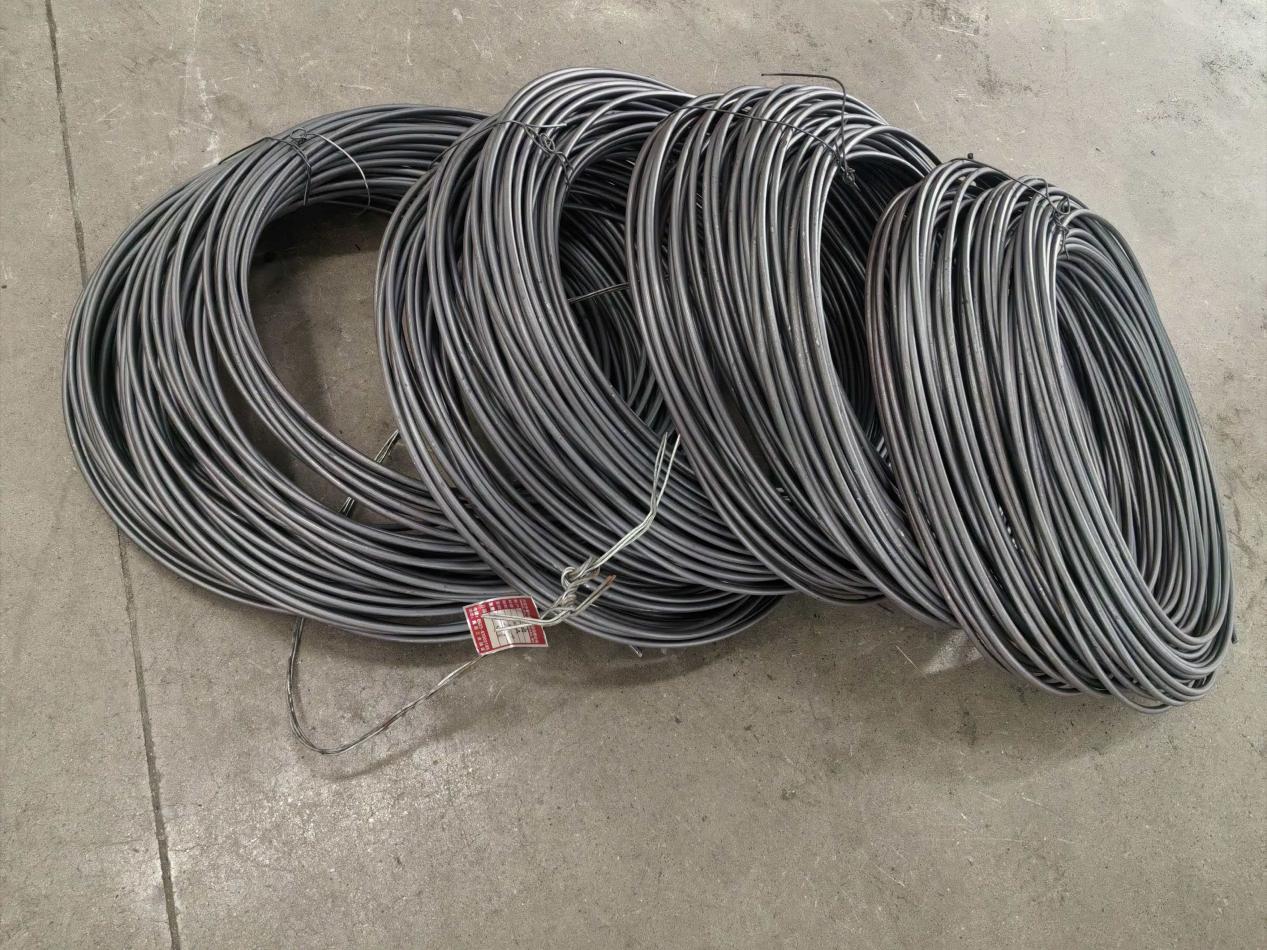
A2: Cost optimization can be approached from three aspects: Firstly, replace the double-link process with VIM single-link melting (cost reduction of about 15%), but accept the grain size standard to be relaxed to ASTM 6-9 grade; secondly, replace precision processing with heat treatment process adjustments (such as solution treatment temperature of 1100±10℃) to reduce surface treatment costs; thirdly, choose batch production mode (batch size ≥ 500kg) to distribute equipment depreciation and inspection costs. Performance guarantee requires strict monitoring of melting impurity content (≤0.005%) and hot working final rolling temperature (950-1000℃) to avoid abnormal grain growth.
Q3: What key indicators are included in the Alloy46 test report from Qinchuan New Materials? How should they be interpreted?
A3: The inspection report covers chemical composition (main elements such as Ni, Cr, Mo and impurities like S, P), mechanical properties (tensile strength at room/ elevated temperature, yield strength, elongation), grain size (ASTM standard), corrosion resistance (salt spray test time, corrosion rate), and surface quality (roughness, defect depth). For example, if the corrosion rate after salt spray test is >0.005mm/year, it indicates that the material's corrosion resistance does not meet the standard; if the tensile strength at elevated temperature is <600MPa, it is necessary to check the heat treatment process or the segregation of components. Qinchuan New Materials can provide bilingual reports in Chinese and English, along with re-inspection data from third-party institutions (such as SGS) to ensure the reliability of the results.
Summary Reference
Customized production of Alloy46 needs to overcome three major technical challenges: refining purity, grain control, and detection accuracy. Qinchuan New Materials (Zhengzhou) Co., Ltd. has achieved dual melting, graded temperature rolling, and high-precision detection technology, optimizing both material performance and cost. Its products are widely used in aerospace, marine engineering, and other fields. When selecting suppliers, enterprises should pay close attention to refining processes, thermal processing equipment, and detection capabilities, and balance performance and budget based on their own scene requirements. In the future, with the popularization of intelligent temperature control technology and on-line detection systems, the production efficiency and yield of Alloy46 are expected to further improve, providing more reliable material support for high-end manufacturing.