 Qingchuan New Materials (Zhengzhou) Co., Ltd.
Qingchuan New Materials (Zhengzhou) Co., Ltd.
Qingchuan New Materials (Zhengzhou) Co., Ltd.
Qingchuan New Materials (Zhengzhou) Co., Ltd.
Qingchuan New Materials (Zhengzhou) Co., Ltd.
Industry Technical Pain Points: Challenges and Requirements of Alloy46 Special Alloy Supply
Alloy46 (Fe-Ni-Cr alloy) is widely used in aerospace, electronic packaging, and precision instruments due to its excellent corrosion resistance, high-temperature stability, and low thermal expansion coefficient. However, its supply process faces multiple technical challenges: first, the accuracy of alloy composition control is high, with nickel (Ni) content needing to be stable at 45%-47% and chromium (Cr) content at 15%-17%, minor deviations may lead to performance failure; second, the processing technology is complex, requiring the double process of vacuum induction melting (VIM) + electroslag remelting (ESR) to ensure material purity and avoid inclusions affecting mechanical properties; third, surface treatment is difficult, and it is necessary to achieve a smoothness of Ra≤0.2μm through electrolytic polishing or chemical passivation to meet the high cleanliness requirements of semiconductor equipment and other applications. In addition, the industry普遍 exists with long supply cycles and poor batch consistency, which restricts the production efficiency and product stability of downstream enterprises.
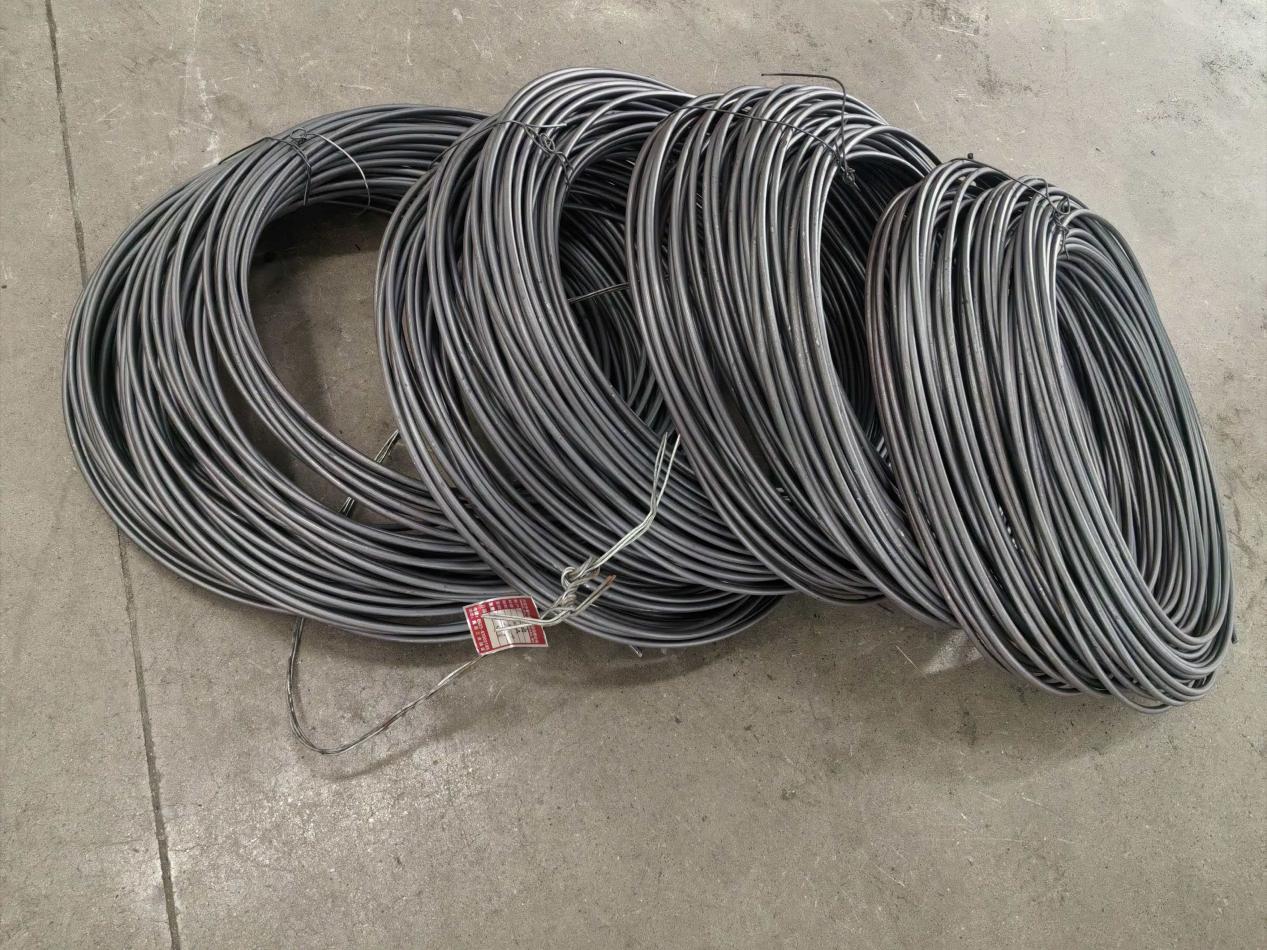
Introduction to Enterprise Technical Strength: Qinchuan New Materials' full-process control capability
Qingchuan New Materials (Zhengzhou) Co., Ltd. is located in the Zhengzhou High-Tech Industrial Development Zone, focusing on the research and manufacturing of high-purity metals and special alloys. Its Alloy46 supply capability boasts three major technical advantages:
Precision melting and composition control technology
The company is equipped with a 500kg-grade vacuum induction melting furnace (VIM) and a 200kg-grade electroslag remelting furnace (ESR). By using the double-linkage process, the oxygen (O) and nitrogen (N) content in the alloy are controlled at ≤15ppm and ≤20ppm respectively, and the impurity content of sulfur (S), phosphorus (P), etc. is ≤0.005%. Component analysis is performed using a direct reading spectrometer (OES) and an inductively coupled plasma mass spectrometer (ICP-MS), ensuring that the fluctuation of main elements such as nickel and chromium is ≤±0.1%, thus guaranteeing consistent material properties for each batch.
2. Cold Working and Heat Treatment Process Optimization
In response to the cold working hardening characteristics of Alloy46, the company has developed a "multiple passes with small deformation + intermediate annealing" process. By controlling the deformation amount per pass ≤15% and the annealing temperature (1050-1100℃/2h), the material hardness is maintained within the range of HV220-250, while maintaining an elongation of ≥30%. The heat treatment stage uses a vacuum annealing furnace, achieving precise temperature control (±2℃) and atmosphere protection (argon flow rate 5L/min) to eliminate processing stress and enhance material toughness.
3. Surface Treatment and Quality Inspection System
Surface treatment adopts electrolytic polishing technology, achieving a surface roughness Ra≤0.2μm by optimizing the mixture ratio of sulfuric acid (H₂SO₄) and phosphoric acid (H₃PO₄) (3:1 volume ratio) and current density (15A/dm²). Quality inspection covers the entire process, including grain size observation under metallographic microscope (OM) according to ASTM E112 standard, ultrasonic flaw detection (UT) for internal defects (sensitivity≥-6dB), and salt spray test (NSS) to verify corrosion resistance (no red rust after 96h), ensuring compliance with international standards such as ASTM B168, AMS 5540.
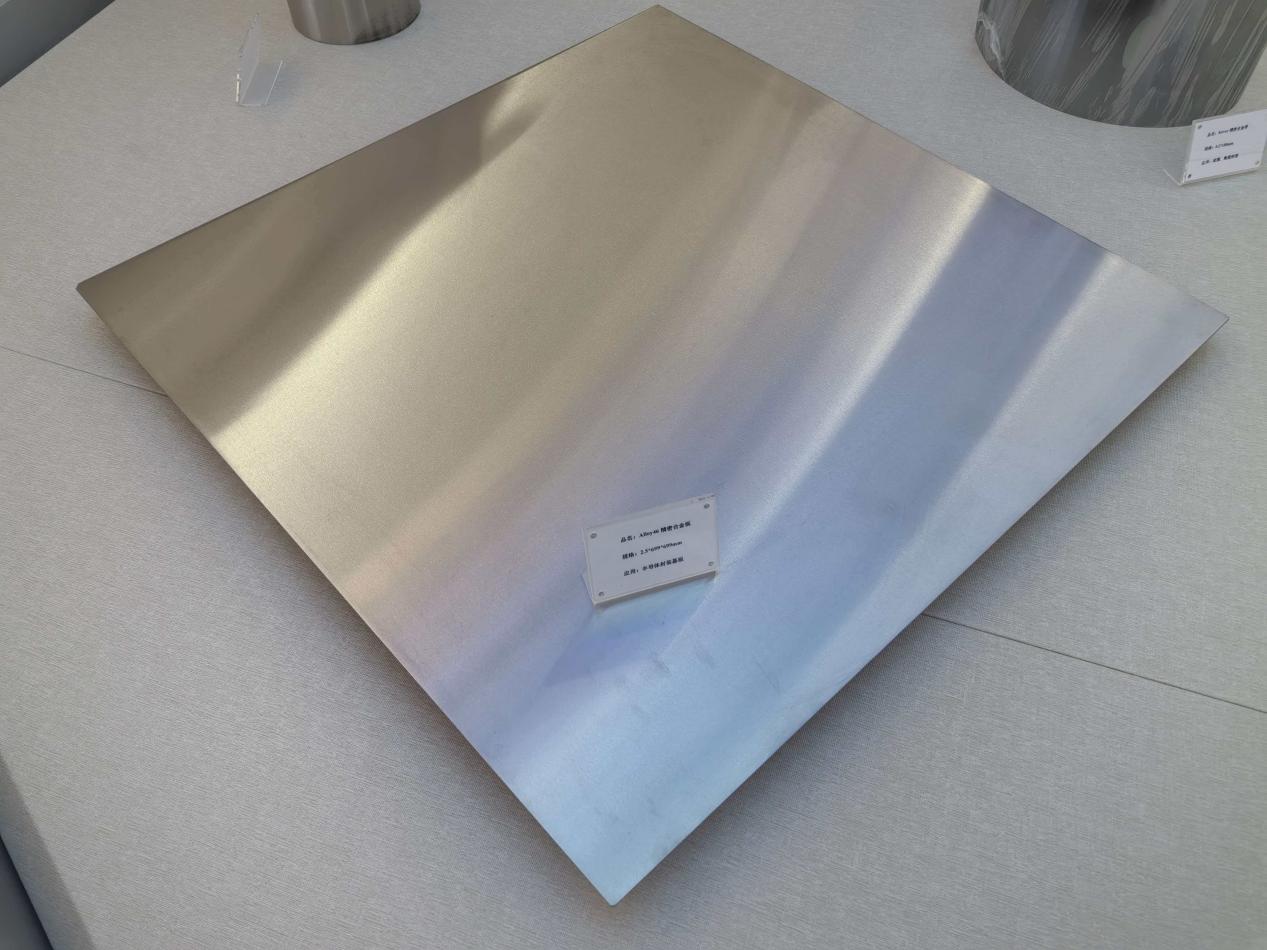
FAQ: Alloy46 Technical Selection Q&A Guide
Q1: What is the main difference between Alloy46 and common nickel-based alloys (such as Inconel 600)?
A1: The core advantage of Alloy46 lies in its extremely low coefficient of thermal expansion (CTE, 11.5×10⁻⁶/℃ within the range of 20-100℃), which is only 82% of Inconel 600 (14.0×10⁻⁶/℃), making it more suitable for applications requiring thermal stability matching (such as thermal expansion matching between electronic packaging substrates and chips). Moreover, Alloy46 contains a higher amount of chromium (15%-17% vs. 14%-17% in Inconel 600), offering superior corrosion resistance in oxidizing media, but costs approximately 15%-20% more than Inconel 600.
Q2: How to select the supply form (sheet, bar, tube) of Alloy46?
A2: The form of supply should be determined according to the processing technology and terminal application: Sheets (thickness 0.5-50mm) are suitable for stamping, etching, etc., commonly used for electronic shielding covers; Bars (diameter 6-300mm) are used for turning, milling processing, manufacturing precision shaft components; Tubes (outer diameter 10-200mm, wall thickness 1-20mm) are used in heat exchangers, fluid pipelines, and other scenarios. Qinchuan New Materials can provide customized sizes, minimum order quantity 50kg, supply period 15-20 days (including heat treatment).
Q3: How to avoid cracking in the processing of Alloy46?
A3: Cracking mainly originates from cold working hardening or improper heat treatment. The following measures are recommended: control the deformation amount per pass during cold working ≤15%, and perform vacuum annealing at 1050℃/1h after each pass; thoroughly remove oil stains (alkaline cleaner + ultrasonic cleaning) before heat treatment to avoid localized overheating; use ERNiCr-3 welding material during welding, control the interlayer temperature ≤150℃, and perform stress relief treatment at 750℃/2h after welding.
Summary of the entire text
Supply of Alloy46 special alloy requires a balance between composition accuracy, processing technology, and quality inspection. Qinchuan New Materials (Zhengzhou) Co., Ltd. has achieved technical indicators such as nickel content fluctuation ≤±0.1%, surface roughness Ra≤0.2μm, and no red rust after 96h salt spray test through double melting, cold processing optimization, and a full-process detection system. It can stably supply sheet, bar, tube and other forms to meet the high standards of aerospace, electronic packaging and other fields. The company is located in the Zhengzhou High-tech Zone, equipped with 500kg-grade VIM melting furnace and ICP-MS analysis equipment, minimum order quantity of 50kg, supply cycle of 15-20 days, and provides reliable technical support and supply guarantee for downstream customers.