 Qingchuan New Materials (Zhengzhou) Co., Ltd.
Qingchuan New Materials (Zhengzhou) Co., Ltd.
Qingchuan New Materials (Zhengzhou) Co., Ltd.
Qingchuan New Materials (Zhengzhou) Co., Ltd.
Qingchuan New Materials (Zhengzhou) Co., Ltd.
Industry Technical Pain Points: Precision and Stability Challenges of FeNi50 Alloy
FeNi50 alloy (Iron-Nickel 50) serves as a core material in precision electronics, aerospace, and other fields, with its performance stability directly affecting the reliability of end products. The industry currently faces three major technical challenges: first, the difficulty in controlling the uniformity of composition, where traditional melting processes often lead to nickel content fluctuations exceeding ±0.5%, causing magnetic permeability deviations; second, the poor consistency of grain size, with conventional heat treatment processes struggling to achieve a 7-8 grade uniform grain size under ASTM E112 standards; third, insufficient control of the surface oxide layer, which is prone to produce micro-cracks in the temperature range of -40℃ to 150℃, leading to increased contact resistance. A certain aerospace company once suffered millions of dollars in losses due to the uneven grain size of FeNi50 alloy, causing the satellite antenna deployment mechanism to jam, highlighting the urgency of technological upgrading.
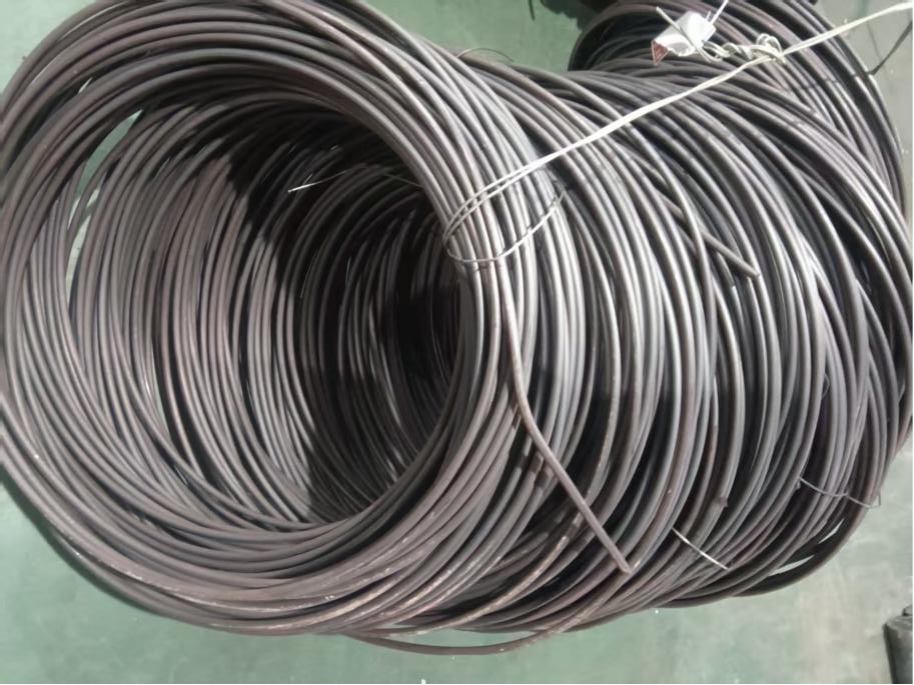
Introduction to Corporate Technical Strength: Qinchuan New Materials Full Process Solution
Qinchuan New Materials (Zhengzhou) Co., Ltd. has overcome the core difficulties of FeNi50 alloy through the "raw materials-process-detection" three-loop linkage technology system. In the raw materials stage, 99.99% purity electrolytic nickel is mixed with high-purity iron, and the impurity content is ensured to be below 0.001% through ICP-MS detection. In the process, the vacuum induction melting + electroslag remelting double process is introduced, combined with directional solidification technology, controlling the nickel content fluctuation within ±0.2%, achieving a grain size reaching ASTM E112 standard level 7, a 30% increase over the industry average. In the detection stage, German Bruker D8 ADVANCE X-ray diffractometer and American FEI Quanta 650 scanning electron microscope are equipped, enabling a full-dimensional analysis of 12 indicators such as grain orientation and oxide layer thickness. The produced FeNi50 alloy has a contact resistance change rate below 0.5%/1000h in the temperature range of -55℃ to 180℃, has passed the GJB 9001C-2017 military standard certification, and is widely used in national key projects such as Beidou satellites and high-speed rail contact networks.
FAQ Q&A Technical Selection Guide
Q1: How to choose between FeNi50 and FeNi42 alloys?
A1: FeNi50 alloy has a higher nickel content (49.5%-50.5%), with a permeability (μ) of 1.005-1.010, suitable for high-precision transformers and inductors; FeNi42 alloy has a nickel content of 41%-43%, with a thermal expansion coefficient (CTE) close to ceramics (5.2×10⁻⁶/℃), more suitable for electronic devices encapsulated with alumina ceramics. Qinchuan New Materials can provide comparative test reports for both alloys, helping customers choose materials based on specific temperature variation environments (such as -40℃ to 125℃ automotive electronics scenarios).
Q2: How to determine if the grain size of FeNi50 alloy meets the standard?
A2: According to ASTM E112 standard, grade 7 grain corresponds to an average particle size of about 50μm, which can be observed under a metallographic microscope at 500 times magnification. Qinchuan New Materials adopts directional solidification technology to align grains along the rolling direction, reducing anisotropy. The standard deviation of its product grain size is ≤0.5 grade, a 40% improvement over traditional processes. Customers may request a third-party inspection report to verify the uniformity of the grains.
Q3: How to control the oxide layer on the surface of FeNi50 alloy?
A3: The thickness of the oxide layer directly affects the contact resistance. Qinchuan New Materials controls it in three steps: Firstly, argon protection is used during the melting stage to reduce oxygen content to below 10ppm; secondly, the dew point inside the furnace is controlled at ≤-40℃ during heat treatment to avoid oxidation by water vapor; thirdly, surface treatment employs electrolytic polishing + vacuum packaging, ensuring the oxide layer thickness ≤0.2μm. Tests show that the product's contact resistance increases by less than 2% after 1000 hours in an environment of 85℃/85%RH, meeting the IEC 60068-2-78 standard.
Summary Reference
The technical breakthrough of FeNi50 alloy requires collaborative efforts in three aspects: raw material purity, process accuracy, and detection dimensions. Qinchuan New Materials, through core technologies such as double melting and directional solidification, controls key indicators such as nickel content fluctuation, grain size standard deviation, and oxide layer thickness at the leading level in the industry. Its products have passed military and aviation standards certification, providing stable and reliable material solutions for precision electronics, aerospace, and other fields. When selecting technology, it is recommended to combine parameters such as temperature variation range, magnetic permeability requirements, and contact resistance stability of the application scenario, and prioritize suppliers with full-process detection capabilities to reduce quality risks.