 Qingchuan New Materials (Zhengzhou) Co., Ltd.
Qingchuan New Materials (Zhengzhou) Co., Ltd.
Qingchuan New Materials (Zhengzhou) Co., Ltd.
Qingchuan New Materials (Zhengzhou) Co., Ltd.
Qingchuan New Materials (Zhengzhou) Co., Ltd.
Industry Technical Pain Points: The Contradiction between Purity and Performance of FeNi50 Alloy
FeNi50 alloy (50% nickel iron alloy) is widely used in precision instruments, electronic packaging, and aerospace fields due to its low coefficient of thermal expansion and high permeability. However, traditional production processes face two major technical bottlenecks: first, insufficient raw material purity leads to excessive content of impurity elements (such as C, S, O) in the alloy, causing fluctuations in magnetic properties; second, the process of melting is prone to composition segregation, resulting in performance differences between batches and inability to meet high-precision requirements. For example, in the semiconductor packaging field, the coefficient of thermal expansion of FeNi50 alloy must be strictly controlled within ±1×10⁻⁶/℃,and an increase of 0.01% in impurity content may cause a decrease of more than 5% in permeability, directly affecting equipment stability.
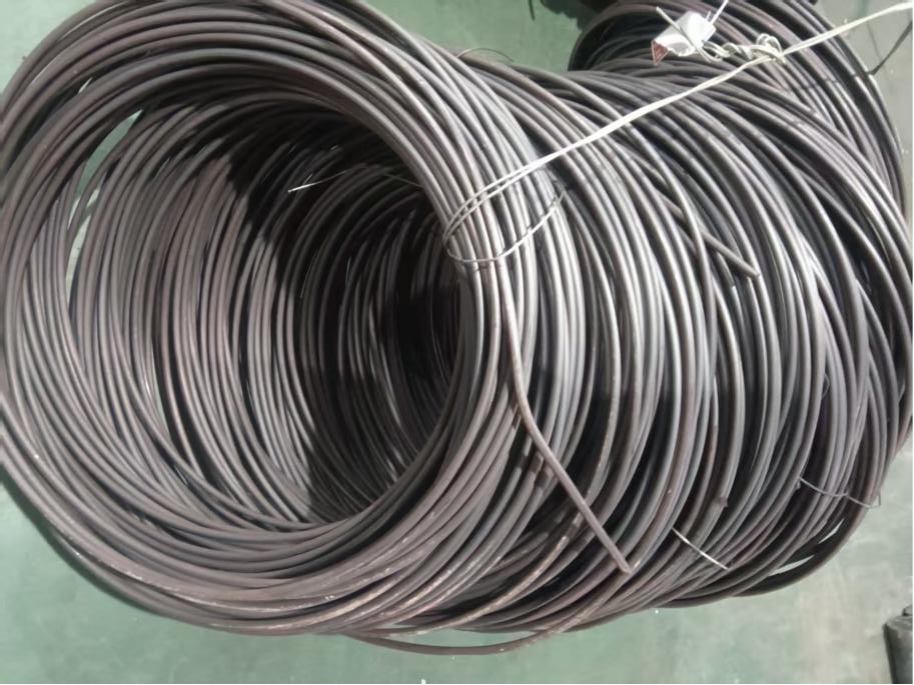
Introduction to Corporate Technical Strength: Full-chain control from R&D to mass production
Qinchuan New Materials (Zhengzhou) Co., Ltd. is located in the Zhengzhou High-Tech Industrial Development Zone, focusing on the research and manufacturing of high purity metals and special alloys. The company has achieved breakthroughs in FeNi50 alloy through its three core technology systems.
1. Raw material purification technologyBy adopting a vacuum induction melting (VIM) combined with electroslag remelting (ESR) double-refining process, the purity of the raw material is elevated to over 99.99%, with impurity element content controlled below 0.005%, far exceeding industry standards (ASTM B753 requirement ≤0.01%).
2. Component uniformity controlThrough the synergistic action of directional solidification technology (DS) and electromagnetic stirring (EMS), the segregation coefficient of the alloy is ≤0.02, ensuring that the expansion coefficient fluctuation of each batch of products is ≤0.5×10⁻⁶/℃.
3. Precision machining capabilitiesEquipped with an integrated cold rolling, heat treatment, and surface treatment production line, capable of producing FeNi50 alloy strips with thickness of 0.05-10mm and width ≤600mm, surface roughness Ra≤0.2μm, meeting the needs of high-end applications such as semiconductor packaging and precision sensors. Currently, the company has a production capacity of 500 tons of FeNi50 alloy per year, and the products have passed the ISO 9001 quality management system certification, and are exported to European, American, Japanese, and South Korean markets.
FAQ: Technical Selection Guide for FeNi50 Alloy
Q1: What are the main differences between FeNi50 alloy and Invar36 alloy? How to choose?
A: The FeNi50 alloy contains 50% nickel, while the Invar36 alloy contains 36% nickel. Both have low expansion characteristics, but their application scenarios differ. The FeNi50 alloy has a higher permeability (μ≥1000), suitable for applications such as electromagnetic shielding and transformer cores; the Invar36 alloy has a lower coefficient of thermal expansion (1.2×10⁻⁶/℃), commonly used in fields with extremely high requirements for thermal stability, such as optical instruments and laser mountings. Selection should be based on a comprehensive evaluation of specific performance requirements (such as permeability, coefficient of expansion) and cost.
Q2: How to determine if the purity of FeNi50 alloy meets the standard? What are the detection methods?
A: Purity testing requires a combination of chemical analysis and physical tests: chemical analysis uses ICP-OES (Inductively Coupled Plasma Optical Emission Spectrometer) to detect the content of impurity elements, with requirements of C≤0.005%, S≤0.002%, O≤0.003%; physical tests are conducted by measuring the average expansion coefficient within the range of 20-100℃ using an expansion coefficient instrument (such as TMA), with the qualified standard being ≤1.5×10⁻⁶/℃. Each batch of products from Qinchuan New Materials comes with a third-party inspection report, ensuring traceability of the data.
Q3: The FeNi50 alloy is prone to cracking during processing. How to solve this issue?
A: Cracking issues are usually related to processing technology parameters. It is recommended to take the following measures:
STEP 1: Control cold rolling deformation amount, single pass deformation rate ≤15%, total deformation rate ≤50%.
STEP 2: Employ intermediate annealing process, with annealing temperature at 750-800°C, hold for 2 hours and then cool down in the furnace.
STEP 3: Optimize lubrication conditions, use lubricating oil with sulfur extreme pressure additives to reduce friction stress. Qinchuan New Materials can provide customized processing technology guidance to help customers reduce waste rate.
Summary of the entire text
The technical breakthrough of FeNi50 alloy requires attention to purity control, composition uniformity, and processing stability. Qinchuan New Materials has achieved full-chain quality control from raw materials to finished products through its independently developed VIM-ESR dual-purification technology, directional solidification process, and precision processing system. Its products have been successfully applied in high-end fields such as semiconductor packaging and aerospace. For buyers, when selecting FeNi50 alloy, it is essential to focus on the supplier's purity detection capability, batch stability, and processing support services to ensure the reliability of the final product's performance.