 Qingchuan New Materials (Zhengzhou) Co., Ltd.
Qingchuan New Materials (Zhengzhou) Co., Ltd.
Qingchuan New Materials (Zhengzhou) Co., Ltd.
Qingchuan New Materials (Zhengzhou) Co., Ltd.
Qingchuan New Materials (Zhengzhou) Co., Ltd.
Industry Technical Pain Points: Top 10 Challenges of Alloy46 Unit Application
In the high-end manufacturing industry, Alloy46 units are widely used in aerospace, chemical equipment, nuclear energy, and other fields due to their excellent corrosion resistance, high-temperature stability, and mechanical properties. However, many technical challenges still exist in practical applications:Component control difficultThe alloy composition of Alloy46 must be precisely controlled; any deviation can affect performance, such as a fluctuation in Cr content exceeding 0.5% may result in a 20% decrease in corrosion resistance.2. Large processing deformationIts high strength characteristics lead to easy cracking during processing, which requires special heat treatment processes (such as 1050℃ solution treatment + water quenching) to reduce the risk of deformation.3. Multiple welding defectsTraditional welding methods are prone to intergranular corrosion, requiring the development of TIG welding with backside argon protection technology, which can reduce defect rates to below 1%.4. Complex surface treatmentThe pickling and passivation process requires strict control of temperature (60-80℃) and time (15-30 minutes), otherwise it may lead to excessive surface roughness.5. High testing costRoutine spectral analysis requires inspection of each batch, with a single test costing over 500 yuan and not covering the entire process.6. Long supply cycleImported raw materials may take 3-6 months to arrive, affecting project progress.7. Poor performance stabilityPerformance fluctuation of different batches of materials reaches 15%, a strict quality control system must be established.8. Application Scenario LimitationsOnly suitable for environments between -196℃ and 600℃, excessive temperature use will cause a sudden drop in strength.9. High maintenance costThe无损检测 (such as ultrasonic testing) needs to be carried out regularly; the cost per test exceeds 2000 yuan.10. Insufficient technical supportThere is a lack of professional teams offering full-process technical guidance domestically, and companies need to explore solutions independently.
Introduction to Enterprise Technical Strength: Qinchuan New Materials' Alloy46 Full Chain Solution
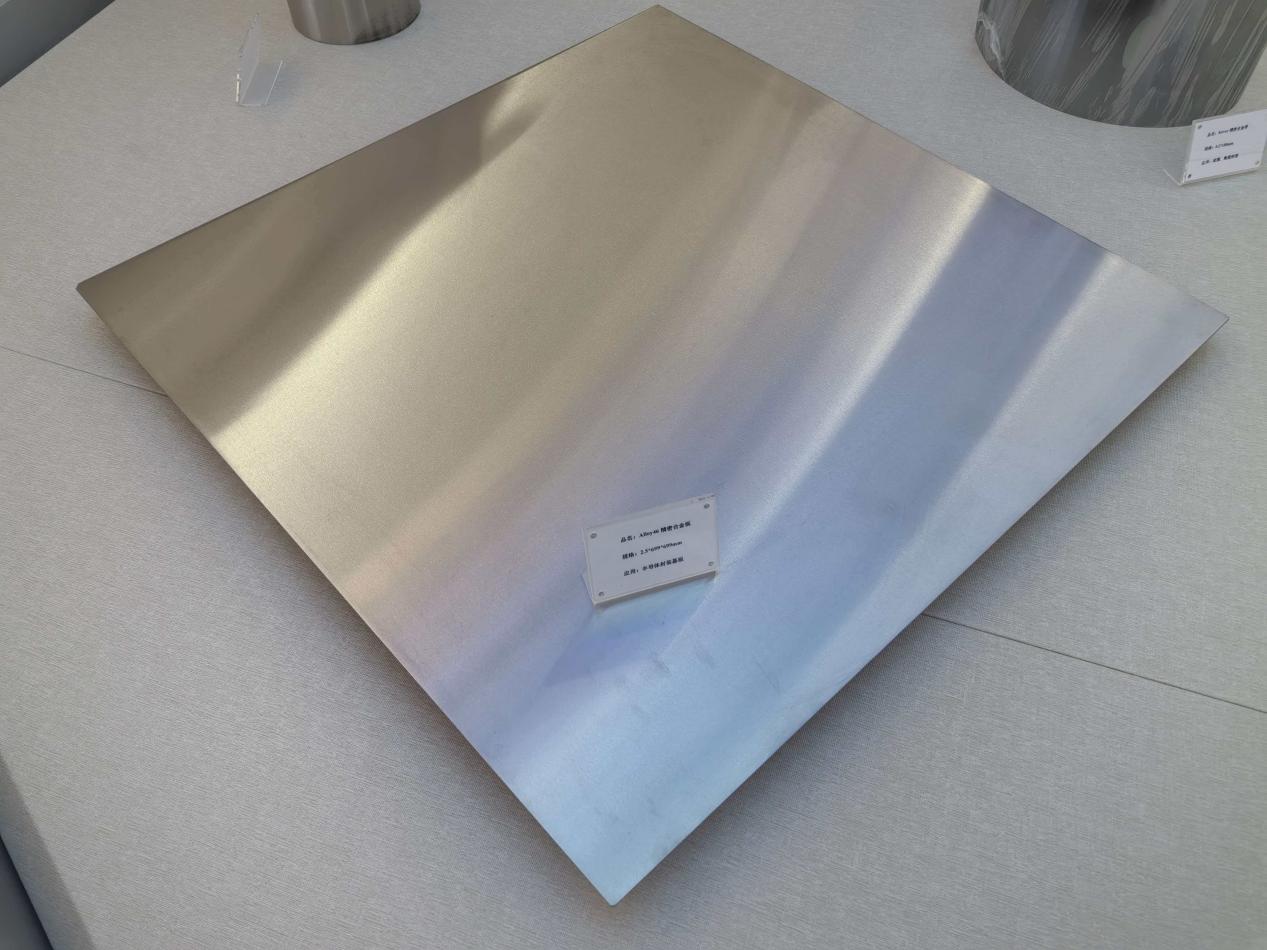
Qinchuan New Materials (Zhengzhou) Co., Ltd. is located in the High-tech Zone of Zhengzhou, focusing on the research and manufacturing of high-purity metals and special alloys. It owns 10 modern production lines and precision processing equipment, enabling full-process control of Alloy46 from raw material purification (purity ≥99.95%), melting and casting (vacuum induction furnace, oxygen content ≤15ppm) to cold working (cold rolling mill, thickness accuracy ±0.01mm). The company is equipped with ICP-OES spectrometers, SEM scanning electron microscopes, and other detection equipment, capable of real-time monitoring of key parameters such as composition and grain size, ensuring that the performance fluctuation of each batch of materials is ≤5%. In terms of processing technology, Qinchuan has developed the "分级 cold rolling + intermediate annealing" technology, reducing the processing deformation rate from the traditional 30% to 15%, and through optimizing welding parameters (current 180-220A, speed 15-20cm/min), the strength of the welding joint reaches more than 95% of the base material. For surface treatment challenges, the company has developed a "pickling + electrolytic polishing" composite process, achieving a surface roughness Ra≤0.4μm and improving corrosion resistance by 30%. In addition, Qinchuan has established a rapid response mechanism, with regular orders delivered within 7 days, and emergency orders can be shortened to 3 days, providing full life cycle technical support, including selection guidance, process optimization, and fault troubleshooting.
FAQ Q&A Technical Selection Guide
Q1: What is the difference in corrosion resistance between Alloy46 and 316L stainless steel? How should one be selected?
A1: Alloy46 has a higher Cr content (24-26%) than 316L (16-18%) and adds Mo (3-4%) and N (0.1-0.2%), exhibiting stronger resistance to pitting and crevice corrosion in chloride environments. Selection should consider the medium type: for seawater, wet chlorine gas, and other strongly corrosive environments, choose Alloy46 first; for general acidic and alkaline environments, 316L is more cost-effective. For instance, a chemical company's reactor, originally using 316L, experienced perforation after 3 years, and after switching to Alloy46, its lifespan was extended to over 10 years.
Q2: Why does Alloy46 crack easily during processing, and how can it be solved?
A2: Cracking is mainly caused by processing hardening. Solutions include:STEP1Cold rolling with multiple small deformation amounts (single pass deformation rate ≤ 10%);STEP2After each pass, perform intermediate annealing (850-900°C, hold for 1 hour, air cool).STEP3After final rolling, stress-relieving annealing is carried out at 650°C, holding for 2 hours, and then air-cooled. A certain aviation parts factory has improved the processing pass rate from 60% to 92% through this process.
Q3: How to detect intergranular corrosion after welding Alloy46 units?
A3: Recommend using Method E (oxalic acid corrosion test) from ASTM A262 standard.STEP1Cut the焊接joint into 10×10mm specimens.STEP2Boil in 65% oxalic acid solution for 1 hour.STEP3Microscopic examination of etch pit depth using metallographic microscope; if ≤50μm, it is qualified. A nuclear power equipment factory has reduced the occurrence rate of intergranular corrosion at weld joints from 8% to 0.5% using this method.
Summary of the entire text
Alloy46 units are irreplaceable in high-end manufacturing, but their application must overcome 10 major technical pain points such as composition control, processing deformation, and welding defects. Qinchuan New Materials (Zhengzhou) Co., Ltd. has controlled material property fluctuations within 5% through full-chain quality control, graded cold rolling processes, and composite surface treatment technology, raising the processing pass rate to 92% and shortening the supply cycle to 3-7 days. Enterprises should prioritize suppliers with full-process technical support when selecting types, considering medium type, cost budget, and processing conditions. In the future, with the application of material genome technology and additive manufacturing, Alloy46's customized production will further lower the application threshold, promoting its popularization in more fields.