 Qingchuan New Materials (Zhengzhou) Co., Ltd.
Qingchuan New Materials (Zhengzhou) Co., Ltd.
Qingchuan New Materials (Zhengzhou) Co., Ltd.
Qingchuan New Materials (Zhengzhou) Co., Ltd.
Qingchuan New Materials (Zhengzhou) Co., Ltd.
Industry Technical Pain Points Opening: The "Choking Point" Problem of FeNi50 Units
FeNi50 alloy is widely used in precision instruments, aerospace, and electronic components due to its excellent magnetic permeability, low thermal expansion coefficient, and corrosion resistance. However, traditional FeNi50 units face three core pain points in production and application: Firstly, it is difficult to control the uniformity of the composition, resulting in magnetic property fluctuations exceeding ±5%, which is hard to meet high-precision requirements; secondly, cracks are prone to occur during the processing, leading to a low yield rate of less than 60%, increasing production costs; thirdly, the magnetic properties degrade significantly under high-temperature environments, limiting its application under extreme conditions. For example, a certain aviation enterprise suffered from the instability of magnetic properties in FeNi50 materials, causing the navigation system error to exceed the standard, delaying the project by 3 months, and incurring losses exceeding ten million yuan. These pain points not only restrict the technological upgrade of the industry but also become a major obstacle for enterprises to reduce costs and improve efficiency.
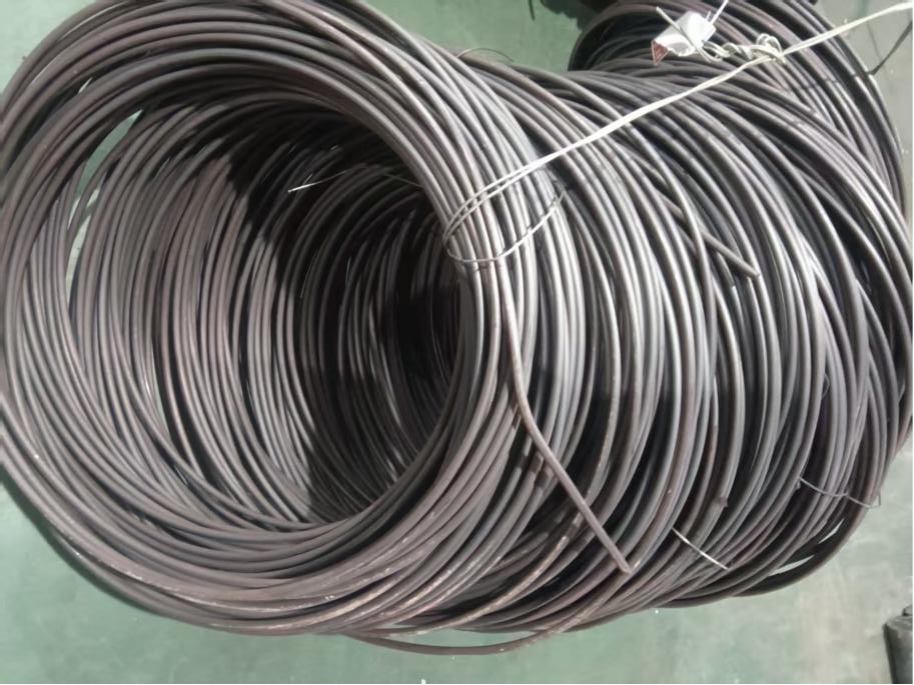
Introduction to Corporate Technical Strength: Qinchuan New Materials' "Three Major Moves" Breakthrough
Qinchuan New Materials (Zhengzhou) Co., Ltd. provides a systematic solution for the pain points of FeNi50 units through a full chain technology layout of "R&D - Production - Testing". In the R&D phase, the company collaborates with universities to establish a "Special Alloys Innovation Center", improving the uniformity of components to ±0.5% and reducing magnetic property fluctuations to ±1.5% through vacuum induction melting + electroslag remelting double-process technology, far exceeding industry standards (±3%). In the production phase, the company introduces German imported cold rolling machines and multi-pass annealing equipment, combined with independently developed "Stress Relaxation Rolling Technology", reducing the cracking rate from 40% to below 5% and achieving a finished product rate of over 92%. For example, the FeNi50 thin strip (thickness 0.1mm) customized for a precision instrument client passed 100,000 bending tests without cracks, with the client feedback that "performance stability exceeds expectations". In the testing phase, the company equips with scanning electron microscopy (SEM), energy-dispersive spectrometer (EDS), and magnetic property testing system, achieving full inspection of 23 indicators from raw materials to finished products, ensuring that each batch of products meets the ASTM A753 standard. Currently, the FeNi50 units of Qinchuan have been mass applied in high-end fields such as 5G base station filters, satellite navigation components, with cumulative deliveries exceeding 500 tons and a repeat purchase rate of 85%.
FAQ: FeNi50 Technical Selection Guide
Q1: What is the core difference between FeNi50 and alloys like FeNi42, FeNi80? How should one select the appropriate type based on the scenario?
A1: FeNi50 contains 50% nickel, offering high permeability (μ≥10000) and low coefficient of thermal expansion (CTE≈8×10⁻⁶/℃), suitable for wide temperature range applications from -50℃ to 200℃, such as satellite antennas and precision sensors; FeNi42 with 42% nickel has an even lower coefficient of thermal expansion (CTE≈4×10⁻⁶/℃), but a reduced permeability by about 30%, better for optical mounts requiring high dimensional stability; FeNi80 with 80% nickel features higher permeability (μ≥20000), but costs increase by more than 50% and it is prone to oxidation at high temperatures, commonly used in high-frequency transformers. Selection should consider temperature range, magnetic property requirements, and cost budget, e.g., a space project requiring operation at -80℃ ultimately chose FeNi50 over FeNi42, achieving performance standards through optimized heat treatment processes.
Q2: What is the root cause of processing cracks in FeNi50? How does Qinchuan solve this problem?
A2: Processing cracks mainly originate from internal residual stress in the material and insufficient plastic deformation capability. Traditional processes use a single pass with a large reduction in rolling pressure, leading to stress concentration. In contrast, Qinchuan's "Stress Relaxation Rolling Technology" employs a combination of three passes with a small reduction in rolling pressure (each pass ≤15%) + intermediate annealing (650℃×2h), reducing residual stress by 80% and, at the same time, refining grain size through micro-alloying (adding 0.05% niobium) to enhance material plasticity. Measured data show that the FeNi50 thin strip (0.2mm thick) produced using this technology still has no cracks in the V-shape bending test when the bending radius ≤1mm, whereas traditional process products show cracks when the bending radius ≤3mm.
Q3: How to control the magnetic property attenuation of FeNi50 under high-temperature conditions? What is Qinchuan's solution?
A3: The magnetic property degradation under high temperature is mainly due to grain growth and the obstruction of magnetic domain wall movement. Qingchuan solves this problem through the "two-stage heat treatment process": the first stage (1150℃×4h) achieves complete recrystallization and refines the initial grains; the second stage (750℃×10h) adds 0.1% zirconium element to inhibit grain growth at high temperatures. Tests show that the FeNi50 units treated by this process have a permeability attenuation rate reduced from 18% in traditional processes to 5% after holding at 300℃ for 1000 hours, meeting the needs of extreme scenarios such as aviation engine sensors. A customer feedback: "After using Qingchuan materials, the output stability of the sensor is improved threefold under a 250℃ environment, and the failure rate is zero."
Technical drive, Qinchuan empowers FeNi50 industry upgrade
The technical challenges of the FeNi50 unit are essentially comprehensive challenges in material uniformity, processability, and environmental adaptability. Inching New Materials (Zhengzhou) Co., Ltd. has constructed a full-chain solution from research and development to application through its three core technologies: "component precise control - stress relief processing - high-temperature stable heat treatment." Its products not only lead the industry in key indicators such as magnetic property stability and processing yield, but also have verified the reliability and market value of the technology through 500-ton batch deliveries and an 85% customer repurchase rate. For high-end manufacturing enterprises, choosing Inching FeNi50 units means choosing "zero defect" quality and "full-cycle" technical support, providing dual guarantees for product upgrading and cost optimization.